

 Blog
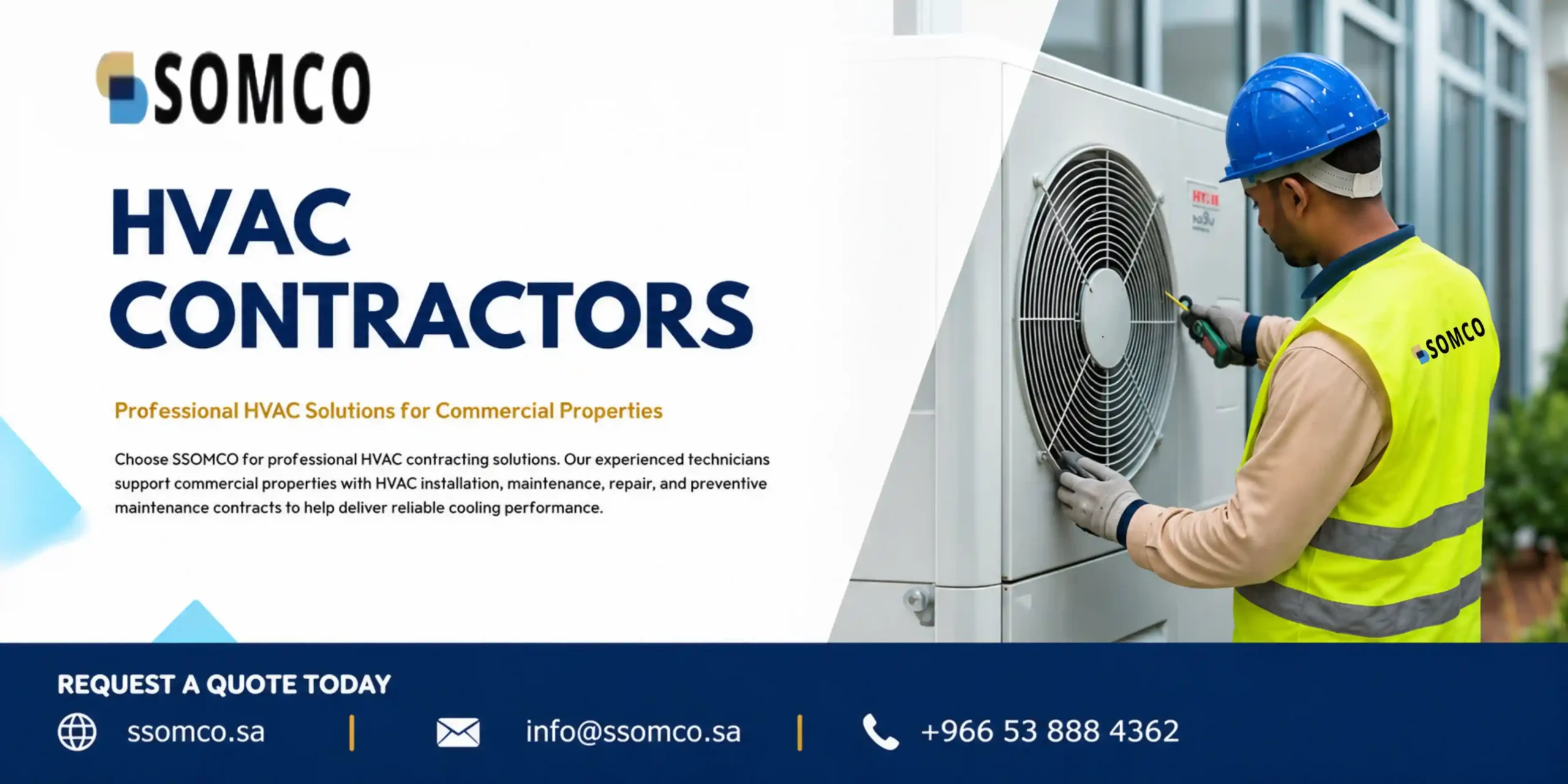
A reliable HVAC system is essential for maintaining comfortable indoor environments, supporting daily operations, and protecting equipment in commercial and industrial buildings. From offices and shopping centres to hotels, restaurants, and industrial facilities, heating, ventilation, and air conditioning systems play an important role in building performance.
Choosing experienced HVAC contractors helps businesses maintain system efficiency, reduce unexpected equipment issues, and plan maintenance more effectively.
At SSOMCO, we understand the importance of dependable HVAC operation and maintenance for commercial properties. This guide explains what HVAC contractors do, which services businesses should consider, and how to select the right contractor for their facility.
What Do HVAC Contractors Do?
HVAC contractors work with heating, ventilation, and air conditioning systems to support indoor comfort and building performance. Their responsibilities may include system installation, maintenance, troubleshooting, repairs, and equipment servicing, depending on their capabilities and project requirements.
For commercial facilities, HVAC work often involves larger and more complex systems than residential air conditioning. Contractors may need to coordinate maintenance activities around operating hours, building requirements, and the needs of facility management teams.
A suitable HVAC contractor can help businesses plan maintenance, identify potential system problems, and keep essential equipment operating reliably.
Why Are Professional HVAC Contractors Important?
Commercial HVAC systems operate for extended periods and may serve multiple areas within a building. Without proper maintenance and technical attention, equipment can experience reduced performance, unexpected breakdowns, and higher operating costs.
Working with a qualified HVAC contractor can help businesses:
- Maintain consistent indoor temperatures and ventilation.
- Identify developing equipment problems.
- Reduce avoidable system downtime.
- Support energy-efficient HVAC operation.
- Plan preventive maintenance activities.
- Extend the useful service life of HVAC equipment.
- Maintain a more comfortable indoor environment for employees, customers, and visitors.
The right maintenance approach depends on the building type, equipment condition, operating schedule, and manufacturer recommendations.
Common Services Provided by HVAC Contractors
HVAC contractors may offer different services depending on their technical expertise and the requirements of each facility.
1. HVAC Installation Services
HVAC installation involves selecting and installing suitable air conditioning and ventilation equipment according to the building’s requirements. Proper planning is important to ensure that the system is appropriate for the intended application.
Commercial HVAC installation projects may involve equipment selection, installation planning, system connections, and operational checks.
2. HVAC Preventive Maintenance
Preventive maintenance helps identify potential equipment issues before they develop into major operational problems.
Typical maintenance activities may include:
- Inspecting HVAC equipment and components.
- Checking filters and cleaning requirements.
- Inspecting electrical connections.
- Checking system operating conditions.
- Examining drainage arrangements.
- Reviewing equipment performance.
- Identifying components that may require attention.
Maintenance schedules should be based on equipment specifications, usage, and site conditions.
3. Air Conditioning Maintenance
Air conditioning systems require regular inspection and servicing to support reliable cooling performance.
Commercial AC maintenance may include filter inspection, coil cleaning where required, drainage checks, operational inspections, and general equipment condition assessments.
Regular servicing can help businesses identify performance issues and maintain more consistent cooling throughout their premises.
4. Chiller Maintenance
Chillers are important components of many large commercial and industrial cooling systems. Their performance can affect the operation of the wider HVAC system.
Chiller maintenance may involve equipment inspections, operational checks, reviewing system conditions, and identifying maintenance requirements.
The maintenance approach varies depending on the chiller type, equipment condition, and manufacturer’s recommendations.
5. VRF and VRV System Services
Variable Refrigerant Flow (VRF) and Variable Refrigerant Volume (VRV) systems provide zoned air conditioning for buildings with different cooling requirements.
These systems require appropriate installation, inspection, and maintenance to support reliable operation.
Businesses using VRF or VRV equipment should work with contractors who understand the specific requirements of these systems.
6. Air Duct Cleaning and Inspection
Air ducts distribute conditioned air throughout a building. Dust and accumulated contaminants may affect duct cleanliness and airflow conditions.
Professional duct cleaning can help maintain cleaner ventilation pathways. The cleaning method and scope should be selected according to the duct system’s condition and site requirements.
How to Choose the Right HVAC Contractors
Selecting an HVAC contractor is an important decision for facility managers and business owners. Before appointing a service provider, consider the following factors.
1. Relevant Commercial Experience
Look for contractors with experience in commercial or industrial environments similar to your property. Different buildings have different HVAC requirements, equipment configurations, and operating conditions.
2. Technical Knowledge
The contractor should understand the type of HVAC equipment installed at your facility. Ask about their experience with air conditioning units, chillers, VRF systems, ventilation equipment, and other relevant systems.
3. Maintenance Planning
A good contractor should be able to discuss preventive maintenance requirements and recommend an appropriate servicing schedule based on equipment specifications and site conditions.
4. Clear Scope of Work
Before starting a project, confirm which activities are included in the quotation. The scope should clearly explain the equipment covered, maintenance tasks, service frequency, exclusions, and any additional charges.
5. Safety Procedures
HVAC work may involve electrical equipment, mechanical components, elevated work areas, and restricted-access locations. Confirm that the contractor follows appropriate site safety procedures and applicable requirements.
6. Communication and Reporting
Clear communication helps facility teams understand equipment condition and maintenance requirements. Ask whether the contractor provides service reports, inspection findings, and recommendations for further work.
HVAC Contractors for Commercial and Industrial Buildings
Commercial and industrial facilities often require a structured approach to HVAC maintenance because cooling and ventilation systems support everyday operations.
Different property types may have different priorities:
Office Buildings: Maintaining comfortable working conditions and reliable cooling across offices, meeting rooms, and common areas.
Hotels and Hospitality Facilities: Supporting guest comfort and maintaining HVAC performance across occupied areas and shared facilities.
Shopping Centres and Retail Properties: Managing cooling requirements across multiple units and high-traffic public spaces.
Restaurants and Commercial Kitchens: Supporting ventilation and air conditioning requirements in dining areas and operational spaces.
Industrial Facilities: Maintaining HVAC equipment according to the building’s operational requirements and equipment specifications.
A contractor should understand the operational needs of the facility before recommending a maintenance plan.
Why Preventive HVAC Maintenance Matters
Waiting until equipment stops working can result in unexpected disruption and urgent repair requirements. Preventive maintenance provides a more structured way to monitor HVAC equipment and identify issues.
A preventive maintenance programme can help businesses:
- Detect equipment wear and developing faults.
- Monitor system operating conditions.
- Identify cleaning and servicing requirements.
- Plan maintenance activities in advance.
- Reduce the likelihood of avoidable breakdowns.
- Improve visibility of equipment condition.
For businesses managing multiple buildings or large facilities, planned maintenance can also make it easier to coordinate service activities and maintenance budgets.
Why Consider SSOMCO for HVAC Maintenance?
Saudi Specialized Operations & Maintenance Company (SSOMCO) supports commercial facility requirements through HVAC and maintenance services.
Our service areas include HVAC and air conditioning maintenance, chiller maintenance, VRF system services, air duct cleaning, and related building maintenance activities.
We understand that commercial properties need practical maintenance support that considers equipment requirements and day-to-day operations.
Whether your facility requires routine HVAC servicing or maintenance support for specific equipment, SSOMCO can discuss your requirements and help identify a suitable service scope.
Have an HVAC maintenance requirement or upcoming project? Contact SSOMCO to discuss your requirements and request a quotation.
Frequently Asked Questions About HVAC Contractors
An HVAC contractor works with heating, ventilation, and air conditioning systems. Depending on their service capabilities, their work may include installation, maintenance, inspection, troubleshooting, and repairs.
Maintenance frequency depends on equipment type, operating hours, site conditions, and manufacturer recommendations. Businesses should establish a preventive maintenance schedule appropriate for their equipment.
Review the contractor's relevant experience, technical capabilities, service scope, safety procedures, maintenance planning, and reporting process.
Some HVAC contractors provide chiller maintenance services. Businesses should confirm that the contractor has experience with the specific chiller type installed at their facility.
Preventive maintenance helps identify developing equipment problems, plan servicing activities, monitor system conditions, and reduce the risk of unexpected operational disruption.
Contractors with suitable commercial and industrial experience may support larger facilities. Businesses should confirm the contractor's available resources, technical capabilities, and service scope before appointment.
Conclusion
Choosing the right HVAC contractors is important for maintaining commercial building performance and supporting reliable air conditioning and ventilation systems. Businesses should consider technical experience, preventive maintenance planning, safety procedures, and clear service agreements when selecting a contractor.
With HVAC maintenance and related facility services, SSOMCO supports businesses looking for practical maintenance solutions for their commercial properties.
Contact SSOMCO today to discuss your HVAC maintenance requirements and request a quotation.
