

 Blog
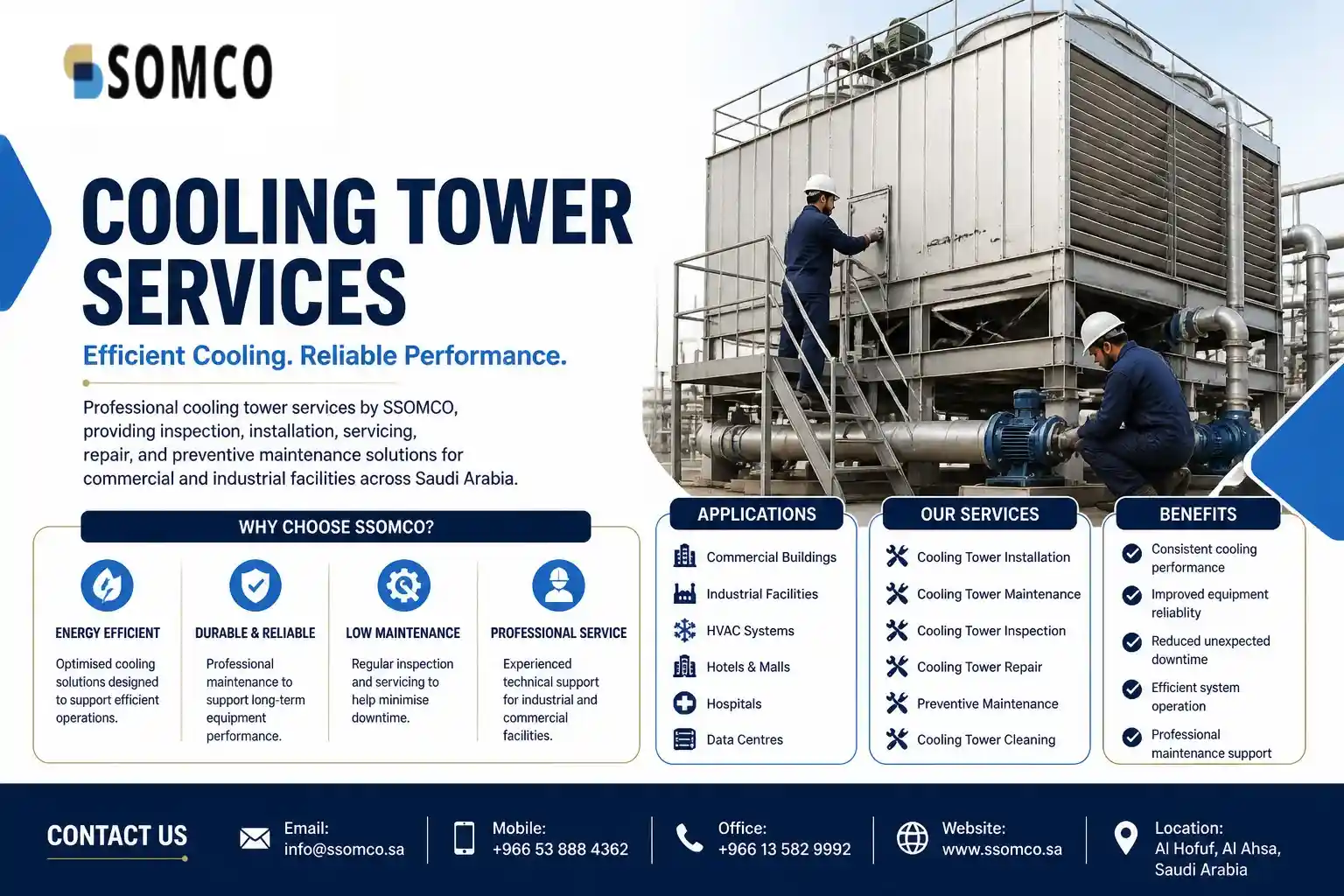
Cooling towers play an important role in commercial and industrial cooling systems by removing unwanted heat from circulating water and releasing it into the atmosphere. They are commonly used in manufacturing plants, commercial buildings, hospitals, hotels, shopping malls, and industrial facilities.
Professional Cooling Tower Services help businesses maintain cooling equipment, manage water quality, identify mechanical problems, and support reliable facility operations.
Over time, cooling towers can accumulate dust, dirt, mineral deposits, scale, and biological growth. Without proper inspection and maintenance, these conditions may affect heat transfer, water circulation, and overall equipment performance.
Choosing a professional cooling tower service provider helps facility managers organize cleaning, inspection, preventive maintenance, and repair activities according to equipment requirements.
What Are Cooling Tower Services?
Cooling tower services involve the installation, inspection, cleaning, maintenance, repair, and servicing of cooling tower equipment.
These activities help maintain mechanical components, water distribution systems, heat transfer surfaces, and other essential parts of cooling towers.
Common cooling tower services include:
- Cooling tower installation and commissioning.
- Cooling tower cleaning and descaling.
- Preventive maintenance.
- Cooling tower inspection.
- Fan and motor maintenance.
- Fill media inspection and replacement.
- Water basin cleaning.
- Water treatment and water quality monitoring.
- Mechanical component repair.
- Cooling tower performance assessment.
Regular professional servicing helps businesses manage cooling equipment and maintain their facility infrastructure.
Types of Cooling Tower Services
1. Cooling Tower Cleaning Services
Cooling tower cleaning is important for removing accumulated dirt, sediment, scale, and biological deposits from equipment surfaces.
Professional cleaning may include:
- Cooling tower basin cleaning.
- Fill media cleaning.
- Drift eliminator cleaning.
- Water distribution system cleaning.
- Spray nozzle inspection.
- Strainer cleaning.
- Removal of accumulated debris.
- Cleaning of accessible internal surfaces.
Proper cleaning helps maintain water circulation and heat transfer while supporting the overall condition of cooling tower equipment.
2. Cooling Tower Maintenance Services
Preventive maintenance helps identify mechanical and operational problems before they develop into major equipment failures.
Cooling tower maintenance activities may include:
- Inspection of cooling tower fans.
- Motor and gearbox inspection.
- Bearing inspection and lubrication.
- Belt and drive system inspection.
- Pump and motor checks.
- Water level inspection.
- Float valve inspection.
- Structural condition assessment.
- Inspection of electrical connections.
A planned maintenance program helps facility managers organize servicing activities and monitor equipment conditions.
3. Cooling Tower Repair Services
Cooling tower equipment may develop mechanical, electrical, or structural problems during operation.
Professional repair services may address:
- Cooling tower fan problems.
- Motor and gearbox faults.
- Water leakage.
- Damaged fill media.
- Blocked water distribution nozzles.
- Pump-related issues.
- Corrosion and component deterioration.
- Damaged drift eliminators.
- Electrical and control system faults.
Timely inspection and corrective maintenance help businesses address equipment problems and maintain cooling system operations.
4. Cooling Tower Installation Services
Cooling tower installation requires appropriate equipment selection, system planning, and technical coordination.
Installation activities may include:
- Cooling tower equipment selection.
- Site and foundation assessment.
- Mechanical installation.
- Water piping connections.
- Electrical connections.
- Pump and motor integration.
- Water distribution system installation.
- Testing and commissioning.
Proper installation according to manufacturer specifications and project requirements supports reliable equipment operation.
5. Cooling Tower Water Treatment Services
Water treatment is an important part of cooling tower operation because circulating water can accumulate mineral deposits, suspended solids, and biological contaminants.
Cooling tower water treatment programs may include:
- Water quality monitoring.
- Scale control.
- Corrosion control.
- Biological growth management.
- Chemical dosing monitoring.
- Blowdown management.
- Water testing and reporting.
An appropriate water treatment program helps maintain water quality and protect cooling tower components. Cleaning and chemical water treatment should be managed together rather than treated as interchangeable activities.
6. Cooling Tower Inspection Services
Regular cooling tower inspections help identify potential problems and evaluate equipment condition.
Inspection activities may include:
- Cooling tower structural inspection.
- Fan and motor condition checks.
- Fill media inspection.
- Drift eliminator inspection.
- Basin and water tank inspection.
- Nozzle and distribution system checks.
- Water leakage assessment.
- Corrosion inspection.
- Operating condition assessment.
Inspection findings help facility managers plan preventive maintenance and necessary repairs.
Types of Cooling Towers Used in Commercial and Industrial Facilities
Different facilities use different cooling tower designs depending on their cooling capacity, application, and system configuration.
1. Crossflow Cooling Towers
Crossflow cooling towers allow air to move horizontally across falling water. They are used in different commercial and industrial cooling applications.
2. Counterflow Cooling Towers
Counterflow cooling towers move air upward against the downward flow of water. This configuration is used in various industrial and commercial cooling systems.
3. Induced Draft Cooling Towers
Induced draft cooling towers use fans positioned to draw air through the tower. They are commonly used in different commercial and industrial installations.
4. Forced Draft Cooling Towers
Forced draft cooling towers use fans to push air through the cooling tower structure. Their design and application depend on project requirements.
5. Closed Circuit Cooling Towers
Closed-circuit cooling towers transfer heat through a heat exchanger while keeping the process fluid within a closed circuit.
Understanding the cooling tower type is important when selecting suitable inspection, cleaning, and maintenance procedures.
Importance of Preventive Cooling Tower Maintenance
Preventive maintenance is an essential part of managing cooling tower equipment. It involves planned inspections, cleaning, component servicing, and water quality monitoring.
Some important benefits include:
- Maintains Heat Transfer Performance
Regular inspection and cleaning help control scale, dirt, and biological deposits that can affect heat transfer surfaces.
- Reduces Unexpected Equipment Problems
Inspecting fans, motors, pumps, and other components helps identify potential issues before they become major failures.
- Supports Water Quality Management
Water monitoring and appropriate treatment help control scale formation, corrosion, and biological growth.
- Protects Equipment Components
Regular servicing helps monitor the condition of fill media, drift eliminators, mechanical components, and water distribution systems.
- Improves Maintenance Planning
Scheduled maintenance allows facility managers to organize inspections, servicing, repairs, and replacement activities.
- Supports Safe System Operation
Proper cleaning, disinfection, and water management are important for controlling biological risks associated with cooling tower systems.
Cooling Tower Water Treatment and Legionella Prevention
Cooling towers require proper water management because warm circulating water and biological deposits can create conditions that support the growth of microorganisms, including Legionella.
An effective cooling tower water management program should include:
- Routine water quality monitoring.
- Appropriate water treatment.
- Cleaning and disinfection.
- Inspection of water distribution systems.
- Monitoring of drift eliminators.
- Management of stagnant water areas.
- Maintenance documentation.
- Periodic review of the water management program.
Cleaning alone does not replace ongoing water treatment. Both activities should be coordinated according to equipment manufacturer recommendations and applicable health and safety requirements.
Cleaning and disinfection should be carried out by appropriately trained personnel using suitable protective equipment and established procedures.
Industries That Require Cooling Tower Services
Cooling towers support different commercial and industrial applications where heat rejection is necessary.
Manufacturing Facilities: Require cooling tower maintenance to support industrial processes and equipment cooling.
Hotels and Hospitality: Use cooling towers in centralized air conditioning and building cooling systems.
Hospitals: Depend on properly maintained cooling infrastructure for their building operations.
Shopping Malls: Use cooling towers as part of large centralized HVAC systems.
Industrial Plants: Require cooling towers for process cooling and heat rejection applications.
Commercial Buildings: Use cooling tower systems to support centralized cooling requirements.
Power and Utility Facilities: May use large cooling tower installations for industrial heat rejection applications.
Each industry requires a maintenance approach based on cooling capacity, operating conditions, equipment design, and water quality requirements.
Common Signs Your Cooling Tower Needs Maintenance
Recognizing equipment problems early can help businesses plan inspection and maintenance activities.
Some common warning signs include:
- Unusual noise or vibration from fans and motors.
- Visible scale or sediment accumulation.
- Water leakage around the cooling tower.
- Blocked or uneven water distribution.
- Corrosion on mechanical components.
- Damaged fill media or drift eliminators.
- Unusual changes in water quality.
- Reduced cooling performance.
- Excessive water carryover.
These symptoms may indicate different mechanical, water treatment, or operational problems. A professional inspection is necessary to determine the appropriate corrective action.
How to Choose the Right Cooling Tower Service Provider
Selecting the right cooling tower contractor is important for businesses that depend on reliable cooling infrastructure.
Consider the following factors before selecting a service provider:
- Technical Expertise: Check the provider’s knowledge of cooling tower systems, mechanical components, and water treatment requirements.
- Range of Services: Consider whether the company can support cleaning, inspection, preventive maintenance, and repair requirements.
- Maintenance Planning: Look for a provider that can organize scheduled inspections and document maintenance activities.
- Water Treatment Knowledge: Ensure that water treatment requirements are considered as part of the overall maintenance program.
- Safety Procedures: Confirm that cleaning and maintenance activities follow suitable safety procedures.
- Equipment Compatibility: Check whether the provider can work with your cooling tower manufacturer and equipment configuration.
- Service Reporting: Maintenance reports help facility managers understand equipment conditions and plan corrective activities.
Annual Maintenance Contracts for Cooling Towers
An Annual Maintenance Contract (AMC) provides a structured approach to managing cooling tower servicing and inspection activities over an agreed period.
A cooling tower maintenance agreement may include:
- Scheduled cooling tower inspections.
- Fan and motor maintenance.
- Fill media condition checks.
- Basin cleaning.
- Water distribution inspection.
- Water treatment monitoring.
- Preventive maintenance activities.
- Mechanical component servicing.
- Maintenance reporting.
The contract should clearly define the scope of work, service frequency, emergency response arrangements, replacement parts, and water treatment responsibilities.
An organized maintenance contract helps businesses manage ongoing cooling tower requirements and plan maintenance resources.
Why Choose SSOMCO for Cooling Tower and HVAC Maintenance?
Saudi Specialized Operations & Maintenance Company (SSOMCO) provides maintenance-focused solutions for commercial and industrial facilities.
Businesses looking for professional cooling system support can explore SSOMCO’s range of HVAC and facility maintenance services.
Its service areas include:
- HVAC operation and maintenance.
- Air conditioning maintenance.
- Chiller installation and maintenance.
- VRF system installation and maintenance.
- MEP installation and maintenance.
- Building operation and maintenance.
- Facility maintenance and management.
- Industrial maintenance.
- Air duct cleaning.
- Air balancing services.
Cooling tower systems are often integrated with centralized HVAC and chiller infrastructure. Their maintenance requirements should therefore be considered as part of an overall cooling system maintenance strategy.
Contact SSOMCO to discuss your commercial or industrial HVAC and cooling system requirements.
Website: https://ssomco.sa/
Phone: +966-13-588-0002
Frequently Asked Questions About Cooling Tower Services
Cooling tower services include installation, cleaning, inspection, maintenance, repair, water treatment, and servicing of cooling tower equipment.
Cleaning frequency depends on water quality, operating conditions, equipment design, and inspection findings. Follow manufacturer recommendations and the site's water management program.
Cooling tower maintenance may include fan and motor inspection, basin cleaning, fill media checks, drift eliminator inspection, water distribution checks, and water treatment monitoring.
Water treatment helps manage scale, corrosion, suspended solids, and biological growth, supporting equipment condition and water quality.
Cleaning physically removes accumulated dirt, sediment, scale, and biological deposits. Water treatment uses monitoring and appropriate treatment methods to manage circulating water conditions.
Common types include crossflow, counterflow, induced draft, forced draft, and closed circuit cooling towers.
Preventive maintenance helps identify equipment problems, manage water quality, maintain mechanical components, and support reliable cooling system operations.
Proper cleaning, water treatment, and mechanical servicing can help maintain heat transfer and equipment operation. Actual performance depends on system design, operating conditions, and equipment condition.
Conclusion
Professional Cooling Tower Services are essential for commercial and industrial facilities that depend on reliable heat rejection and centralized cooling systems.
From cooling tower cleaning and water treatment to mechanical inspection, preventive maintenance, and equipment repair, regular servicing helps businesses manage their cooling infrastructure effectively.
Choosing a suitable maintenance provider allows facility managers to organize maintenance activities, monitor equipment conditions, and support long-term cooling system operation.
SSOMCO provides HVAC and facility maintenance solutions for commercial and industrial requirements. Contact the team to discuss your cooling system and maintenance needs.
