

 Blog
Commercial kitchens in restaurants, hotels, catering facilities, and food-service businesses depend on properly functioning exhaust systems to remove smoke, grease-laden vapours, heat,t and cooking odours. Over time, grease and other residues can accumulate inside kitchen chimneys, exhaust ducts, filters, and ventilation equipment.
This buildup can restrict airflow, affect kitchen ventilation, and increase fire-safety risks if the exhaust system is not properly maintained.
A professional chimney duct cleaning service helps commercial kitchen operators remove accumulated grease and maintain cleaner exhaust systems. Regular inspection and cleaning also help facility managers identify maintenance requirements before deposits become more difficult to remove.
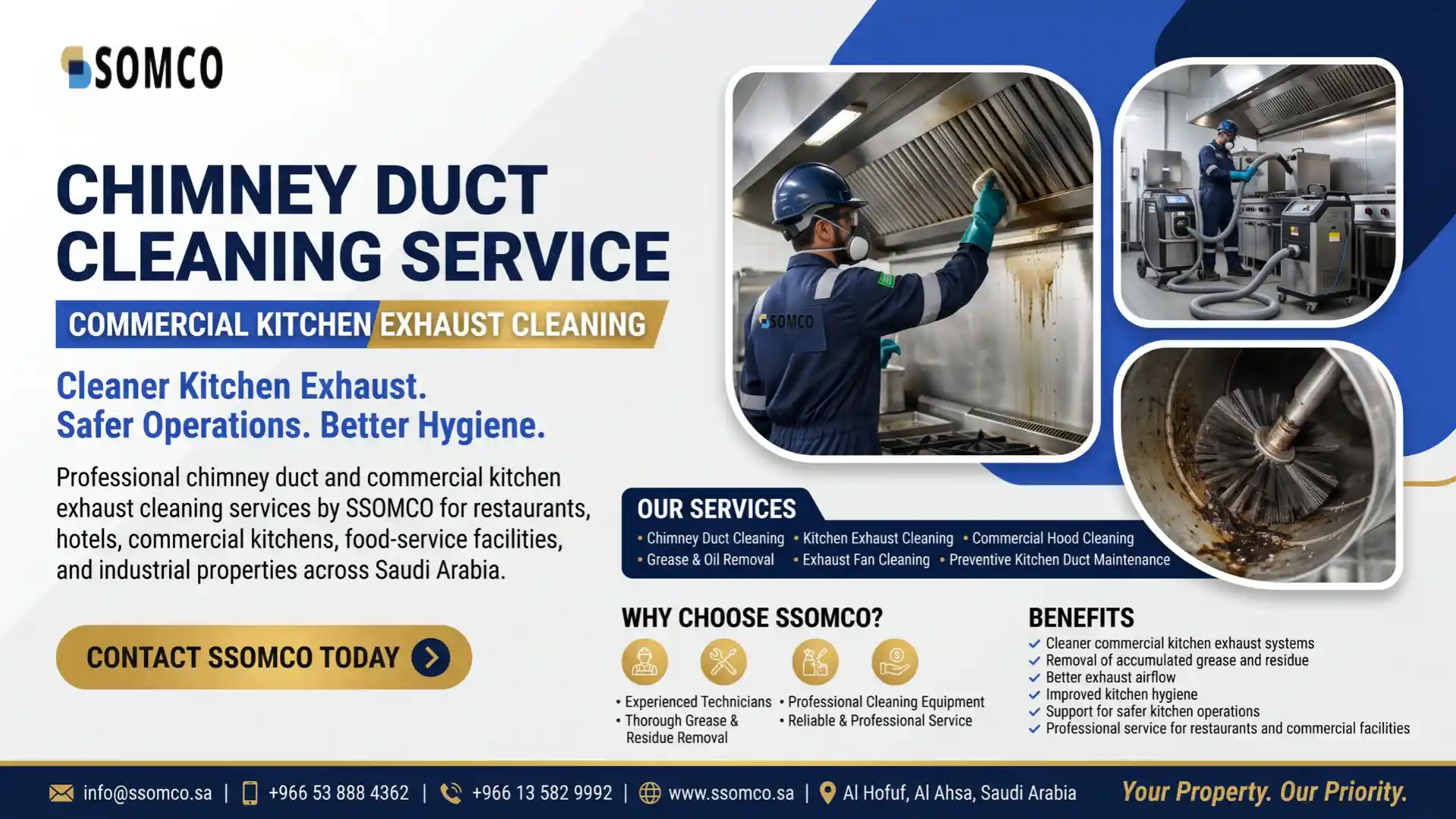
Saudi Specialized Operations & Maintenance Company (SSOMCO) provides kitchen hood cleaning and related maintenance services for commercial and industrial requirements.
What Is Chimney Duct Cleaning?
Chimney duct cleaning is the process of removing accumulated grease, oil, smoke residue,e and other contaminants from commercial kitchen exhaust ductwork.
In commercial kitchens, the exhaust system generally collects cooking fumes through a hood and transfers them through ductwork to an external discharge point using an exhaust fan.
Depending on the system design and service scope, professional cleaning may cover:
- Kitchen exhaust hood.
- Grease filters and baffle filters.
- Hood plenum and accessible internal surfaces.
- Horizontal exhaust ducts.
- Vertical chimney ducts.
- Exhaust fan blades and housing.
- Accessible duct access panels.
- Roof outlet and discharge components.
Cleaning only the visible hood surface does not necessarily remove grease deposits deeper inside the exhaust duct. A complete cleaning assessment should consider the accessible components throughout the system.
Why Is Commercial Kitchen Chimney Duct Cleaning Important?
Commercial kitchen exhaust systems operate regularly and can accumulate grease deposits as cooking vapours move through the ventilation network.
Professional cleaning is important for several reasons.
1. Helps Reduce Fire Hazards
Grease deposits inside exhaust ducts and associated components can contribute to fire hazards. If accumulated grease ignites, fire can spread through the exhaust system.
Removing grease deposits as part of a suitable cleaning and maintenance program helps reduce this particular risk.
2. Supports Better Ventilation
Grease accumulation can restrict airflow through filters, ducts, and other exhaust components.
Cleaning helps remove deposits that may interfere with the movement of cooking fumes and ventilation air.
3. Helps Control Cooking Odours
Accumulated grease and food residues can contribute to unpleasant smells around commercial kitchen areas.
Cleaning the exhaust system helps remove these deposits from the components covered by the service.
4. Supports Kitchen Hygiene
Grease and dirt can accumulate on exhaust system surfaces that are not regularly accessible during routine kitchen cleaning.
Professional cleaning helps address these areas as part of a wider commercial kitchen hygiene program.
5. Supports Equipment Maintenance
Grease accumulation on exhaust fan components can affect their operating condition. Cleaning and inspection help identify deposits and potential maintenance requirements.
6. Supports Maintenance Documentation
Documenting completed cleaning work helps facility managers maintain service records and plan future inspections.
Main Components Included in Chimney Duct Cleaning
A commercial kitchen exhaust system contains several components that may require separate inspection and cleaning.
1. Kitchen Exhaust Hood Cleaning
The exhaust hood collects smoke, grease vapour,s and heat above cooking appliances.
Cleaning may include:
- Removing grease from accessible hood surfaces.
- Cleaning internal hood sections.
- Degreasing the hood canopy.
- Inspecting grease collection areas.
- Removing accumulated oil and food residue.
2. Grease Filter Cleaning
Grease filters capture grease particles before air enters the exhaust duct.
Cleaning activities may include:
- Removing accessible filters.
- Applying suitable degreasing methods.
- Removing accumulated grease.
- Washing and drying filters where appropriate.
- Checking filters for visible damage.
Damaged filters may require replacement rather than cleaning.
3. Kitchen Chimney Duct Cleaning
The exhaust duct carries cooking fumes from the hood towards the external discharge point.
Over time, grease can collect on the internal duct walls, particularly in areas that are difficult to access.
Professional duct cleaning may include:
- Inspecting accessible duct sections.
- Identifying grease accumulation.
- Cleaning horizontal ductwork.
- Cleaning vertical chimney sections.
- Removing grease deposits from accessible internal surfaces.
- Reviewing access panels and cleaning coverage.
4. Exhaust Fan Cleaning
Exhaust fans help move cooking fumes through the duct system.
Grease deposits on fan blades and associated components can affect their operating condition.
Cleaning may include:
- Inspecting fan blades.
- Removing accumulated grease.
- Cleaning accessible fan housing.
- Checking visible component condition.
- Identifying vibration or maintenance concerns.
5. Roof Outlet and Discharge Area Cleaning
Some commercial kitchen exhaust systems discharge air through roof-mounted outlets.
Where included in the scope, accessible discharge components can be inspected and cleaned to remove grease and other deposits.
Common Signs Your Kitchen Chimney Duct Needs Cleaning
Commercial kitchen operators should pay attention to changes in exhaust system condition and performance.
Common signs include:
- Visible grease accumulation around the hood.
- Grease deposits on filters.
- Persistent cooking odours.
- Reduced smoke extraction.
- Grease dripping from exhaust components.
- Heavy deposits on accessible duct surfaces.
- Grease accumulation around exhaust fan components.
- Maintenance or inspection reports identifying contamination.
These signs may indicate that the system requires professional inspection and cleaning.
Our Commercial Kitchen Chimney Duct Cleaning Process
A structured cleaning process helps ensure that the relevant exhaust components are addressed according to the agreed service scope.
Step 1: Initial Inspection
The cleaning team assesses the kitchen exhaust system, including the hood, filters, accessible duct sections,ns and exhaust fan.
The inspection helps identify grease accumulation, access requirements, and the work needed.
Step 2: Site Preparation and Safety Measures
Before cleaning begins, the work area and nearby kitchen equipment are protected.
The relevant equipment is isolated where required, following appropriate safety procedures.
Step 3: Filter Removal and Cleaning
Accessible grease filters are removed and cleaned using suitable methods based on their material and condition.
Step 4: Hood Degreasing
The internal and external hood surfaces covered by the service are cleaned to remove accumulated grease and residue.
Step 5: Exhaust Duct Cleaning
Accessible horizontal and vertical duct sections are cleaned according to the system configuration and approved scope.
Suitable degreasing and mechanical cleaning methods are selected based on the deposits and accessibility.
Step 6: Exhaust Fan Cleaning
Accessible fan components are inspected and cleaned to remove accumulated grease where included in the service.
Step 7: Final Inspection and Reporting
The completed work is reviewed. Any inaccessible areas, remaining contamination, or additional maintenance requirements should be documented for the client.
Which Businesses Need Chimney Duct Cleaning Services?
Commercial kitchen exhaust cleaning is relevant to businesses and facilities that operate cooking equipment and grease-producing ventilation systems.
Restaurants
Restaurants with continuous cooking operations can experience grease accumulation in hoods, filters, and exhaust ducts.
Hotels
Hotel kitchens may operate several cooking areas and food preparation facilities. Regular exhaust system inspection and cleaning help facility teams manage these systems.
Cafeterias and Canteens
Corporate cafeterias, school canteens, and industrial kitchens require appropriate exhaust maintenance according to cooking activity and equipment usage.
Catering Facilities
Large catering kitchens often operate multiple cooking appliances and exhaust systems. Their cleaning requirements depend on production volume and system configuration.
Food Courts and Shopping Malls
Food courts may contain several commercial kitchens connected to different exhaust arrangements. Each system should be assessed according to its own configuration.
Bakeries and Food Production Facilities
Bakeries and food preparation facilities may require specialized exhaust cleaning depending on their cooking processes and installed ventilation equipment.
How Often Should Commercial Kitchen Chimney Ducts Be Cleaned?
There is no single cleaning frequency suitable for every commercial kitchen.
The required frequency depends on:
- Type of cooking activity.
- Daily operating hours.
- Volume of food preparation.
- Grease production.
- Exhaust system design.
- Previous cleaning history.
- Inspection findings.
- Applicable safety and regulatory requirements.
Kitchens with heavy frying and grilling operations may require more frequent cleaning than facilities with lighter cooking activities.
International guidance such as NFPA 96 uses cooking volume and equipment type when determining inspection and cleaning schedules. Businesses should confirm the applicable requirements for their facility with the relevant authorities and qualified professionals.
A professional inspection can help determine an appropriate cleaning schedule for the installed system.
Difference Between Kitchen Hood Cleaning and Chimney Duct Cleaning
Kitchen hood cleaning and chimney duct cleaning are related but do not necessarily cover the same components.
Kitchen Hood Cleaning | Chimney Duct Cleaning |
Focuses on the exhaust hood and its accessible components | Focuses on internal exhaust ductwork |
Includes hood surface degreasing | Includes removal of grease from duct walls |
May include grease filter cleaning | Covers accessible horizontal and vertical duct sections |
Addresses visible grease around the cooking area | Addresses grease accumulation deeper in the exhaust pathway |
May be performed as a separate service | May be included in a wider exhaust cleaning package |
For a complete commercial kitchen exhaust cleaning program, the hood, filters, ductwork and exhaust fan should be assessed together.
How to Choose a Professional Chimney Duct Cleaning Company
Selecting a suitable cleaning contractor is important for restaurants, hotels, and commercial kitchen operators.
Consider the following factors before appointing a service provider.
1. Commercial Kitchen Experience
Choose a contractor familiar with commercial exhaust systems, grease accumulation, and kitchen cleaning requirements.
2. Complete System Inspection
Ask whether the contractor assesses the hood, filters, accessible ductwork, and exhaust fan instead of focusing only on visible surfaces.
3. Suitable Cleaning Equipment
The contractor should use appropriate cleaning equipment and degreasing methods for the system configuration and materials.
4. Safety Procedures
Cleaning activities should account for electrical isolation, work at height, access limitations, equipment protection, and other site-specific risks.
5. Cleaning Scope and Documentation
Confirm which components will be cleaned and whether the contractor provides service documentation, photographs, or inspection observations.
6. Flexible Scheduling
Commercial kitchens may need cleaning outside normal operating hours to reduce disruption to food preparation and business activities.
Chimney Duct Cleaning Services by SSOMCO
Saudi Specialized Operations & Maintenance Company (SSOMCO) provides kitchen hood cleaning and related technical maintenance services for commercial and industrial requirements.
The company’s kitchen hood cleaning services include inspection of hoods, ducts, fans, and filters to identify grease accumulation and cleaning requirements.
Depending on the agreed scope, services may include:
- Commercial kitchen hood inspection.
- Grease filter cleaning.
- Hood canopy degreasing.
- Accessible kitchen exhaust duct cleaning.
- Exhaust fan cleaning.
- Grease and residue removal.
- Final inspection of cleaned components.
- Identification of additional maintenance requirements.
SSOMCO supports businesses seeking professional cleaning and maintenance solutions for commercial kitchen environments.
Why Consider SSOMCO?
Commercial Cleaning Requirements
Services are relevant to commercial kitchens and business facilities.
Related Maintenance Capabilities
Kitchen hood cleaning can be considered alongside other facility maintenance requirements.
System Inspection
Hoods, filters, ducts, and fans can be assessed to identify grease accumulation and cleaning needs.
Maintenance Support
Businesses can discuss recurring cleaning requirements and suitable service arrangements.
For commercial kitchen chimney duct cleaning requirements, contact SSOMCO to discuss the system configuration and service scope.
Contact Details
Company: Saudi Specialized Operations & Maintenance Company (SSOMCO)
Website: https://ssomco.sa/
Phone: +966-13-588-0002
Conclusion
Commercial kitchen chimney duct cleaning is an important part of maintaining cleaner exhaust systems and managing grease-related fire hazards in restaurants, hotels, catering facilities, and other food-service environments.
Regular inspection and professional cleaning help remove grease deposits from hoods, filters, accessible ductwork, and exhaust fan components. The appropriate cleaning schedule depends on cooking activity, system configuration, and applicable requirements.
SSOMCO provides kitchen hood cleaning and related maintenance solutions for commercial and industrial facilities. Businesses can contact SSOMCO to discuss their kitchen exhaust system and arrange an appropriate cleaning scope.
Frequently Asked Questions
A chimney duct cleaning service removes accumulated grease, oil, smoke residue, and other contaminants from commercial kitchen exhaust ductwork and associated components.
It helps remove grease deposits that can restrict airflow, contribute to unpleasant odors, and increase fire-safety risks.
Depending on the service scope, cleaning may cover hood surfaces, grease filters, horizontal and vertical ducts, exhaust fans, and accessible discharge components.
Cleaning frequency depends on cooking volume, equipment type, operating hours, grease accumulation, and applicable requirements. Heavy-use kitchens generally require more frequent attention.
No. Hood cleaning focuses on the canopy and filters, while chimney duct cleaning addresses the internal exhaust ductwork. Both may be required for complete system cleaning.
Yes. Grease deposits inside commercial kitchen exhaust systems can ignite and contribute to fire spread. Regular inspection and cleaning help manage this risk.
Yes. SSOMCO provides kitchen hood cleaning services that include inspection of hoods, ducts, fans, and filters, with cleaning activities determined by the agreed service scope.
Cleaning can often be arranged outside normal kitchen operating hours, subject to site access, equipment isolation, and scheduling arrangements.
Businesses should review the completed cleaning scope, accessible duct sections, filters, hood and fan components, along with any service report or inspection observations.
