

 Blog
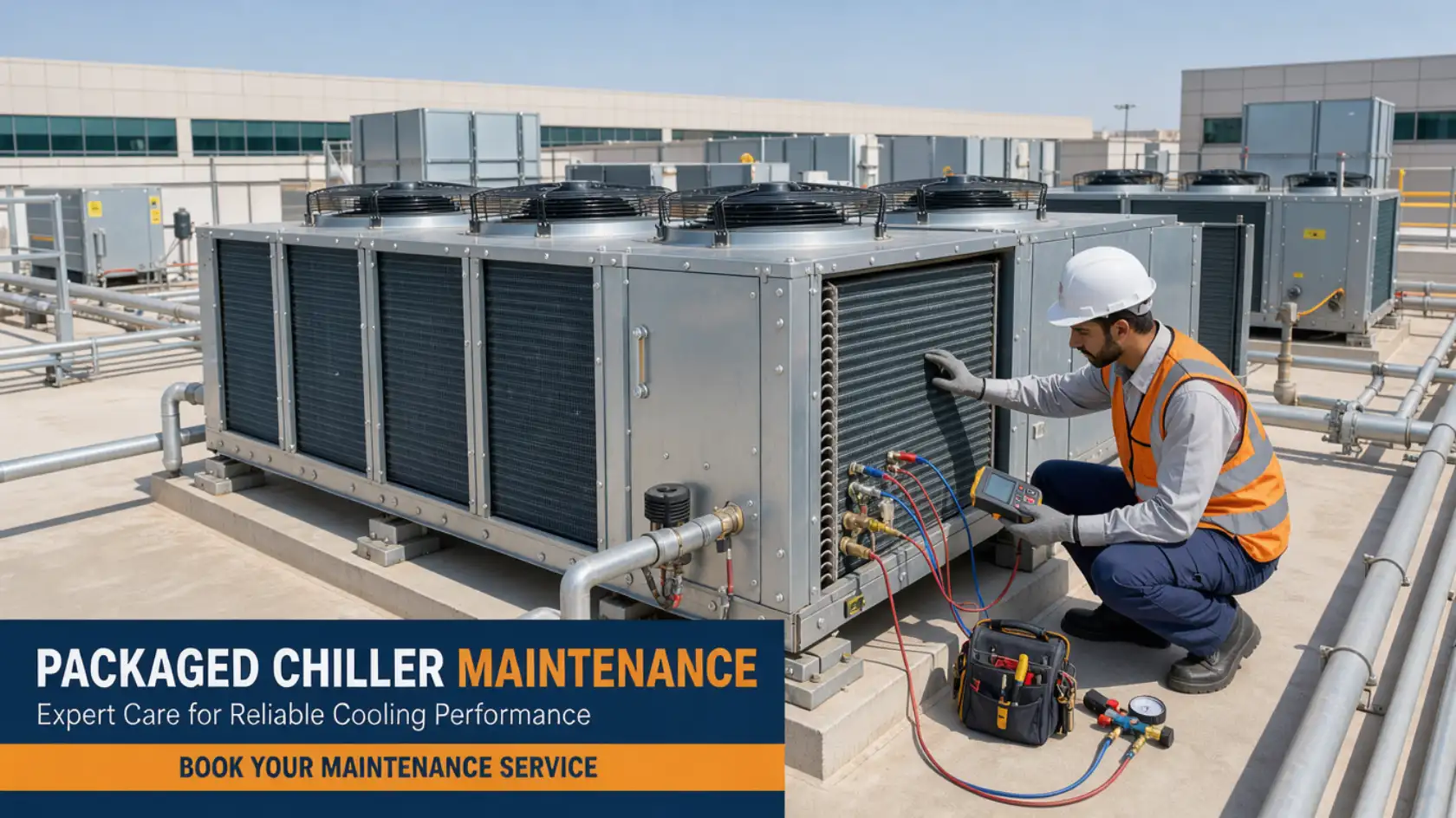
Packaged chiller maintenance is essential for businesses that depend on reliable cooling in commercial buildings, industrial facilities, warehouses, hotels, and manufacturing environments. Regular servicing helps maintain cooling performance, identify developing equipment faults, and reduce the risk of unexpected system interruptions.
Packaged chillers operate under demanding conditions, particularly in environments with high temperatures, dust accumulation and continuous cooling requirements. Without a structured maintenance program, problems such as dirty condenser coils, restricted water flow, refrigerant leaks and electrical faults can affect equipment performance.
For facility managers and industrial decision-makers, a well-planned packaged chiller maintenance program is an important part of HVAC asset management. It helps maintain equipment condition, supports energy-efficient operation and provides better visibility into maintenance requirements.
What Is Packaged Chiller Maintenance?
Packaged chiller maintenance is the process of inspecting, cleaning, testing and servicing a packaged chiller to maintain its operating condition and cooling performance.
A packaged chiller combines major refrigeration components, controls and supporting equipment within an integrated unit. Depending on its design, it may use air-cooled or water-cooled heat rejection.
Professional maintenance typically covers:
- Compressor inspection and performance checks
- Condenser coil and heat exchanger cleaning
- Evaporator inspection
- Refrigerant circuit leak checks
- Electrical panel and connection inspection
- Chilled water flow verification
- Temperature and pressure monitoring
- Controller and safety device testing
- Operating performance assessment
- Maintenance reporting and recommendations
The maintenance procedure must be appropriate for the equipment model, refrigerant, operating conditions and manufacturer’s instructions.
Why Is Regular Packaged Chiller Maintenance Important?
1. Maintain Consistent Cooling Performance
A packaged chiller must transfer heat effectively to provide the required chilled water or process cooling. Dust accumulation, heat exchanger fouling, restricted water flow, and incorrect operating conditions can reduce its cooling capacity.
Routine inspection helps identify these conditions before they significantly affect system operation.
2. Reduce Unexpected Chiller Breakdowns
Mechanical wear, loose electrical connections, abnormal vibration, refrigerant leaks and control faults can develop over time.
Preventive maintenance helps identify warning signs and allows maintenance teams to plan corrective work before a minor problem becomes a major interruption.
3. Support Energy-Efficient Operation
A poorly maintained chiller may require more energy to deliver the same cooling output.
Dirty heat exchangers, restricted airflow, incorrect water flow and abnormal operating pressures can contribute to inefficient operation. Cleaning, inspection and performance monitoring help address these issues.
4. Protect Important HVAC Equipment
Compressors, fans, motors, heat exchangers, electrical components, and control systems represent important equipment investments.
Regular servicing helps identify deterioration, abnormal operating conditions, and maintenance requirements that could affect equipment reliability.
5. Improve Maintenance Planning
A documented maintenance program gives facility managers better insight into equipment condition, service history, recurring faults, and upcoming maintenance needs.
This makes it easier to plan resources, coordinate contractors, and prioritize corrective work.
Major Packaged Chiller Components That Require Maintenance
Understanding the main components helps facility managers develop a more effective maintenance checklist.
1. Compressor Maintenance
The compressor circulates refrigerant through the refrigeration system and supports the cooling process.
Important inspection activities include:
- Checking compressor operating conditions
- Monitoring current and voltage
- Inspecting for abnormal vibration
- Listening for unusual operating noise
- Checking for oil leakage where applicable
- Reviewing suction and discharge conditions
- Inspecting electrical connections and protection devices
Compressor servicing, oil analysis and component replacement should follow the manufacturer’s recommendations for the specific compressor type.
2. Condenser Coil Maintenance
The condenser removes heat from the refrigerant. Air-cooled packaged chillers use condenser coils and fans to transfer heat into the surrounding air.
Maintenance activities may include:
- Inspecting condenser coil surfaces
- Removing accumulated dust and debris
- Checking for bent or damaged fins
- Inspecting condenser fan motors
- Checking fan blades and guards
- Verifying adequate airflow
- Inspecting surrounding clearances
Condenser cleaning is particularly important where equipment operates in dusty or high-temperature environments.
Cleaning methods and chemical products must suit the coil material and manufacturer requirements.
3. Evaporator Maintenance
The evaporator transfers heat from the chilled water or process fluid into the refrigerant.
Inspection activities may include:
- Checking chilled water inlet and outlet temperatures
- Verifying water flow
- Inspecting water strainers
- Reviewing pressure drop
- Checking for leakage
- Inspecting insulation
- Monitoring heat exchanger performance
Water-side cleaning and treatment requirements depend on the evaporator design and the condition of the circulating fluid.
4. Refrigerant Circuit Inspection
The refrigerant circuit is essential to the chiller’s cooling process. Abnormal refrigerant conditions can affect cooling capacity, operating pressure and compressor performance.
Maintenance checks may include:
- Inspecting accessible refrigerant connections
- Checking for signs of refrigerant leakage
- Monitoring suction and discharge pressures
- Reviewing refrigerant temperatures
- Assessing superheat and subcooling where applicable
- Inspecting relevant valves and controls
- Reviewing refrigerant-related alarms
Refrigerant should not be added simply because cooling performance has declined. The cause must first be diagnosed by a qualified refrigeration technician.
5. Electrical and Control System Maintenance
Electrical and control components regulate equipment operation and protect the chiller against abnormal conditions.
A professional inspection may include:
- Checking electrical panel condition
- Inspecting terminals and connections
- Reviewing contactors and relays
- Checking motor protection devices
- Inspecting sensors and control wiring
- Reviewing controller alarms
- Testing safety interlocks
- Verifying operating settings
Electrical inspection and testing must be carried out by qualified personnel using suitable isolation procedures.
6. Water Circuit and Supporting Equipment
Packaged chillers depend on suitable water flow and properly functioning supporting equipment.
Depending on the installation, inspections may cover:
- Water pumps
- Water strainers
- Isolation valves
- Flow switches
- Pressure gauges
- Water piping
- Pipe insulation
- Expansion tanks
- Water treatment arrangements
Any water flow restriction should be investigated because inadequate flow can affect heat transfer and may activate equipment protection systems.
Packaged Chiller Preventive Maintenance Checklist
A preventive maintenance checklist helps technicians inspect important components systematically and maintain consistent service records.
Inspection area | Recommended maintenance activity |
Compressor | Check operating readings, vibration, noise and visible condition |
Condenser coil | Inspect cleanliness, airflow and physical condition |
Condenser fans | Check fan operation, motors and electrical connections |
Evaporator | Review temperatures, water flow and leakage |
Refrigerant circuit | Inspect for leaks and abnormal operating conditions |
Electrical panel | Inspect connections, contactors and protection devices |
Water circuit | Check strainers, valves, pressure and flow |
Sensors | Review temperature and pressure readings |
Controller | Check alarms, settings and safety functions |
Insulation | Inspect chilled water piping and equipment insulation |
Equipment structure | Check corrosion, supports and visible deterioration |
Maintenance records | Document readings, faults and completed work |
The checklist should be customized according to the chiller manufacturer, equipment configuration, site conditions and maintenance agreement.
Common Packaged Chiller Problems and Troubleshooting
Identifying early warning signs helps maintenance teams investigate faults before they develop into more serious equipment problems.
Chiller Not Providing Sufficient Cooling
Possible causes include:
- Dirty condenser coils
- Insufficient chilled water flow
- Refrigerant circuit problems
- Faulty temperature sensors
- Incorrect operating settings
- Evaporator performance issues
Maintenance approach: Review the operating conditions, water flow, temperature difference, condenser condition and refrigeration system readings.
High Condensing Pressure
High condensing pressure may occur because of:
- Restricted condenser airflow
- Dirty condenser coils
- Condenser fan malfunction
- High ambient temperature
- Heat exchanger fouling in applicable systems
Maintenance approach: Inspect heat rejection components and compare operating readings with the manufacturer’s acceptable operating conditions.
Low Suction Pressure
Possible causes include:
- Restricted refrigerant flow
- Insufficient refrigerant charge
- Low cooling load
- Water flow problems
- Expansion device malfunction
- Other refrigeration system faults
Maintenance approach: A qualified technician should evaluate refrigerant circuit readings, system load and water-side conditions before determining the corrective action.
Frequent Chiller Shutdowns
Repeated shutdowns may result from:
- High-pressure or low-pressure alarms
- Electrical protection trips
- Low water flow
- Sensor malfunction
- Compressor protection activation
- Control system faults
Maintenance approach: Review fault history and investigate the underlying cause rather than repeatedly resetting the equipment.
Unusual Noise or Vibration
Possible causes include loose components, fan imbalance, worn mechanical parts, mounting problems or compressor-related faults.
Maintenance approach: Inspect mechanical supports, rotating components and equipment mounting arrangements according to manufacturer procedures.
Packaged Chiller Maintenance Schedule
The maintenance schedule should be based on manufacturer instructions, operating hours, equipment condition and environmental conditions.
The following is a general planning guide, not a universal service interval.
Frequency | Suggested maintenance activities |
Daily or routine monitoring | Review alarms, temperatures, pressures and unusual operating conditions |
Monthly or periodic inspection | Inspect equipment condition, condenser cleanliness and visible electrical indicators |
Quarterly or scheduled servicing | Review operating performance, water flow, controls and heat exchanger condition |
Annual or major inspection | Conduct a comprehensive inspection and test relevant safety and operating functions according to manufacturer recommendations |
Equipment operating in dusty, high-temperature or demanding industrial environments may require more frequent inspection.
Packaged Chiller Maintenance in Saudi Arabia
Saudi Arabia’s climate creates important maintenance considerations for packaged chiller systems, especially equipment operating outdoors or in industrial environments.
High ambient temperatures and airborne dust can affect condenser performance, airflow and heat rejection.
Dust and Sand Accumulation
Dust can collect on condenser coil surfaces and restrict airflow. Regular inspection and appropriate coil cleaning help maintain heat transfer.
High Ambient Temperatures
High outdoor temperatures can increase the demands placed on air-cooled condenser systems.
Maintenance teams should monitor operating pressures, temperatures, fan operation and manufacturer-specified operating limits.
Heavy Cooling Requirements
Commercial buildings and industrial facilities may operate chillers for extended periods to meet cooling requirements.
Operating data and maintenance records help identify performance changes and recurring faults.
Electrical and Mechanical Conditions
High equipment operating temperatures and demanding operating environments make routine inspection of electrical connections, motors, fans and mechanical components important.
A site-specific maintenance plan is more effective than applying the same service schedule to every packaged chiller.
Air-Cooled vs. Water-Cooled Packaged Chiller Maintenance
Packaged chiller maintenance varies according to the method used to reject heat.
Maintenance area | Air-cooled packaged chiller | Water-cooled packaged chiller |
Condenser | Air-cooled condenser coil | Water-cooled condenser heat exchanger |
Heat rejection | Condenser fans and airflow | Condenser water circulation |
Main inspection | Coil cleanliness and fan operation | Water flow and heat exchanger condition |
Cleaning requirements | Remove dust and debris from coils | Assess water-side fouling and cleaning needs |
Supporting equipment | Fans and associated controls | Pumps and associated water systems |
Water treatment | Not normally required for the air-cooled condenser itself | Required where specified by the water system design |
Correct identification of the chiller configuration is essential before preparing a maintenance procedure.
Preventive Maintenance vs. Corrective Chiller Maintenance
Both preventive and corrective maintenance are necessary for effective HVAC equipment management.
Preventive maintenance | Corrective maintenance |
Planned inspections and servicing | Repair after a fault is identified |
Cleaning and component checks | Troubleshooting and fault correction |
Performance monitoring | Replacement or repair of faulty components |
Helps identify developing issues | Addresses existing equipment problems |
Scheduled according to a maintenance plan | Arranged according to equipment condition |
A preventive maintenance strategy helps reduce avoidable equipment interruptions, while corrective maintenance restores equipment when faults occur.
Safety Requirements During Packaged Chiller Servicing
Packaged chillers contain electrical components, pressurized refrigerant circuits, rotating equipment and potentially hot or cold surfaces.
Important safety requirements include:
- Follow site-approved risk assessments and work procedures.
- Isolate electrical supplies before applicable servicing activities.
- Apply lockout and tagout procedures.
- Verify electrical isolation before beginning electrical work.
- Use appropriate personal protective equipment.
- Follow approved refrigerant recovery and handling procedures.
- Never open a pressurized refrigerant circuit without proper preparation.
- Use manufacturer-approved tools and procedures.
- Restore protective covers and safety devices before returning equipment to operation.
Only trained and authorized technicians should perform specialist refrigeration and electrical maintenance.
How to Choose a Packaged Chiller Maintenance Company
Selecting an experienced HVAC maintenance provider is important for commercial and industrial facilities that depend on packaged cooling equipment.
Before choosing a contractor, consider:
Technical knowledge: The provider should understand the specific packaged chiller design, manufacturer and refrigeration system.
Qualified technicians: Confirm that personnel have the appropriate training and qualifications for the required maintenance activities.
Preventive maintenance planning: Look for a structured inspection plan based on equipment condition and manufacturer recommendations.
Troubleshooting capability: The contractor should be able to investigate alarms, abnormal operating readings and recurring equipment faults.
Maintenance documentation: Inspection reports should identify completed work, operating readings, defects and recommended corrective actions.
Safety procedures: Check that electrical isolation, refrigerant handling and site safety requirements are clearly addressed.
Contract clarity: Confirm the equipment covered, service frequency, spare parts responsibilities and corrective maintenance arrangements.
Packaged Chiller Maintenance Services by SSOMCO
Saudi Specialized Operations & Maintenance Company (SSOMCO) supports commercial and industrial facilities with HVAC and maintenance-related services.
For businesses planning packaged chiller maintenance, it is important to assess the equipment type, cooling requirements, operating environment, maintenance history and service expectations before defining the maintenance scope.
A structured HVAC maintenance approach can help facility managers monitor equipment condition, identify developing faults and coordinate maintenance activities across their facilities.
If your business requires packaged chiller maintenance or wider HVAC maintenance support, contact SSOMCO to discuss your facility requirements and request a quotation.
Request a Quote from SSOMCO for your commercial or industrial maintenance requirements.
Frequently Asked Questions About Packaged Chiller Maintenance
Packaged chiller maintenance may include compressor inspection, condenser cleaning, evaporator checks, refrigerant leak inspection, electrical testing, water flow verification, controller inspection and operating performance monitoring.
Maintenance frequency depends on the manufacturer's recommendations, operating hours, environmental conditions and equipment condition. A site-specific preventive maintenance schedule should be established for each unit.
Common causes include dirty condenser coils, insufficient water flow, heat exchanger fouling, refrigeration circuit faults, incorrect settings and sensor problems.
Condenser coil cleaning helps remove accumulated dust and debris that can restrict airflow and reduce heat transfer. It is particularly important for air-cooled chillers operating in dusty environments.
Maintenance can help address conditions that contribute to inefficient operation, including dirty heat exchangers, airflow restrictions and incorrect operating conditions. Actual energy performance depends on equipment design, load and operating practices.
Packaged chiller maintenance includes planned inspections and servicing to maintain equipment condition. Chiller repair involves diagnosing and correcting an existing equipment fault.
Warning signs include reduced cooling capacity, unusual noise, abnormal vibration, repeated alarms, water flow problems, visible leakage and changes in normal operating readings.
Commercial buildings, factories, industrial plants, warehouses, hotels and other facilities that use packaged chillers for air conditioning or process cooling may require regular maintenance.
Refrigerant inspection may form part of the maintenance scope. Charging should only be performed when required after proper diagnosis, leak investigation and verification of the correct refrigerant specification.
Professional maintenance helps ensure that equipment inspections, refrigeration work, electrical checks and corrective activities are carried out using appropriate technical procedures and safety controls.
Conclusion
Packaged chiller maintenance is essential for commercial and industrial facilities that depend on reliable cooling systems. Regular inspections, condenser cleaning, compressor checks, refrigerant system monitoring, electrical testing and water flow verification help maintain equipment condition and identify developing faults.
For facility managers, the best approach is to establish a preventive maintenance plan based on manufacturer recommendations, operating conditions and equipment history.
With proper planning and qualified technical support, businesses can improve maintenance visibility, manage cooling equipment more effectively and reduce the risk of unexpected operational interruptions.
