

 Blog
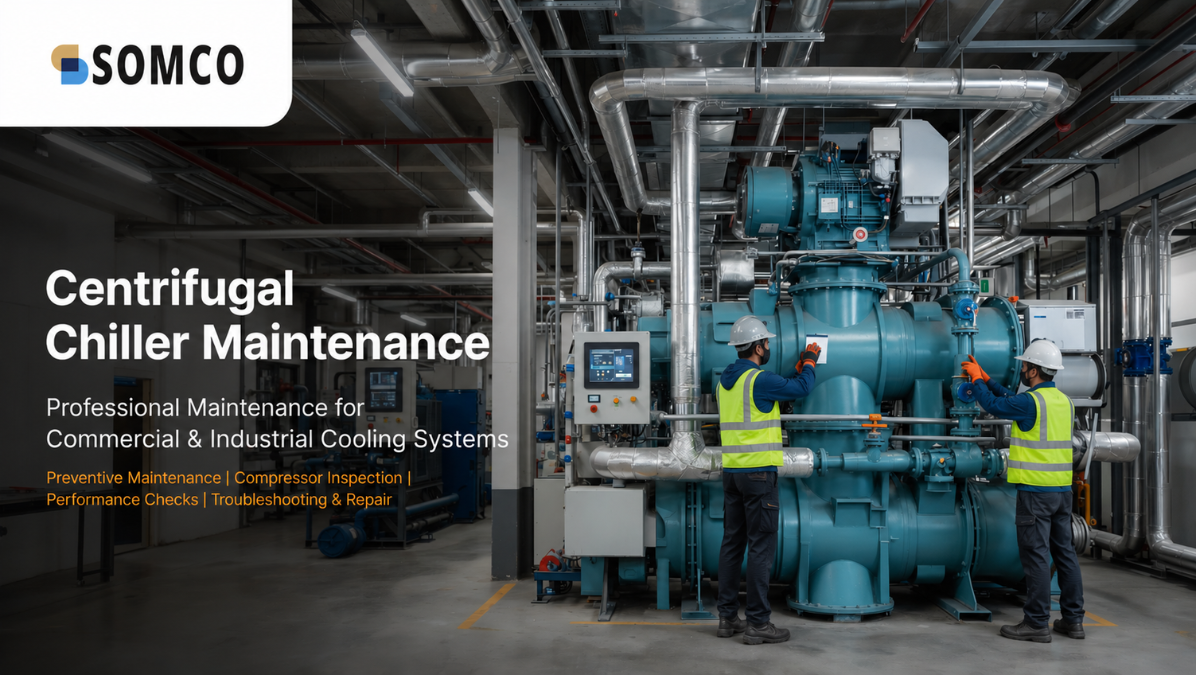
Keep your commercial cooling systems operating reliably with professional centrifugal chiller maintenance services from SSOMCO (Saudi Specialized Operations & Maintenance Company). We help commercial and industrial facility operators plan chiller inspections, preventive maintenance, performance checks, and troubleshooting based on their equipment requirements.
Centrifugal chillers are important components of large HVAC systems used in commercial buildings, hotels, hospitals, industrial facilities, and other properties with substantial cooling demands. Regular maintenance helps identify developing issues, maintain operating performance, and reduce the risk of unexpected equipment interruptions.
SSOMCO provides HVAC and maintenance solutions for businesses seeking a structured approach to chiller care. Whether you require scheduled preventive maintenance or an assessment of an existing centrifugal chiller, our team can discuss your facility requirements and the appropriate scope of work.
Need centrifugal chiller maintenance for your facility? Contact SSOMCO to discuss your equipment and request a quotation.
Professional Centrifugal Chiller Maintenance
A centrifugal chiller uses a centrifugal compressor to move refrigerant through the cooling cycle. Its operation depends on several interconnected components, including the compressor, heat exchangers, controls, electrical equipment, and associated water systems.
When these components are not maintained appropriately, issues such as reduced heat-transfer performance, abnormal operating pressures, control faults, and equipment shutdowns may occur.
SSOMCO can help businesses plan centrifugal chiller maintenance around equipment condition, operating requirements, manufacturer recommendations, and the needs of the facility.
Our maintenance approach focuses on:
- Preventive inspection and operating checks
- Chiller performance monitoring
- Compressor and auxiliary component assessment
- Evaporator and condenser inspection
- Electrical and control system checks
- Fault diagnosis and maintenance recommendations
- Planned servicing based on equipment condition
The precise maintenance scope depends on the chiller model, operating environment, service history, and agreed requirements.
Centrifugal Chiller Preventive Maintenance
Preventive maintenance helps identify developing equipment issues before they lead to major operational interruptions. A planned maintenance programme also provides a structured way to record operating conditions and review changes in system performance.
Our centrifugal chiller preventive maintenance service can include the following activities, subject to equipment type and approved scope.
1. Chiller Operating Performance Checks
Reviewing operating data helps identify changes that may indicate an emerging issue.
Maintenance checks may include:
- Chilled-water entering and leaving temperatures
- Condenser-water temperatures, where applicable
- Evaporator and condenser operating pressures
- Compressor current and operating status
- Oil system readings, where applicable
- Alarm history and operating trends
- Unusual vibration, noise, or temperature changes
Readings should be assessed against the manufacturer’s specified operating limits and the design conditions of the installation.
2. Centrifugal Compressor Inspection
The compressor is a critical component of a centrifugal chiller. Its condition and operating performance directly affect the cooling system.
Depending on the chiller design, maintenance may include reviewing compressor operating data, checking for abnormal vibration or noise, inspecting relevant connections, and evaluating available diagnostic information.
Where the equipment requires specialist internal inspection, bearing assessment, shaft alignment, or overhaul, the required work should be determined by a qualified technician familiar with the specific chiller model.
3. Evaporator and Condenser Maintenance
Heat exchangers transfer heat during the refrigeration cycle. Fouling, restricted water flow, and other heat-transfer problems can affect chiller performance.
Maintenance may include:
- Reviewing evaporator and condenser temperature readings
- Inspecting accessible piping and connections
- Checking water strainers and associated components
- Reviewing water-flow conditions
- Assessing heat-exchanger fouling indicators
- Arranging tube inspection or cleaning when required
For water-cooled centrifugal chillers, condenser and evaporator tube maintenance should be based on equipment condition, water quality, operating history, and manufacturer guidance.
4. Electrical System and Starter Inspection
Electrical components must operate correctly to support reliable chiller operation.
Depending on the equipment, maintenance may include reviewing electrical connections, starter or variable-frequency drive diagnostics, motor operating data, and available fault records.
Electrical inspections and testing must be performed by appropriately qualified personnel using the manufacturer’s safety procedures. Equipment must be safely isolated before work requiring access to hazardous electrical components.
5. Control System and Safety Checks
Modern centrifugal chillers use control systems to regulate operation and respond to abnormal conditions.
Maintenance may include reviewing controller alarms, checking relevant operating settings, inspecting sensor readings, and verifying specified safety functions according to the equipment manufacturer’s procedures.
Control settings should not be changed without understanding the system requirements and the effect on safe operation.
6. Refrigerant and Oil System Assessment
Refrigerant and lubrication systems require appropriate monitoring to help identify potential faults and maintain the chiller within its specified operating conditions.
Depending on the model, service requirements may include leak assessment, review of purge-system operation where fitted, oil-system checks, oil analysis, and examination of relevant diagnostic readings.
Refrigerant handling, oil sampling, and system repairs should be performed by qualified technicians using compatible materials and the manufacturer’s procedures.
Centrifugal Chiller Troubleshooting and Fault Diagnosis
A centrifugal chiller may experience operational problems for several reasons. Accurate diagnosis helps identify the underlying cause rather than treating only the visible symptom.
Common issues that may require technical assessment include:
Chiller High-Pressure Alarm
High condenser pressure may be associated with inadequate heat rejection, condenser fouling, unsuitable water-flow conditions, or other equipment-specific issues.
A qualified technician should review the alarm history, operating conditions, heat-transfer performance, and relevant system components before recommending corrective action.
Reduced Cooling Performance
Insufficient cooling may result from changes in cooling demand, water-flow problems, heat-exchanger fouling, sensor issues, refrigerant-system faults, or other operating conditions.
Reviewing temperature readings, pressures, control data, and system demand can help narrow down the potential cause.
Unusual Noise or Vibration
Changes in noise or vibration may indicate an issue involving rotating equipment, alignment, bearings, mounting, or operating conditions.
These symptoms should be investigated promptly, particularly when accompanied by alarms, increased vibration readings, or abnormal operating performance.
Repeated Chiller Trips
Repeated shutdowns may be caused by protective controls responding to an abnormal condition. Alarm codes and operating history should be reviewed before restarting equipment or changing settings.
SSOMCO can discuss the reported symptoms and arrange an appropriate maintenance assessment based on the service requirements and availability.
Water-Cooled Centrifugal Chiller Maintenance
Water-cooled centrifugal chillers rely on an effective heat-rejection system, typically involving a condenser-water circuit and cooling tower.
Maintenance planning may need to consider:
- Condenser-water flow and temperature
- Condenser tube condition
- Water strainers and piping
- Cooling tower performance
- Water treatment and scale formation
- System pressure and temperature trends
Poor heat rejection can affect operating conditions and cooling performance. Coordinated maintenance of the chiller and associated cooling equipment is therefore an important consideration.
The exact scope should be established according to the installed system and the responsibilities defined in the maintenance agreement.
Annual Centrifugal Chiller Maintenance and Inspection
A comprehensive periodic inspection can help evaluate equipment condition and identify maintenance requirements that may not be apparent during routine operating checks.
Depending on the chiller model and maintenance history, an annual service visit may consider:
- Review of operating logs and alarm history
- Inspection of the compressor and associated systems
- Assessment of evaporator and condenser condition
- Review of electrical equipment and control functions
- Refrigerant leak assessment where applicable
- Oil analysis or lubrication-system checks where specified
- Review of vibration and other diagnostic information
- Identification of components requiring further investigation
- Recommendations for corrective maintenance or overhaul
Not every task is required for every chiller during every visit. Service intervals and specialist tests should follow the manufacturer’s recommendations, equipment condition, and operating environment.
Centrifugal Chiller Maintenance for Commercial Facilities
Reliable cooling is important for facilities where temperature control supports occupant comfort, business operations, or process requirements.
SSOMCO provides HVAC and maintenance solutions for commercial customers. Centrifugal chiller maintenance requirements can be discussed for facilities such as:
Commercial buildings: Support cooling-system reliability through planned inspections and maintenance.
Hotels and hospitality properties: Help assess chiller operating performance and coordinate maintenance requirements around facility operations.
Healthcare facilities: Plan chiller maintenance with appropriate consideration for operational continuity and site requirements.
Industrial facilities: Review equipment condition and cooling-system needs according to operating demands.
Large properties and multi-building facilities: Discuss maintenance requirements for chiller plants and associated HVAC equipment.
Actual service availability, equipment coverage, and project scope should be confirmed with SSOMCO before scheduling work.
Annual Maintenance Contracts for Chiller Systems
A planned maintenance agreement can help facility managers organize inspections, service visits, maintenance records, and follow-up work.
Depending on the agreed contract, a centrifugal chiller maintenance programme may cover scheduled preventive maintenance, operating checks, reporting, and recommendations for corrective work.
When evaluating an annual maintenance contract, consider:
- The number and type of chillers covered
- Planned inspection and service frequency
- Included labour and consumables
- Emergency response arrangements, if offered
- Exclusions and additional charges
- Reporting and documentation requirements
- Availability of specialist repairs and overhauls
- Responsibilities for associated cooling equipment
SSOMCO can discuss your facility requirements to help define a suitable maintenance scope and quotation.
Why Choose SSOMCO for Centrifugal Chiller Maintenance?
Effective chiller maintenance requires an understanding of the equipment, its operating conditions, and the cooling system in which it is installed.
SSOMCO focuses on HVAC and maintenance services for commercial and industrial customers.
Our service approach emphasizes:
- Planned maintenance: Organizing inspections around equipment requirements and operating needs.
- Performance-focused assessment: Reviewing available operating data to identify unusual trends.
- Equipment-specific maintenance: Considering the installed chiller model and manufacturer requirements.
- Clear maintenance recommendations: Documenting identified concerns and proposed follow-up work.
- Facility-oriented planning: Discussing maintenance requirements in the context of site operations.
- Quotation-based service scope: Defining the required work before service arrangements are confirmed.
The objective is to support informed maintenance decisions and help customers plan appropriate care for their centrifugal chiller systems.
Our Centrifugal Chiller Maintenance Process
Step 1: Discuss Your Requirements
Tell us about your facility, chiller type, equipment manufacturer, operating concerns, and maintenance needs.
Step 2: Review Equipment Information
Available equipment details, service records, alarm history, and operating requirements help establish the initial service scope.
Step 3: Assess the Required Maintenance
The inspection, preventive maintenance, troubleshooting, or specialist service requirements are identified according to the equipment and agreed scope.
Step 4: Receive a Quotation
Review the proposed work, exclusions, service arrangements, and quotation before approving the service.
Step 5: Complete the Agreed Service
Maintenance is carried out according to the confirmed scope, applicable safety procedures, and relevant manufacturer requirements.
Step 6: Review Findings and Recommendations
Where included in the service scope, the findings and recommended follow-up actions are documented for the facility team.
Frequently Asked Questions
Centrifugal chiller maintenance involves inspecting and servicing the components and systems that support chiller operation. It may include operating checks, compressor assessment, heat-exchanger inspection, electrical and control checks, and refrigerant or oil-system assessments where applicable.
The service frequency depends on the chiller model, operating hours, equipment condition, manufacturer guidance, and facility requirements. Routine monitoring and periodic specialist maintenance should follow the applicable manufacturer's recommendations.
Potential causes include restricted water flow, heat-exchanger fouling, unsuitable operating conditions, control faults, and refrigerant-system problems. A qualified technician should assess the equipment data and operating conditions to identify the actual cause.
Planned maintenance can help identify developing issues and support timely corrective action. However, it cannot eliminate every equipment failure or guarantee uninterrupted operation.
