

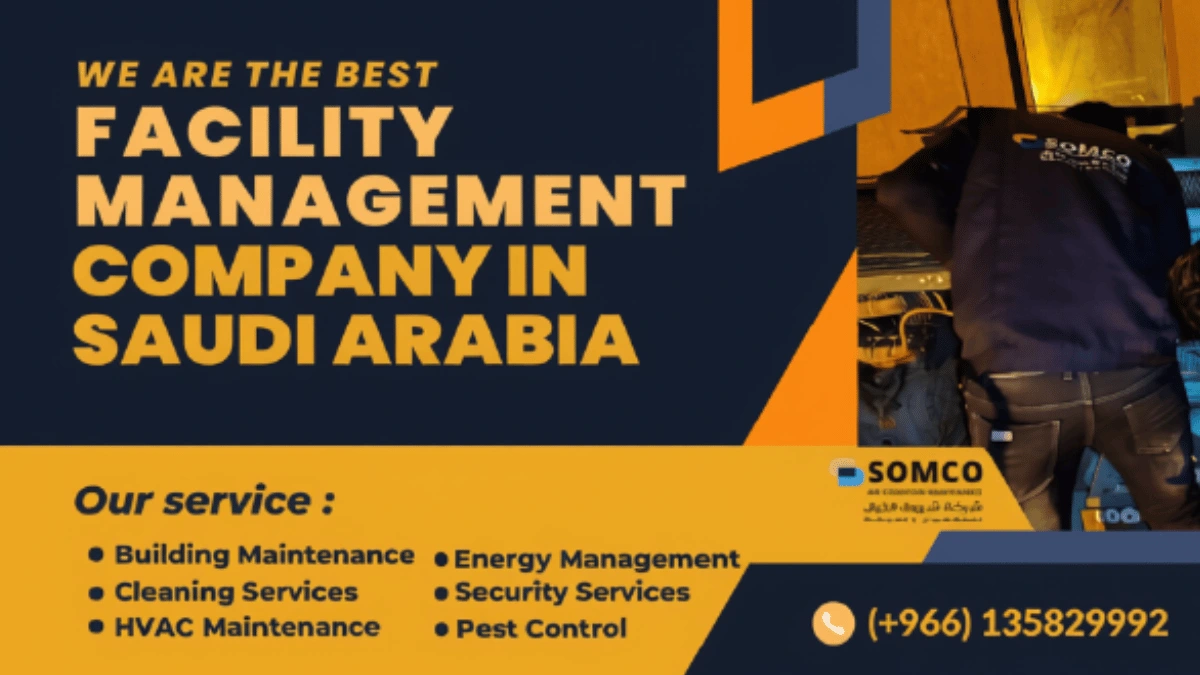
 Facility Management
Managing a facility successfully requires more than responding when something breaks. Modern properties depend on a combination of building upkeep, equipment maintenance, operational planning, inspections, cleaning, technical support, and ongoing monitoring.
For organizations operating in Saudi Arabia, these responsibilities can become increasingly complex as facilities grow, equipment becomes more sophisticated, and operating requirements change. A structured facility management strategy gives businesses a practical way to organize these responsibilities while keeping their properties functional and well maintained.
This is where a professional facility management company in Saudi Arabia can become an important part of a property’s long-term operating strategy.
Facility management is not simply about maintenance. It is about creating a coordinated approach to the building, its systems, its equipment, its maintenance requirements, and the people responsible for keeping the facility operational.
For businesses, the right approach can provide better visibility into maintenance requirements, clearer planning, more organized service coordination, and a more consistent operating environment.
What Does Facility Management Actually Mean?
Facility management is the organized management of a property’s operational and maintenance requirements.
The exact scope depends on the building and its usage. A commercial office may have different requirements from an industrial facility, while a property containing commercial kitchens may require additional specialized maintenance.
A facility management program may coordinate:
- Building maintenance
- HVAC maintenance
- AC maintenance
- HVAC operations and maintenance
- Chiller maintenance
- MEP maintenance
- Facility maintenance
- Building operation and maintenance
- Industrial maintenance
- Cleaning services
- Janitorial services
- Soft services
- Air duct cleaning
- Air balancing
- Kitchen hood cleaning
- VRF-related requirements
Businesses can review the complete facility management and maintenance services offered by SSOMCO to understand how different maintenance requirements can be coordinated.
The important point is that these activities should not necessarily be treated as disconnected tasks.
A facility manager needs to understand how different systems and maintenance activities affect the overall operation of the property.
Why Facility Management Is Important for Saudi Businesses
A facility is part of the infrastructure that supports everyday business activity.
When building systems are not maintained properly, operational problems can develop. A cooling issue can affect working conditions. A neglected maintenance requirement can become a larger repair. Poor coordination between service activities can create delays.
A structured facility management approach can help organizations organize these requirements before they become difficult to manage.
Key areas include:
- Planned maintenance
- Equipment monitoring
- Facility inspections
- Corrective maintenance
- Preventive maintenance
- Operational coordination
- Maintenance documentation
- Service scheduling
- Follow-up activities
The objective is not to promise that a facility will never experience a fault. Instead, it is to create a process through which maintenance requirements can be identified, prioritized, and managed.
Facility Management Is Different from Basic Maintenance
One common misunderstanding is treating facility management and maintenance as exactly the same thing.
Maintenance is an important component of facility management, but facility management has a broader coordination role.
For example, an organization may need:
- HVAC maintenance
- Building maintenance
- Cleaning
- Janitorial support
- MEP maintenance
- Chiller maintenance
- Industrial maintenance
- Air duct cleaning
Facility management brings these requirements into a more organized operational framework.
This can make it easier for facility managers to understand what has been completed, what is pending, what needs attention, and which issues are recurring.
The Main Objective of Professional Facility Management
A professional facility management strategy should focus on the practical needs of the property.
Rather than creating a generic list of services, the provider should first understand:
- What type of facility is being managed
- How the property is used
- Which systems are installed
- How frequently equipment operates
- What maintenance history exists
- Which areas require regular attention
- What operational priorities the client has
This information can then be used to develop an appropriate maintenance and facility support structure.
That approach is more useful than applying exactly the same service schedule to every property.
Facility Assessment: Where Good Planning Begins
Before creating a maintenance program, it is useful to understand the current condition of the facility.
A facility assessment can consider the building, major equipment, maintenance history, operational requirements, and recurring issues.
The assessment may help identify:
Existing Equipment
The facility team can document major HVAC, chiller, MEP, and other relevant systems.
Current Condition
Equipment and building conditions can be reviewed to determine which areas require attention.
Maintenance History
Previous breakdowns and repairs can reveal recurring problems.
Operational Priorities
Some equipment may be more important to daily operations than other assets.
Maintenance Gaps
A review may identify areas where inspections or planned maintenance have not been sufficiently organized.
This information provides a useful starting point for facility management planning.
Preventive Maintenance and Facility Management
Preventive maintenance is one of the most useful components of a structured facility management program.
Instead of waiting for a major fault, maintenance activities are scheduled according to equipment requirements and operating conditions.
Preventive maintenance can include:
- Planned inspections
- Equipment checks
- Performance monitoring
- Cleaning requirements
- Condition assessment
- Scheduled servicing
- Follow-up inspections
The schedule should not be identical for every facility.
Equipment type, operating hours, age, usage, environmental conditions, and manufacturer recommendations can all influence maintenance planning.
For organizations that want scheduled long-term HVAC maintenance, SSOMCO also provides Annual Maintenance Contract services that can support planned maintenance requirements.
Corrective Maintenance: Managing Problems After Detection
Even well-maintained facilities can experience equipment faults.
Corrective maintenance focuses on resolving problems that have already been identified.
A practical corrective maintenance process can include:
- Reporting the issue
- Assessing the problem
- Inspecting the relevant system
- Identifying the likely cause
- Determining the appropriate corrective action
- Completing the required work
- Checking the system afterward
- Recording the result
This process can help prevent the same issue from being repeatedly treated as an isolated breakdown.
HVAC Maintenance as a Facility Management Priority
In many Saudi facilities, HVAC systems are an important part of daily operations.
Cooling equipment may operate for extended periods, which makes planned HVAC maintenance an important consideration.
A facility management strategy can coordinate HVAC requirements such as:
- Preventive inspections
- System checks
- Troubleshooting
- Corrective maintenance
- Performance monitoring
- AC maintenance
- HVAC operations and maintenance
For businesses requiring specialist support, SSOMCO provides HVAC maintenance services that can be incorporated into a broader facility maintenance strategy.
This allows HVAC requirements to remain part of the overall facility plan rather than being handled only when a cooling system develops a problem.
Chiller Maintenance for Facilities with Centralized Cooling
Chillers can represent a significant component of a property’s cooling infrastructure.
Their maintenance requirements should therefore be considered separately within the wider facility maintenance plan.
Depending on the equipment and project requirements, chiller maintenance can involve:
- Equipment inspection
- Operational checks
- Condition monitoring
- Preventive maintenance
- Troubleshooting
- Corrective maintenance
- Performance-related assessment
A facility management company should understand when chiller maintenance needs to be incorporated into the property’s wider maintenance schedule.
SSOMCO includes chiller maintenance among its published maintenance capabilities.
Building Maintenance and Property Condition
A facility cannot be managed effectively by focusing only on mechanical equipment.
The building itself also requires ongoing attention.
Building maintenance can help organizations monitor the physical condition of their property and identify areas requiring routine or corrective work.
A building maintenance program may involve:
- Routine inspections
- Preventive maintenance
- Corrective maintenance
- Facility condition checks
- General building upkeep
- Maintenance reporting
The exact scope should depend on the property.
For example, a large commercial facility may have significantly different maintenance requirements from a smaller office building.
Businesses can also explore SSOMCO’s dedicated building maintenance services for more information.
MEP Maintenance Within Facility Operations
Mechanical, electrical, and plumbing-related building systems can form part of the wider technical environment of a property.
Where MEP maintenance is included in the facility’s scope, coordination becomes important.
Rather than managing each requirement independently, facility teams can organize MEP activities around the overall maintenance schedule.
This can help with:
- Planned inspections
- Maintenance scheduling
- Fault reporting
- Corrective work
- Documentation
- Follow-up
SSOMCO includes MEP installation and MEP maintenance within its published service portfolio.
Industrial Maintenance and Facility Management
Industrial properties can have highly specific operational requirements.
Equipment may operate for long periods, facilities may have specialized environments, and maintenance interruptions can affect production or other activities.
Industrial maintenance can therefore become an important component of the facility management strategy.
A coordinated approach can help organizations track:
- Equipment requirements
- Maintenance schedules
- Reported faults
- Corrective actions
- Operational priorities
- Recurring issues
Facility management for industrial properties should be based on the actual operating environment rather than a generic commercial-building model.
Cleaning Services as Part of Facility Management
A facility’s operational condition also depends on the cleanliness of its working environment.
Cleaning services can be incorporated into a broader facility management plan according to the building’s usage and service requirements.
Different areas may require different cleaning schedules depending on:
- Occupancy
- Foot traffic
- Operating hours
- Facility type
- Usage patterns
For example, a high-traffic commercial facility may need a different cleaning arrangement from an industrial property.
Janitorial Services and Daily Facility Support
Janitorial services focus on recurring day-to-day requirements that help keep facilities orderly and usable.
When incorporated into facility management, these activities can be scheduled alongside other maintenance tasks.
This can provide facility managers with a more coordinated view of daily support requirements.
SSOMCO’s published service information includes cleaning and support services as part of its facility management approach.
Soft Services Within a Facility Management Plan
Soft services can support the daily usability and presentation of a facility.
Their role depends on the property’s requirements and the agreed service scope.
Rather than adding unrelated services to every facility management package, businesses should identify which soft-service requirements actually apply to their property.
This keeps the facility management plan practical and easier to monitor.
Air Duct Cleaning and HVAC-Related Facility Care
Air duct systems can require professional cleaning depending on their condition, building environment, operating history, and maintenance requirements.
Air duct cleaning can therefore be included when it is appropriate for the facility.
A facility manager may consider:
- Ductwork condition
- Maintenance history
- Dust accumulation
- Airflow concerns
- Building usage
- HVAC operating conditions
SSOMCO provides professional air duct cleaning as part of its maintenance and cleaning capabilities.
The cleaning schedule should be based on actual system requirements rather than automatically applying the same frequency to every building.
Air Balancing and Building Performance
Air balancing focuses on the distribution of airflow throughout an HVAC system.
If different areas of a facility experience inconsistent airflow, the air distribution system may require assessment.
Air balancing can be considered as part of the wider HVAC and facility performance strategy.
It should be evaluated according to the building layout, HVAC configuration, operating conditions, and system requirements.
SSOMCO’s current services information lists air balancing among its facility-related technical services.
Kitchen Hood Cleaning for Commercial Kitchens
Facilities that contain commercial kitchens have additional maintenance considerations.
Kitchen hood systems can accumulate grease and residues during cooking operations. Appropriate cleaning can therefore form part of the maintenance plan for restaurants, commercial kitchens, hospitality facilities, and other applicable properties.
SSOMCO provides kitchen hood cleaning services for applicable facilities.
The appropriate cleaning approach and frequency should be determined according to the kitchen operation, system condition, and applicable requirements.
VRF Systems and Facility Management
VRF systems can be used in buildings where multiple areas require individually controlled cooling.
For new installations, proper planning and installation are important to the overall system setup.
Businesses planning a new project can review SSOMCO’s VRF installation services for more information.
For facility managers, VRF systems should be included in the property’s equipment inventory and maintenance planning process.
The relevant maintenance requirements depend on the installed system and operating conditions.
Building Operation and Maintenance
Facility management also involves understanding how the building operates on a daily basis.
Building operation and maintenance can include monitoring operational requirements, coordinating maintenance activities, reviewing reported issues, and maintaining records.
A structured approach helps facility teams answer practical questions such as:
- What equipment requires attention?
- Which inspections are due?
- What faults were reported?
- What corrective work has been completed?
- Which problems are recurring?
- What maintenance is scheduled next?
These questions become particularly important when a facility contains many systems and multiple maintenance requirements.
The Importance of Maintenance Records
Maintenance records provide historical information about the facility.
A useful record can include:
- Equipment identification
- Inspection dates
- Reported faults
- Maintenance activities
- Corrective actions
- Recommendations
- Follow-up requirements
Over time, these records can help facility managers recognize recurring problems.
They can also make communication between the property owner, facility manager, and maintenance provider more organized.
How Facility Managers Can Prioritize Maintenance
Not every maintenance issue has the same level of urgency.
A practical prioritization system can consider:
Operational Impact
Will the issue affect normal facility operations?
Equipment Importance
Is the affected equipment critical to the property?
Safety Considerations
Does the problem create a condition that requires immediate attention?
Recurrence
Has the same problem happened repeatedly?
Potential Escalation
Could ignoring the issue result in a larger maintenance requirement?
This type of prioritization can help facility teams allocate resources more effectively.
Facility Management for Commercial Buildings
Commercial buildings require a balance between maintenance and uninterrupted daily activity.
Facility management can coordinate:
- HVAC maintenance
- Building maintenance
- Cleaning
- Janitorial services
- MEP maintenance
- Preventive maintenance
- Corrective maintenance
The maintenance schedule should consider occupancy and operating hours so that necessary work can be organized with minimal disruption.
Businesses operating in Riyadh can also explore SSOMCO’s dedicated facility management services in Riyadh for location-specific information.
Facility Management for Industrial Properties
Industrial properties often require closer coordination between building systems and operational requirements.
Industrial maintenance can be incorporated into the broader facility strategy where applicable.
The provider should understand that industrial facilities may require:
- More structured equipment monitoring
- Detailed maintenance records
- Planned interventions
- Faster response to important faults
- Coordination with operating schedules
The actual approach should be based on the facility rather than simply copying a commercial building maintenance plan.
Facility Management for Offices
Office facilities require reliable building systems and an environment suitable for everyday business activity.
HVAC maintenance, cleaning, janitorial services, building maintenance, and other approved requirements can be coordinated through an appropriate facility management plan.
The schedule should reflect occupancy, working hours, building configuration, and equipment usage.
Facility Management for Large and Multi-System Properties
Large properties may contain multiple HVAC systems, chillers, air distribution systems, building assets, and service areas.
For such facilities, coordination becomes especially important.
A facility management provider can help organize:
- Asset information
- Preventive maintenance schedules
- Corrective work
- Service records
- Inspection requirements
- Operational priorities
This creates a more centralized approach to facility maintenance.
How to Select a Facility Management Company in Saudi Arabia
Choosing a provider should begin with the property’s actual requirements.
- Define the Facility
Identify the building type, size, usage, and operational schedule.
- List the Systems
Create an inventory of HVAC, chillers, MEP systems, and other relevant assets.
- Identify Recurring Requirements
Determine which systems require regular inspections or servicing.
- Separate Preventive and Corrective Needs
Understand which activities can be planned and which are likely to require response-based maintenance.
- Review the Provider’s Relevant Services
Choose a provider whose capabilities match the facility rather than selecting the company with the longest generic service list.
- Ask About Reporting
Find out how maintenance activities, findings, and corrective work are documented.
- Consider Long-Term Support
Facility management is generally an ongoing responsibility, so long-term service capability matters.
Building a Facility Management Checklist
A facility management checklist can help businesses maintain consistency.
Property Information
- Facility type
- Building size
- Occupancy
- Operating hours
Equipment Information
- HVAC systems
- Chillers
- VRF systems
- Relevant MEP equipment
- Air distribution systems
Maintenance Information
- Preventive maintenance schedule
- Corrective maintenance records
- Inspection history
- Recurring faults
- Pending work
Service Information
- Cleaning requirements
- Janitorial requirements
- Air duct cleaning requirements
- Air balancing requirements
- Kitchen hood cleaning requirements where applicable
This checklist can be updated as the facility changes.
Why a Customized Facility Management Strategy Works Better
Every facility has its own operating conditions.
A warehouse, office, industrial property, and commercial kitchen should not automatically receive identical maintenance plans.
A customized strategy allows the provider to consider:
- Equipment configuration
- Building usage
- Operating hours
- Maintenance history
- Facility priorities
- Service frequency
- Existing maintenance procedures
This can make the facility management program more practical and easier to manage.
SSOMCO Facility Management Services in Saudi Arabia
SSOMCO provides facility management support based on the requirements of individual facilities.
Its approved service portfolio includes:
- Facility management
- Facility maintenance
- Building maintenance
- Building operation and maintenance
- HVAC maintenance
- AC maintenance
- HVAC operations and maintenance
- Chiller maintenance
- VRF specialist support
- VRF installation
- Industrial maintenance
- MEP installation
- MEP maintenance
- Soft services
- Cleaning services
- Janitorial services
- Kitchen hood cleaning
- Air duct cleaning
- Air balancing
SSOMCO’s published service information describes its facility management approach around facility inspections, preventive maintenance planning, asset and equipment monitoring, HVAC operation and maintenance, building maintenance coordination, cleaning/support services, operational reporting, maintenance scheduling, and corrective maintenance coordination.
Businesses can review the complete SSOMCO service portfolio before selecting the services relevant to their property.
A Practical Facility Management Workflow
A simple workflow can make ongoing facility management easier to organize.
Stage 1: Assessment
Understand the building, systems, equipment, and operating requirements.
Stage 2: Planning
Develop maintenance schedules and define service priorities.
Stage 3: Preventive Maintenance
Carry out planned inspections and maintenance activities.
Stage 4: Issue Management
Record and investigate faults when they occur.
Stage 5: Corrective Work
Complete the required corrective maintenance.
Stage 6: Reporting
Document findings, completed work, and outstanding requirements.
Stage 7: Review
Use maintenance records to improve future planning.
This creates a continuous cycle instead of treating facility management as a series of unrelated service calls.
Common Facility Management Mistakes
Using a Generic Service Package
Not every property requires the same combination of services.
Focusing Only on Breakdowns
Reactive maintenance alone does not provide a complete long-term strategy.
Ignoring Maintenance Records
Without historical information, recurring problems can be difficult to identify.
Failing to Prioritize
Minor issues and critical operational problems should not necessarily receive the same response.
Separating Every Service
Poor coordination between HVAC, building maintenance, cleaning, and other approved requirements can make facility operations more difficult to manage.
Not Reviewing the Plan
Facility requirements change as equipment ages, buildings change, and usage patterns evolve.
How Professional Facility Management Supports Long-Term Operations
The value of facility management is not limited to individual maintenance tasks.
A structured approach can help organizations develop better visibility into their properties.
Over time, businesses can build a clearer understanding of:
- Equipment condition
- Maintenance history
- Recurring faults
- Planned activities
- Facility priorities
- Operational requirements
This information can support more informed maintenance decisions.
For businesses operating multiple facilities, a consistent management framework can also make reporting and maintenance planning easier while still allowing each site to have its own requirements.
Frequently Asked Questions
A facility management company coordinates building operations, maintenance, inspections, technical services, and other approved facility requirements according to the needs of a property.
It provides a structured way to organize maintenance and operational requirements while giving businesses better visibility into their facilities.
Yes. HVAC requirements can be coordinated within a wider facility management program when applicable to the property.
Yes. Building maintenance is included in SSOMCO's approved service portfolio.
There is no single schedule suitable for every property. Frequency should depend on equipment type, usage, operating conditions, maintenance history, and applicable recommendations.
Businesses should evaluate relevant technical capabilities, maintenance planning, service coordination, reporting, communication, and the provider's ability to support the facility over time.
No. Preventive maintenance cannot eliminate every possible failure, but it provides a structured method for monitoring equipment and addressing known maintenance requirements.
They provide a history of inspections, faults, repairs, and completed maintenance, which can help facility managers identify recurring problems and plan future work.
No. A maintenance strategy should reflect the property's building type, equipment, usage, operating schedule, and specific requirements.
Conclusion
A well-managed facility depends on more than individual repairs. It requires a coordinated approach to building maintenance, equipment care, inspections, operational planning, cleaning, technical support, and ongoing maintenance review.
For businesses searching for a facility management company in Saudi Arabia, the most important consideration is whether the provider can build a practical strategy around the actual requirements of the property.
A commercial building may need strong HVAC and cleaning coordination. An industrial facility may require closer attention to industrial maintenance and equipment operation. A property with centralized cooling may need dedicated chiller maintenance, while a commercial kitchen may require kitchen hood cleaning.
The right facility management strategy therefore begins with assessment, followed by planning, preventive maintenance, corrective work, reporting, and regular review.
SSOMCO provides facility management and approved maintenance services designed around individual facility requirements. Its published service information emphasizes facility inspections, preventive maintenance planning, equipment monitoring, HVAC operations and maintenance, building maintenance coordination, cleaning support, reporting, and maintenance scheduling.
For organizations seeking long-term facility support in Saudi Arabia, a structured and customized maintenance approach can provide a clearer path toward reliable building operations and better maintenance management.
For project discussions and service requirements, businesses can contact SSOMCO directly.
