

 Blog
Facility management services play an important role in keeping commercial, industrial, and residential buildings safe, efficient, clean, and comfortable. From maintaining air conditioning systems to managing electrical, plumbing, cleaning, and building operations, professional facility management helps businesses maintain their properties while focusing on their core activities.
In Saudi Arabia, businesses operate in demanding environments where high temperatures, continuous building usage, and operational requirements make proper facility maintenance essential. Choosing the right facility management approach can help reduce equipment downtime, improve workplace conditions, and support the long-term performance of a property.
What Are Facility Management Services?
Facility management services involve coordinating and maintaining the systems, spaces, and supporting operations within a building or property. These services help ensure that facilities function properly, remain clean, and provide a safe environment for employees, visitors, tenants, and customers.
Depending on the property and business requirements, facility management may include technical maintenance, cleaning, equipment inspections, building operations, and other support services.
The main objective is to maintain the condition and functionality of a facility while supporting efficient day-to-day operations.
Types of Facility Management Services
Facility management generally includes two major categories: hard facility management and soft facility management.
1. Hard Facility Management Services
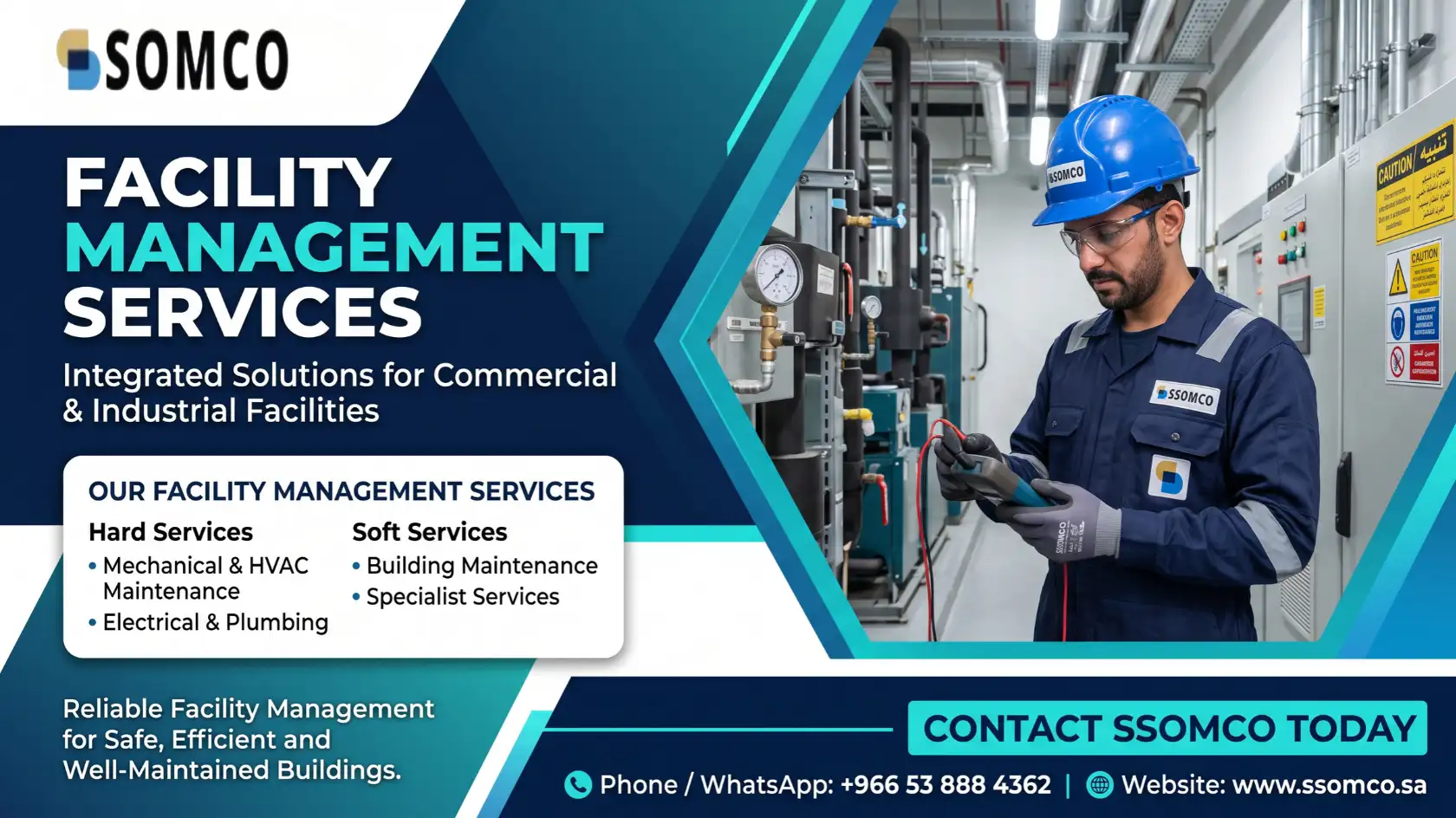
Hard facility management focuses on the physical infrastructure and technical systems of a building. These services help maintain essential equipment and building operations.
Common hard facility management services include:
- HVAC Maintenance: Inspection, servicing, and maintenance of heating, ventilation, and air conditioning systems.
- Electrical Maintenance: Checking electrical installations, distribution systems, lighting, and related equipment.
- Plumbing Maintenance: Maintaining water supply, drainage, and plumbing systems.
- Mechanical Maintenance: Servicing mechanical equipment and building systems.
- Chiller Maintenance: Supporting the operation and performance of commercial cooling systems.
- MEP Maintenance: Maintaining mechanical, electrical, and plumbing installations.
- Building Maintenance: Addressing general building maintenance requirements and supporting the condition of the property.
Regular technical maintenance helps identify potential issues before they develop into more disruptive problems.
2. Soft Facility Management Services
Soft facility management focuses on the cleanliness, appearance, comfort, and day-to-day usability of a building.
Common soft facility management services include:
- Commercial cleaning
- Office cleaning
- Housekeeping services
- Janitorial services
- Washroom cleaning and maintenance
- Common-area cleaning
- Floor and surface cleaning
- Waste collection and management
- Kitchen and food-area cleaning
These services contribute to a clean and organized workplace and help create a positive experience for employees, visitors, and customers.
Why Are Facility Management Services Important?
Buildings require consistent attention to remain functional and suitable for daily operations. Without proper maintenance and facility support, small problems can affect equipment performance, workplace conditions, and business activities.
Professional facility management can provide several benefits.
Improved Building Performance
Routine inspections and maintenance help keep essential building systems operating properly. This supports reliable building operations and helps reduce avoidable equipment problems.
Better Workplace Environment
Clean and well-maintained workplaces create a more comfortable environment for employees and visitors. Cleaning, housekeeping, and building maintenance all contribute to better daily working conditions.
Reduced Maintenance Disruptions
Identifying maintenance issues at an early stage can help businesses plan repairs and reduce unexpected interruptions.
Better Asset Protection
HVAC systems, electrical equipment, plumbing installations, and other building assets require proper care. Regular maintenance supports their condition and can help extend their useful service life.
More Organized Operations
Coordinating maintenance and cleaning requirements through a structured facility management plan makes it easier to monitor work, prioritize tasks, and manage service requirements.
Facility Management Services for Different Industries
Different industries have different facility requirements. A suitable facility management plan should reflect the building type, operational activities, equipment, and occupancy levels.
Commercial Buildings
Offices, business centres, and commercial properties require reliable HVAC systems, clean workspaces, functioning electrical installations, and properly maintained common areas.
Industrial Facilities
Factories, warehouses, and industrial buildings may require specialized mechanical, electrical, HVAC, and general building maintenance. Maintenance planning is particularly important where equipment problems can affect production activities.
Hotels and Hospitality Properties
Hotels need consistent cleaning, housekeeping, HVAC maintenance, plumbing support, and general building care to maintain comfortable spaces for guests and staff.
Healthcare Facilities
Healthcare properties require carefully planned cleaning and maintenance procedures to support hygienic environments and the proper functioning of building systems. Service arrangements should follow the facility’s applicable requirements and procedures.
Educational Institutions
Schools, colleges, and training centres need clean classrooms, maintained washrooms, functional cooling systems, and safe, usable common areas.
Residential and Mixed-Use Buildings
Residential complexes and mixed-use developments require ongoing attention to shared spaces, HVAC systems, plumbing, electrical installations, and general property maintenance.
Facility Management vs. Building Maintenance
Facility management and building maintenance are related, but they are not exactly the same.
Facility Management | Building Maintenance |
Covers a broader range of building operations and support services | Focuses mainly on maintaining the physical property |
May include hard and soft services | Usually includes technical and general repair work |
Coordinates different facility requirements | Addresses specific maintenance tasks |
Supports overall building functionality and usability | Helps keep building systems and structures in good condition |
Building maintenance can be one part of a wider facility management arrangement.
How to Choose the Right Facility Management Company in Saudi Arabia
Selecting a facility management provider is an important business decision. The right provider should understand the property’s requirements and offer services that match its operational needs.
Consider the following factors before making a decision.
1. Understand Your Facility Requirements
Identify the services your building needs. These may include HVAC maintenance, MEP services, cleaning, housekeeping, plumbing, electrical maintenance, or general building support.
2. Review Technical Capabilities
For facilities with complex systems, check whether the provider has the relevant technical capabilities to support the required equipment and maintenance activities.
3. Check the Service Scope
Ask for a clear description of the services included in the proposed arrangement. Responsibilities, exclusions, reporting requirements, and service schedules should be clearly defined.
4. Evaluate Maintenance Planning
A good maintenance plan should explain inspection schedules, preventive maintenance activities, reporting procedures, and how maintenance issues will be addressed.
5. Consider Industry Experience
The requirements of an industrial facility are different from those of an office or hotel. Choose a provider that understands the type of property and its operating environment.
6. Compare Proposals Carefully
Compare quotations based on service scope, staffing arrangements, technical requirements, reporting, and contract terms rather than selecting a provider based only on price.
Preventive Maintenance in Facility Management
Preventive maintenance is an important part of managing building systems and equipment. It involves planned inspections and servicing to identify potential issues and maintain equipment performance.
A preventive maintenance plan may include:
- Regular HVAC inspections and servicing
- Chiller system checks
- Electrical system inspections
- Plumbing and drainage checks
- Inspection of mechanical equipment
- Cleaning of relevant ventilation components
- General building condition assessments
- Maintenance reports and service records
The frequency of maintenance should depend on equipment specifications, building usage, operating conditions, and manufacturer recommendations.
Facility Management Services by SSOMCO
SSOMCO supports business and facility requirements through maintenance and operational services for commercial and industrial environments.
Its service areas include HVAC and air conditioning maintenance, chiller-related services, VRF system installation and maintenance, MEP services, building maintenance, commercial cleaning, janitorial support, air duct cleaning, and kitchen hood cleaning.
Businesses can discuss their facility requirements with SSOMCO to identify suitable maintenance and support services for their properties.
A clear understanding of the building, its equipment, and its operational needs helps establish an appropriate service scope.
Conclusion
Facility management services help businesses maintain functional, clean, and properly supported buildings. From HVAC and MEP maintenance to commercial cleaning and general building care, these services contribute to better facility operations and a more organized working environment.
For businesses in Saudi Arabia, selecting a suitable facility management provider starts with understanding the property’s requirements, reviewing technical capabilities, and defining a clear service scope.
SSOMCO provides maintenance and facility support services for commercial and industrial requirements. Contact the team to discuss your building’s maintenance needs and request a suitable service proposal.
Frequently Asked Questions
Facility management services may include HVAC maintenance, electrical and plumbing support, MEP maintenance, building maintenance, commercial cleaning, housekeeping, and other building-related support services.
Hard facility management focuses on technical building systems such as HVAC, electrical, plumbing, and mechanical equipment. Soft facility management covers services such as cleaning, housekeeping, janitorial support, and waste management.
Businesses use facility management services to maintain building systems, support clean and comfortable workplaces, organize maintenance activities, and reduce operational disruptions.
Maintenance frequency depends on the type of equipment, building usage, manufacturer recommendations, and operating conditions. A planned maintenance schedule helps organize inspections and servicing.
Review the company's service scope, technical capabilities, relevant experience, maintenance planning, reporting procedures, and commercial proposal. Make sure the services match your property's actual requirements.
Yes. HVAC maintenance is commonly included in hard facility management services. It may cover inspections, servicing, troubleshooting, and maintenance of air conditioning and ventilation systems.
Yes. Service arrangements can be developed according to the building's size, equipment, occupancy, operating requirements, and maintenance priorities.
