

 Cleaning
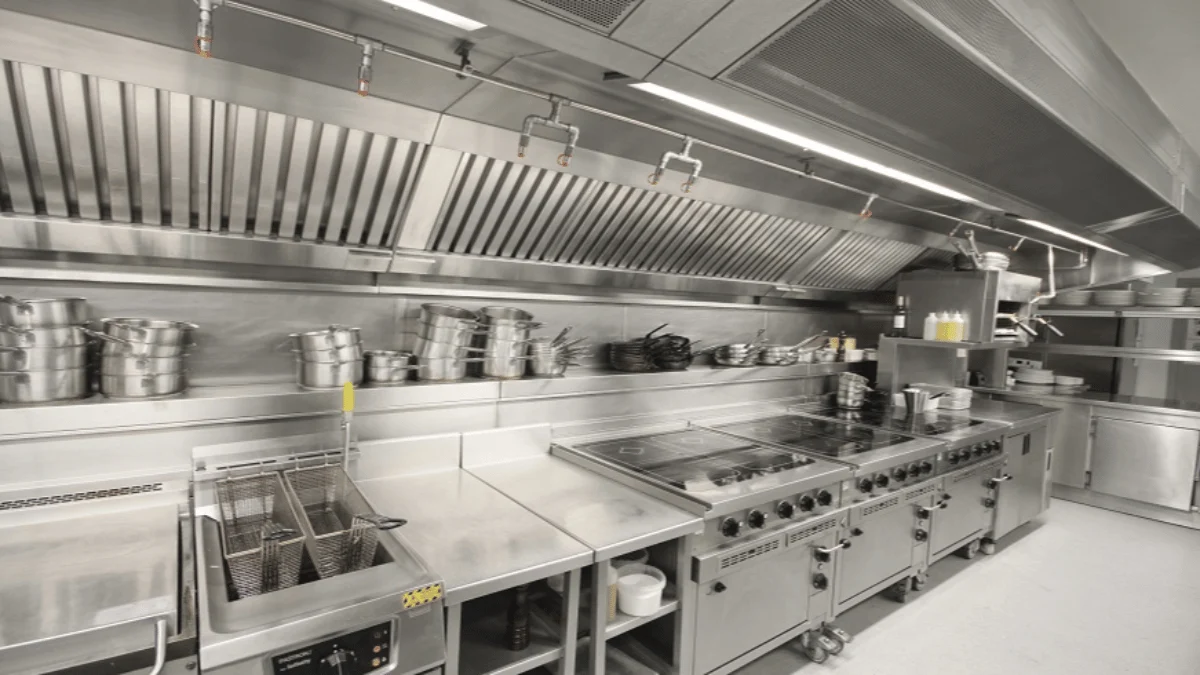
A kitchen hood is one of the hardest-working systems in a commercial kitchen. Every day, it helps capture smoke, heat, grease, vapours, and airborne cooking particles before they spread throughout the kitchen and exhaust system. Because of this constant exposure, kitchen hood cleaning cannot be treated as an occasional housekeeping task.
One of the most common questions restaurant owners, facility managers, and kitchen operators ask is: How often should you clean your kitchen hood?
The answer depends on how heavily the kitchen is used, the type of cooking performed, the amount of grease produced, and how quickly residue accumulates inside the hood and exhaust system.
For example, a busy restaurant that operates throughout the day and frequently uses fryers, grills, or other high-heat cooking equipment may require cleaning much more frequently than a small kitchen with limited cooking activity.
The current SSOMCO guidance recommends cleaning high-volume kitchen hoods every 1 to 3 months, moderate-volume kitchens every 3 to 6 months, and low-volume kitchens approximately every 6 to 12 months. Seasonal kitchens should be cleaned before and after their operating period. A visual inspection every month is also recommended so that visible grease buildup, unusual odors, or other warning signs can be identified early.
However, a fixed calendar should not be the only factor used to determine your kitchen hood cleaning frequency.
Why Kitchen Hood Cleaning Frequency Matters
Kitchen exhaust systems collect residues generated during cooking. Over time, grease and other deposits can accumulate on accessible and less-visible parts of the system.
If cleaning is delayed for too long, buildup can become increasingly difficult to remove. It may also affect the condition and performance of the exhaust system.
Regular cleaning helps kitchen operators maintain a more organized maintenance routine rather than waiting until heavy buildup becomes obvious.
A planned cleaning schedule can help you:
- Control grease accumulation
- Maintain cleaner hood surfaces
- Support proper kitchen ventilation
- Reduce the chance of excessive residue inside the exhaust system
- Identify maintenance problems earlier
- Keep cleaning responsibilities organized
- Reduce the likelihood of emergency cleaning requirements
- Maintain a more consistent kitchen maintenance program
The important point is that kitchen hood cleaning frequency should match actual kitchen activity.
A restaurant cannot necessarily use the same schedule as a school kitchen, hotel kitchen, cafeteria, or seasonal food outlet.
How Often Should You Clean a Kitchen Hood?
- High-Volume Restaurants: Every 1 to 3 Months
High-volume restaurants generally produce grease and cooking residue at a faster rate.
This is particularly relevant when the kitchen:
- Operates for long hours
- Serves a large number of customers
- Uses frying equipment frequently
- Performs high-heat grilling
- Produces significant cooking smoke
- Runs continuously during busy periods
- Prepares large quantities of food every day
For these environments, SSOMCO’s current guidance recommends kitchen hood cleaning approximately every 1 to 3 months.
The exact interval within that range should depend on how quickly grease accumulates.
For example, a heavily used restaurant may need a shorter interval, while another high-volume kitchen with different cooking practices may require a somewhat longer interval.
The important thing is to monitor actual conditions rather than choosing a date once and ignoring the system until that date arrives.
- Moderate-Volume Kitchens: Every 3 to 6 Months
Moderate-use kitchens may not operate at the same intensity as large restaurants, but they can still generate substantial amounts of grease and airborne cooking residue.
Examples may include:
- Casual dining restaurants
- Medium-sized food-service operations
- Business kitchens
- Institutional kitchens
- Kitchens with mixed cooking methods
For these environments, cleaning every 3 to 6 months may be appropriate as a starting point, while regular inspections help determine whether the interval needs to be shortened.
If grease becomes visible sooner than expected, the kitchen should not simply wait for the next scheduled cleaning.
- Low-Volume Kitchens: Every 6 to 12 Months
Some kitchens operate only for limited periods or produce comparatively low levels of grease.
Examples can include:
- Small kitchens
- Low-use food preparation areas
- Some school kitchens
- Occasional-use facilities
- Kitchens where high-grease cooking is limited
For these environments, SSOMCO’s existing guidance indicates that cleaning every 6 to 12 months may be sufficient, provided grease accumulation is monitored and the schedule is adjusted when necessary.
Even when a kitchen is classified as low-volume, operators should not assume that the hood can be ignored for an entire year.
A monthly visual check remains useful.
- Seasonal Kitchens Need a Different Schedule
Seasonal kitchens require special planning because they may remain inactive for extended periods.
Examples could include food outlets that operate primarily during a particular season or businesses that temporarily close during part of the year.
For seasonal kitchens, SSOMCO recommends cleaning the kitchen hood before and after the operating period.
Cleaning before reopening can help ensure that residue from previous operations is not simply carried into the new season.
Cleaning after the operating period provides an opportunity to address grease and residue before the kitchen remains unused.
A seasonal maintenance calendar should therefore include:
- Pre-opening inspection
- Hood and exhaust cleaning
- Operational monitoring
- Mid-season inspection where necessary
- End-of-season cleaning
- Maintenance documentation
This approach is more practical than applying a standard restaurant schedule to a kitchen that operates only part of the year.
A Monthly Kitchen Hood Inspection Is Still Important
Cleaning frequency and inspection frequency are not the same thing.
A kitchen may be scheduled for professional cleaning every few months, but the system should still be visually checked regularly.
SSOMCO’s current article recommends a monthly visual inspection of the kitchen hood and exhaust system.
During an inspection, kitchen management can look for:
- Visible grease accumulation
- Heavy residue around filters
- Grease deposits on accessible surfaces
- Unusual odors
- Changes in ventilation performance
- Excessive smoke remaining around cooking areas
- Signs that cleaning is becoming overdue
A visual inspection does not replace professional cleaning. Instead, it helps determine whether the existing cleaning interval remains appropriate.
What Factors Determine Kitchen Hood Cleaning Frequency?
The calendar is only one part of the decision.
Several operational factors can change how frequently a hood should be cleaned.
- Type of Cooking
Different cooking methods produce different amounts of grease, smoke, and airborne residue.
A kitchen that regularly uses frying and grilling may accumulate residue more quickly than a kitchen focused primarily on lower-grease food preparation.
When establishing a cleaning schedule, consider the actual cooking methods used every day.
- Number of Operating Hours
A kitchen operating 12 to 16 hours a day has a different maintenance requirement from a kitchen operating only a few hours.
Long operating hours mean more exposure to:
- Heat
- Smoke
- Cooking vapors
- Grease
- Food particles
Therefore, operating hours should be considered when selecting a cleaning interval.
- Daily Cooking Volume
The amount of food prepared is another important consideration.
Two restaurants may use similar equipment, but the restaurant preparing significantly more food each day may experience faster buildup.
This is why cleaning frequency should be based on actual kitchen activity rather than simply the size of the building.
- Grease-Producing Equipment
The equipment beneath the hood also matters.
Frequent use of equipment that produces substantial grease or smoke can increase the amount of residue captured by the exhaust system.
Kitchen managers should therefore evaluate the equipment operating under the hood when reviewing the cleaning schedule.
- Visible Buildup
Visible buildup is one of the clearest reasons to review your cleaning frequency.
If grease is becoming noticeable shortly after a professional cleaning, the existing interval may not be adequate for the kitchen’s workload.
Do not wait until the next planned date if conditions indicate that cleaning is needed sooner.
Signs Your Kitchen Hood May Need Cleaning Earlier
A scheduled cleaning date is useful, but actual conditions should always be considered.
Watch for signs such as:
Grease on Hood Surfaces
If grease is accumulating quickly on accessible surfaces, it may indicate that the system requires attention.
Dirty Filters
Filters that repeatedly become heavily coated with grease require regular cleaning and monitoring.
Strong or Unusual Odors
Persistent odors around the exhaust system can be a reason to investigate the condition of the hood and exhaust components.
Excessive Smoke
If smoke appears to remain around the cooking area rather than being effectively captured, the system should be inspected.
Increasing Residue
If staff notice that the hood becomes visibly dirty much faster than it did previously, the cleaning schedule may need to be reviewed.
Changes in Airflow
Changes in perceived airflow may indicate that the system requires inspection. However, airflow concerns can have several possible causes, so they should not automatically be attributed only to dirty surfaces.
Kitchen Hood Cleaning Should Be Part of a Maintenance Calendar
Instead of treating hood cleaning as an isolated activity, restaurant operators can include it in their overall maintenance planning.
A simple annual calendar can contain:
- Monthly visual inspections
- Filter cleaning according to operating conditions
- Scheduled professional hood cleaning
- Exhaust system checks
- Documentation of completed work
- Follow-up inspections
- Review of the cleaning interval
This makes it easier for managers to identify patterns.
For example, if a kitchen repeatedly requires additional cleaning before its scheduled date, management has evidence that the current interval may be too long.
Daily, Weekly, Monthly and Professional Cleaning Tasks
Not every cleaning activity needs to happen at the same frequency.
A practical maintenance structure can separate routine housekeeping from deeper professional cleaning.
Daily Attention
Kitchen staff can keep visible hood surfaces cleaner by removing fresh grease and residue as part of normal kitchen housekeeping.
This helps prevent surface buildup from becoming excessive.
Weekly Attention
Depending on the kitchen’s equipment and operating procedures, removable filters and accessible components may require more detailed cleaning.
The exact method should follow the equipment manufacturer’s recommendations and the kitchen’s established safety procedures.
Monthly Inspection
Management should visually inspect the hood and exhaust system for signs of grease accumulation, unusual odors, or other changes.
SSOMCO’s existing guidance specifically recommends monthly visual inspection.
Professional Cleaning
Professional cleaning should be scheduled according to kitchen workload and actual accumulation.
High-volume kitchens may require service every 1–3 months, moderate-volume kitchens every 3–6 months, and low-volume kitchens every 6–12 months as a starting framework.
Can Kitchen Staff Clean the Hood?
Routine cleaning by kitchen staff can be useful for maintaining visible surfaces between professional services.
However, there is an important difference between cleaning accessible surfaces and performing a complete exhaust-system cleaning.
The visible hood is only one part of the overall system.
A commercial kitchen exhaust arrangement can include:
- Hood surfaces
- Filters
- Exhaust pathways
- Duct sections
- Exhaust fan components
- Other connected areas
The areas that staff can easily see are not necessarily the only areas where grease can accumulate.
SSOMCO’s related guidance explains that routine DIY cleaning can help with filters and visible hood surfaces, while professional cleaning addresses less-accessible components such as ductwork and exhaust fan areas.
For this reason, routine staff cleaning should be viewed as part of ongoing housekeeping—not automatically as a replacement for scheduled professional cleaning.
Why Waiting Until the Hood Looks Dirty Can Be a Mistake
One common maintenance mistake is using appearance as the only measurement.
A hood can look reasonably clean from the kitchen floor while residue may still exist in less-visible parts of the exhaust system.
This is why a planned maintenance approach is more reliable.
Instead of asking only:
“Does the hood look dirty?”
Kitchen managers should also ask:
- When was the last professional cleaning?
- How many hours does the kitchen operate?
- What cooking methods are used?
- How quickly do filters become dirty?
- Has grease accumulation increased?
- Are there unusual Odors?
- Has airflow changed?
- Are inspections being documented?
These questions provide a much better picture of whether the current cleaning interval is appropriate.
How to Build a Kitchen Hood Cleaning Schedule
Creating a schedule does not have to be complicated.
Start by recording the following information:
Step 1: Record Kitchen Usage
Write down approximate operating hours and the typical number of cooking shifts.
Step 2: Identify Cooking Intensity
Determine whether the kitchen performs low-, moderate-, or high-grease cooking activities.
Step 3: Establish an Initial Cleaning Interval
Use the workload categories as a starting point:
- High volume: 1–3 months
- Moderate volume: 3–6 months
- Low volume: 6–12 months
- Seasonal: before and after the operating period
These ranges come from SSOMCO’s existing kitchen hood cleaning guidance.
Step 4: Add Monthly Inspections
Do not wait for the professional cleaning date to check the system.
Step 5: Record Findings
Document visible grease, odors, filter condition, and any changes noticed by kitchen staff.
Step 6: Adjust When Necessary
If the system becomes dirty faster than expected, shorten the interval.
This creates a maintenance program based on actual operating conditions.
Kitchen Hood Cleaning Records Are Worth Keeping
A simple maintenance record can help facility managers understand how the system is performing over time.
A record can include:
Item | Information to Record |
Cleaning date | Date professional cleaning was completed |
Inspection date | Date of visual inspection |
Kitchen workload | Low, moderate, or high |
Cooking type | Main cooking methods used |
Filter condition | Clean, moderate buildup, heavy buildup |
Grease accumulation | Low, moderate, or heavy |
Odor observations | Any unusual odor |
Airflow observations | Any noticeable change |
Follow-up | Additional cleaning or inspection required |
This information can be particularly useful for restaurants, hotels, institutional kitchens, and facilities with multiple food preparation areas.
Common Kitchen Hood Cleaning Scheduling Mistakes
Mistake 1: Using the Same Schedule for Every Kitchen
A small occasional-use kitchen and a busy restaurant do not necessarily need the same cleaning frequency.
Mistake 2: Ignoring Cooking Intensity
Kitchen workload matters more than simply looking at the calendar.
Mistake 3: Skipping Monthly Inspections
A professional cleaning schedule should not eliminate routine visual checks.
Mistake 4: Cleaning Only What Is Visible
Visible hood surfaces are not necessarily the entire exhaust system.
Mistake 5: Waiting for Heavy Grease
Heavy buildup should not be the trigger for every cleaning decision.
Mistake 6: Failing to Record Maintenance
Without records, it becomes difficult to determine whether the current interval is working.
Mistake 7: Treating Routine Cleaning as Complete Exhaust Cleaning
Staff housekeeping can support cleanliness, but it should not automatically be considered equivalent to professional exhaust-system cleaning.
Kitchen Hood Cleaning and Fire Safety
Grease accumulation is an important reason why kitchen hood maintenance should be taken seriously.
A commercial cooking environment contains heat, cooking oils, equipment, and exhaust components. Allowing grease to accumulate unnecessarily can increase maintenance concerns.
Regular cleaning is therefore an important part of maintaining the kitchen exhaust system.
For operations that need guidance on kitchen exhaust requirements and maintenance considerations, SSOMCO also provides information related to NFPA 96 kitchen hood cleaning standards and kitchen hood maintenance.
These resources can be used alongside a planned cleaning schedule rather than relying solely on visual appearance.
When Should You Increase Your Cleaning Frequency?
Your cleaning interval may need to be reviewed when operating conditions change.
Consider increasing the frequency if:
- The restaurant has become busier
- Operating hours have increased
- More high-grease cooking has been introduced
- New cooking equipment has been added
- Filters become dirty faster
- Grease accumulation is increasing
- Monthly inspections identify recurring buildup
- Staff notice persistent odors
- Smoke capture appears different from normal
A cleaning schedule should evolve with the kitchen.
For example, a restaurant that starts with moderate cooking activity may eventually become a high-volume operation. Continuing to use the original schedule without reviewing conditions could leave the exhaust system under-maintained.
How Often Should a Restaurant Clean Its Kitchen Hood?
For a restaurant, the answer depends primarily on cooking volume and intensity.
A practical starting framework is:
High-volume restaurant: every 1–3 months
Moderate-volume restaurant: every 3–6 months
Low-volume kitchen: every 6–12 months
Seasonal operation: before and after the operating season
Visual inspection: monthly
These are planning ranges, not a universal replacement for condition-based assessment. SSOMCO’s current published guidance uses these same categories and emphasizes adjusting the schedule according to grease buildup and kitchen use.
A Practical Kitchen Hood Cleaning Checklist
Before deciding that your kitchen is following an adequate maintenance schedule, review these points:
- Kitchen workload has been classified
- Cooking methods have been reviewed
- Operating hours are known
- Grease-producing equipment has been identified
- Filters are checked regularly
- Visible hood surfaces are maintained
- Monthly visual inspections are completed
- Cleaning dates are documented
- Grease buildup is monitored
- Unusual Odors are investigated
- Changes in airflow are reported
- Professional cleaning is scheduled
- Cleaning frequency is reviewed when kitchen usage changes
- Seasonal kitchens have pre- and post-season cleaning scheduled
This checklist can help restaurant managers turn kitchen hood cleaning from an occasional task into a structured maintenance activity.
Professional Kitchen Hood Cleaning for Commercial Kitchens
When a commercial kitchen requires more than routine surface cleaning, professional kitchen hood cleaning can provide a more comprehensive approach.
Professional teams can work on areas that are difficult for ordinary kitchen staff to access and can use appropriate equipment and cleaning procedures for the exhaust system.
SSOMCO provides Kitchen Hood Cleaning as part of its approved service portfolio, supporting businesses that need planned cleaning and maintenance for commercial kitchen environments.
A professional cleaning schedule can also be coordinated with broader building and facility maintenance planning.
For businesses managing multiple maintenance requirements, integrating kitchen hood cleaning into a wider facility management or annual maintenance program can make scheduling easier and reduce the possibility of important tasks being overlooked.
Why SSOMCO for Kitchen Hood Cleaning?
Choosing the right cleaning schedule is only one part of effective kitchen hood maintenance. The quality and completeness of the cleaning work also matter.
SSOMCO supports commercial and facility environments with planned maintenance services, including kitchen hood cleaning.
The objective is to help businesses maintain a structured approach rather than waiting until grease accumulation becomes a significant concern.
For restaurant operators and facility managers, a practical approach is to:
- Understand the workload of the kitchen.
- Establish a suitable cleaning interval.
- Perform monthly visual inspections.
- Monitor grease accumulation.
- Keep maintenance records.
- Adjust the schedule when kitchen conditions change.
- Use professional cleaning when deeper exhaust-system cleaning is required.
This approach creates a more consistent kitchen maintenance routine.
Final Thoughts:
There is no single answer for every kitchen.
A high-volume restaurant may need cleaning every 1 to 3 months, while a moderate-volume kitchen may require cleaning every 3 to 6 months. Lower-volume kitchens may be able to operate on a 6-to-12-month schedule, while seasonal kitchens should be cleaned before and after their operating period. A monthly visual inspection should be used to identify changes between scheduled cleanings.
The most important principle is to match the maintenance schedule to actual kitchen conditions.
Cooking volume, operating hours, cooking methods, grease production, filter condition, and visible buildup should all be considered.
Routine staff cleaning can support day-to-day cleanliness, but it should not automatically replace professional cleaning of less-accessible exhaust-system components.
A well-planned kitchen hood cleaning schedule helps restaurant owners and facility managers stay ahead of buildup instead of reacting to problems after they become obvious.
For professional Kitchen Hood Cleaning support, SSOMCO can help businesses establish a practical maintenance approach based on their kitchen’s operating requirements.
Frequently Asked Questions
The frequency depends on kitchen usage. SSOMCO's current guidance recommends every 1–3 months for high-volume kitchens, 3–6 months for moderate-volume kitchens, and 6–12 months for low-volume kitchens.
Busy restaurants may require cleaning every 1–3 months, particularly when high-grease or high-heat cooking is performed frequently.
Not every kitchen necessarily requires professional cleaning every month. However, a monthly visual inspection is recommended so that grease buildup and other warning signs can be identified.
Kitchen staff can handle routine cleaning of accessible surfaces and removable components when appropriate. However, routine cleaning does not necessarily replace professional cleaning of ductwork and other less-accessible exhaust components.
Visible grease buildup, dirty filters, unusual odors, increasing residue, and changes noticed around the ventilation system can indicate that the cleaning schedule should be reviewed.
Yes. Cooking methods that generate more grease and smoke can cause faster accumulation and may require more frequent cleaning.
Yes. Filters should be monitored and cleaned according to operating conditions and the equipment's maintenance recommendations.
Start by assessing cooking volume, operating hours, cooking methods, grease production, and previous cleaning records. Then establish an initial interval and adjust it according to inspection findings.
Yes. Including kitchen hood cleaning in a broader maintenance calendar can make it easier to track inspections, cleaning dates, and follow-up requirements.
Contact SSOMCO
Maintaining a commercial kitchen requires more than keeping visible surfaces clean. A planned kitchen hood cleaning schedule helps businesses monitor grease accumulation, organize maintenance activities, and keep the exhaust system under regular attention.
SSOMCO provides professional Kitchen Hood Cleaning services for commercial and facility environments.
If your current cleaning schedule is no longer matching your kitchen’s workload, it may be time to review the frequency and create a more practical maintenance plan.
Contact SSOMCO to discuss your kitchen hood cleaning requirements and maintenance needs.
