

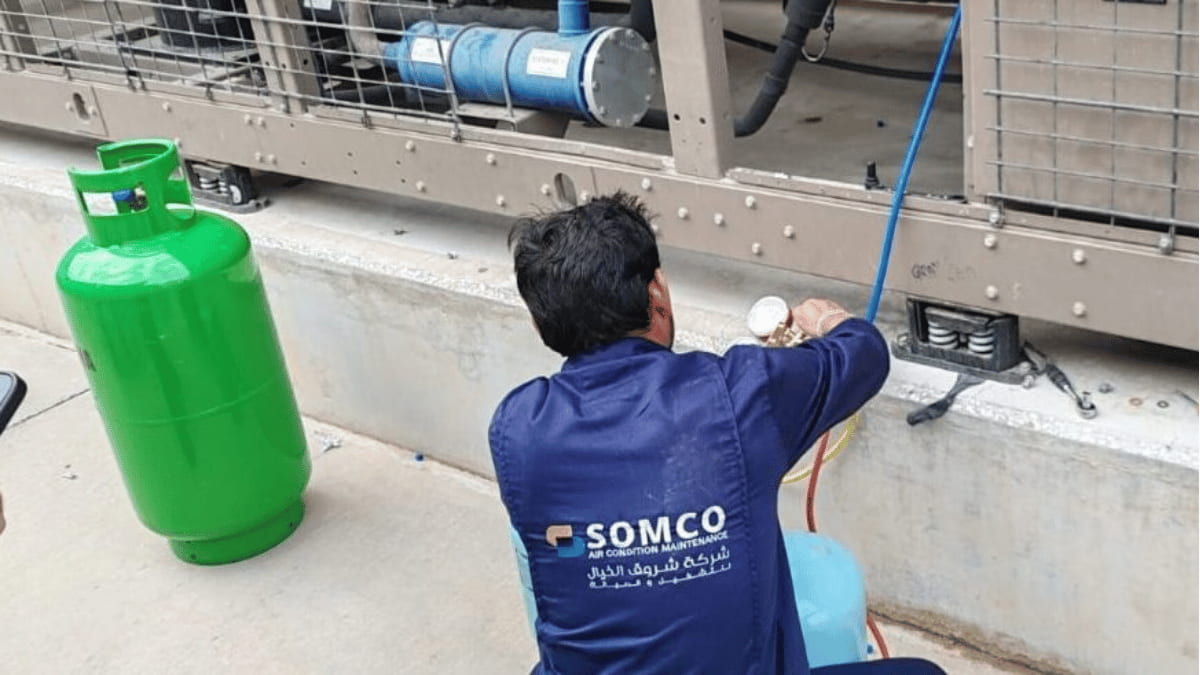
 Maintenance
Air-cooled chillers are widely used for commercial and industrial cooling applications where dependable temperature control is important. Like other mechanical HVAC equipment, however, a chiller can experience performance problems when components become dirty, mechanical parts wear, refrigerant conditions change, or airflow and water circulation are not properly maintained.
For facility managers, building operators, and maintenance teams, identifying early warning signs can make a major difference. A small change in cooling performance or energy consumption may indicate a maintenance issue that should be investigated before it develops into an expensive breakdown.
The most effective approach is not simply to repair a chiller after failure. Regular inspection, cleaning, performance monitoring, and preventive maintenance can help identify problems earlier and keep the equipment operating more reliably.
This guide examines five common air-cooled chiller problems highlighted in SSOMCO’s existing maintenance article:
- Dirty condenser coils
- Refrigerant leaks
- Compressor failure
- Water or airflow issues
- High energy consumption
It also explains how facility teams can recognize these problems, what can cause them, and how preventive maintenance can reduce avoidable equipment issues.
Why Air-Cooled Chiller Maintenance Matters
An air-cooled chiller must continuously remove heat from the cooling system and reject that heat through its air-side components.
When the system is properly maintained, important components can operate under more suitable conditions. When maintenance is neglected, dirt, mechanical wear, refrigerant problems, airflow restrictions, and other issues can gradually affect performance.
The impact of a chiller problem can extend beyond the equipment itself.
A cooling problem may affect:
- Building comfort
- Process cooling
- HVAC performance
- Operating schedules
- Energy consumption
- Maintenance budgets
- Equipment availability
For this reason, air cooled chiller maintenance services should focus on prevention as well as corrective repairs.
SSOMCO’s existing article emphasizes the importance of regular maintenance, cleaning schedules, refrigerant monitoring, and professional inspections for preventing common chiller problems.
Understanding How an Air-Cooled Chiller Can Develop Problems
Chiller problems rarely appear without any warning.
In many cases, changes develop gradually.
For example, a condenser coil may slowly collect dust and debris. The equipment may continue operating, but its ability to reject heat can decline. Similarly, a refrigerant leak may initially produce only a small performance change before becoming a more serious problem.
This is why maintenance teams should monitor both:
- The physical condition of the equipment
- The operating behaviour of the equipment
A good maintenance program combines inspection with performance observation.
Problem 1: Dirty Condenser Coils
Dirty condenser coils are one of the most common issues affecting air-cooled chillers.
The condenser coil is responsible for rejecting heat from the refrigerant to the surrounding air. When dust, dirt, and debris accumulate on the coil surface, heat transfer can become less effective.
The chiller may then need to work harder to achieve the required cooling conditions.
SSOMCO’s current article identifies dirty condenser coils as the first major air-cooled chiller problem and recommends regular coil cleaning together with keeping the surrounding area free of debris.
Why Coil Contamination Happens
Several conditions can contribute to dirty condenser coils:
- Dusty surroundings
- Outdoor exposure
- Debris near the chiller
- Poor housekeeping around equipment
- Long operating periods
- Delayed maintenance
- Restricted access for cleaning
Outdoor equipment naturally requires attention because the condenser is exposed to the surrounding environment.
Signs of Dirty Condenser Coils
A maintenance team may notice:
- Increasing operating temperatures
- Reduced cooling performance
- Higher energy consumption
- Longer operating cycles
- Abnormal system readings
- Visible dirt on coil surfaces
These signs should not automatically be attributed to dirty coils, but they can justify inspection.
How to Prevent Dirty Coils
Preventive measures include:
- Inspecting condenser coils regularly
- Cleaning accumulated dirt
- Keeping the surrounding area free from debris
- Monitoring system performance
- Including coil cleaning in preventive maintenance planning
SSOMCO’s existing article recommends establishing a preventive maintenance schedule for coil cleaning at least twice a year.
The actual frequency should still be adjusted according to the equipment environment and operating conditions.
Problem 2: Refrigerant Leaks
Refrigerant problems can have a significant impact on chiller performance.
A refrigerant leak can cause pressure conditions to change and may reduce the system’s ability to provide the required cooling.
SSOMCO identifies refrigerant leaks as the second common problem and notes that low refrigerant conditions can contribute to poor cooling performance and increased energy consumption. The article also warns that refrigerant problems can contribute to compressor damage if left unresolved.
What Can Cause Refrigerant Problems?
Potential causes can include:
- Leaks in connections
- Component deterioration
- Damaged piping
- Seal problems
- Long-term mechanical wear
A refrigerant issue should be investigated rather than simply treating low refrigerant as a reason to add refrigerant repeatedly.
Signs of a Possible Refrigerant Leak
Possible warning signs include:
- Reduced cooling capacity
- Unusual operating pressures
- Increasing energy consumption
- Longer cooling cycles
- Repeated need for refrigerant attention
These symptoms can have other causes as well, so qualified technical assessment is important.
Preventing Refrigerant-Related Problems
A preventive program should include:
- Reviewing relevant pressure readings
- Checking refrigerant conditions
- Inspecting accessible connections
- Investigating unexplained performance changes
- Repairing identified leaks promptly
SSOMCO’s source article specifically recommends checking for leaks when refrigerant levels are low and having identified leaks repaired by a qualified technician.
Problem 3: Compressor Failure
The compressor is one of the most important components in a chiller system.
If the compressor develops a serious fault, the overall cooling operation can be significantly affected.
Compressor problems can develop for different reasons, including mechanical wear, lubrication problems, and electrical issues.
SSOMCO’s current article identifies lack of lubrication, electrical problems, and mechanical wear among the potential causes of compressor failure.
Why Compressor Problems Are Serious
A compressor failure can result in:
- Chiller shutdown
- Loss of cooling capacity
- Emergency maintenance
- Higher repair costs
- Operational disruption
For commercial or industrial facilities that depend heavily on chilled-water cooling, unexpected compressor failure can create significant operational challenges.
Warning Signs Worth Investigating
Maintenance teams should pay attention to:
- Unusual compressor noise
- Changes in vibration
- Abnormal electrical readings
- Unexpected temperature changes
- Repeated trips
- Reduced cooling output
- Changes in operating behaviour
A single symptom does not necessarily prove compressor failure, but unusual changes should be investigated.
Preventive Compressor Maintenance
Preventive measures can include:
- Monitoring operating conditions
- Reviewing electrical connections
- Checking lubrication requirements
- Observing vibration or noise changes
- Inspecting the compressor during scheduled maintenance
- Addressing smaller abnormalities early
Routine professional maintenance can help identify developing problems before they result in a major failure.
Problem 4: Water or Airflow Issues
Proper airflow and water circulation are important for chiller performance.
Although an air-cooled chiller rejects heat through air-side components, the chilled-water circuit also plays an important role in delivering cooling to the building or process.
SSOMCO’s source article identifies blocked filters, dirty coils, failing fans, and water-circuit problems as possible causes of airflow or circulation issues.
Airflow Problems
Airflow can be affected by:
- Dirty components
- Blocked filters
- Condenser coil contamination
- Fan problems
- Obstructions around the equipment
If airflow through the condenser is restricted, heat rejection can become more difficult.
Water Circulation Problems
The chilled-water side can also develop issues that affect cooling performance.
Potential concerns include:
- Inadequate circulation
- Pump-related problems
- Flow restrictions
- System imbalance
- Maintenance-related issues
The exact cause should be established through technical inspection rather than assuming that every cooling problem is caused by the chiller itself.
Preventing Airflow and Water-Circulation Problems
A preventive maintenance program can include:
- Cleaning relevant filters
- Inspecting fans
- Checking airflow
- Reviewing water circulation
- Inspecting associated equipment
- Monitoring cooling performance
Keeping both sides of the system under observation gives maintenance teams a more complete understanding of chiller performance.
Problem 5: High Energy Consumption
Energy consumption is one of the most useful performance indicators for a chiller.
If a chiller suddenly requires significantly more energy to provide the same cooling output, something may have changed.
SSOMCO’s existing article identifies dirty coils, low refrigerant, and worn components among possible causes of increased energy use.
Why Energy Consumption Can Increase
Higher consumption may result from:
- Dirty condenser coils
- Refrigerant problems
- Airflow restrictions
- Component wear
- Extended operating periods
- Changes in cooling demand
- Poor system condition
Energy data should therefore be considered alongside operating conditions.
Why Monitoring Matters
A facility team that records energy performance over time can identify unusual changes more easily.
Instead of looking only at the monthly electricity bill, maintenance teams can compare:
- Chiller operating hours
- Cooling demand
- Energy consumption
- System readings
- Outdoor conditions
- Historical performance
This provides a more useful picture of whether the equipment is operating as expected.
How to Respond to an Energy Spike
If energy consumption rises unexpectedly:
- Review recent operating conditions.
- Check condenser cleanliness.
- Review airflow.
- Check relevant refrigerant conditions.
- Look for worn or malfunctioning components.
- Compare current performance with historical records.
- Arrange professional inspection if the cause is unclear.
SSOMCO’s current article recommends investigating potential causes such as airflow restrictions and low refrigerant when energy consumption increases.
The Connection Between the Five Problems
These five problems should not always be treated as separate events.
One issue can contribute to another.
For example:
Dirty condenser coil → reduced heat rejection → increased operating effort → higher energy consumption
Another example:
Refrigerant leak → reduced cooling performance → longer operation → increased energy use
Similarly:
Airflow restriction → poor heat rejection → abnormal operating conditions → potential equipment stress
This is why a good air-cooled chiller maintenance program looks at the complete system rather than repairing only the symptom.
Preventive Maintenance vs Reactive Chiller Repair
Reactive maintenance happens after a problem becomes serious.
For example, a chiller may be repaired only after it stops cooling properly.
Preventive maintenance takes a different approach.
The maintenance team regularly checks the equipment to identify problems while they are still manageable.
Reactive Maintenance
Typical characteristics include:
- Unexpected breakdowns
- Emergency service
- Unplanned costs
- Operational disruption
- Limited preparation time
Preventive Maintenance
A preventive approach focuses on:
- Scheduled inspections
- Cleaning
- Performance monitoring
- Component checks
- Maintenance records
- Early problem identification
For critical cooling equipment, preventive maintenance can provide a more organized approach to managing equipment reliability.
Building an Air-Cooled Chiller Maintenance Schedule
A maintenance schedule should reflect the equipment and its operating environment.
Routine Visual Checks
Maintenance personnel can look for:
- Visible dirt
- Debris around the equipment
- Unusual noise
- Signs of leakage
- Damaged components
- Abnormal operating conditions
Planned Cleaning
Condenser coils and relevant components should be cleaned according to their actual condition and the maintenance plan.
Performance Monitoring
Teams should monitor:
- Cooling performance
- Operating pressures
- Temperature conditions
- Energy consumption
- Water circulation
- Airflow
Professional Inspection
A qualified technician should periodically perform a more detailed inspection of the equipment.
This provides an opportunity to identify technical problems that may not be obvious during routine visual checks.
Why Chiller Maintenance Records Matter
Maintenance records are valuable for long-term equipment management.
A record can include:
- Inspection date
- Cleaning date
- Coil condition
- Refrigerant observations
- Compressor observations
- Airflow findings
- Water-circulation findings
- Energy-performance observations
- Repairs completed
- Recommended follow-up
Over time, these records can help identify recurring issues.
For example, if a condenser coil becomes heavily contaminated every few months, the maintenance team may need to review the cleaning frequency or surrounding environment.
Preparing a Chiller for High-Demand Periods
Before periods of heavy cooling demand, facility teams can review the condition of air-cooled chillers.
A pre-demand inspection may include:
- Condenser coil condition
- Fan operation
- Refrigerant condition
- Compressor condition
- Water circulation
- Electrical connections
- General system performance
The purpose is to identify maintenance requirements before the equipment is placed under sustained demand.
This can reduce the likelihood of discovering an existing problem during the busiest operating period.
Environmental Conditions and Air-Cooled Chillers
Air-cooled chillers are installed outdoors or in areas where they exchange heat with surrounding air.
As a result, the surrounding environment can influence maintenance requirements.
Dust, debris, restricted clearance, and other environmental factors can affect the cleanliness and operation of the equipment.
Maintenance teams should therefore inspect not only the chiller but also the area around it.
The equipment should have appropriate clearance and should not be surrounded by unnecessary debris that can interfere with airflow or maintenance access.
What Facility Managers Should Monitor
Facility managers do not need to perform every technical task themselves, but they should know which changes deserve attention.
Useful indicators include:
- Cooling complaints
- Unexpected shutdowns
- Higher energy consumption
- Frequent maintenance calls
- Abnormal noise
- Visible coil contamination
- Refrigerant-related concerns
- Reduced airflow
- Changes in water circulation
- Repeated component failures
A pattern is often more important than a single isolated event.
When to Call a Professional Chiller Maintenance Company
Professional assistance should be considered when:
- Cooling performance drops unexpectedly
- Refrigerant problems are suspected
- The compressor shows abnormal behaviour
- Fans are not operating correctly
- Water circulation is inadequate
- Energy consumption rises without a clear reason
- The chiller repeatedly trips
- Routine cleaning does not resolve the problem
Trying to diagnose or repair complex refrigeration and mechanical components without appropriate technical knowledge can create additional problems.
Professional inspection can help identify the actual cause before unnecessary parts are replaced.
How to Choose a Chiller Maintenance Provider
When selecting a chiller maintenance company, businesses should evaluate the provider based on more than price.
Important considerations include:
Technical Experience
The provider should understand chiller systems and the components involved in inspection and maintenance.
Preventive Approach
A good maintenance provider should not focus only on emergency repairs.
Clear Reporting
Maintenance findings should be communicated clearly so facility managers understand what was inspected and what requires attention.
Scheduled Maintenance
The provider should be able to work according to the facility’s maintenance requirements.
Appropriate Service Scope
The proposed maintenance scope should reflect the actual equipment and site conditions.
Why SSOMCO for Chiller Maintenance?
SSOMCO’s website lists Chillers Maintenance Services among its service offerings. Its current air-cooled chiller article emphasizes preventive maintenance, cleaning, refrigerant monitoring, system-performance checks, and professional inspections.
For businesses managing cooling equipment, this preventive approach can help identify potential issues before they become major operational problems.
SSOMCO’s published service structure also includes HVAC maintenance and facility management services, which can be relevant when chiller maintenance forms part of a broader property maintenance requirement.
The focus should remain on maintaining the actual equipment condition, identifying developing problems, and supporting reliable operation.
Air Cooled Chiller Maintenance Checklist
Facility teams can use this checklist as a basic maintenance reference:
- Inspect condenser coils
- Remove accumulated dirt and debris
- Check surrounding clearance
- Review refrigerant conditions
- Inspect for potential leaks
- Monitor compressor operation
- Check electrical connections
- Review fan operation
- Check airflow
- Review water circulation
- Monitor cooling performance
- Track energy consumption
- Record maintenance activities
- Investigate unusual operating changes
- Schedule professional inspection
This checklist is a maintenance-planning aid and does not replace the equipment manufacturer’s maintenance requirements or professional technical assessment.
Frequently Asked Questions
Dirty condenser coils are one of the common problems identified by SSOMCO. Dirt and debris can reduce the system's ability to reject heat effectively.
Several issues can contribute, including dirty coils, refrigerant problems, airflow restrictions, water-circulation issues, and component wear.
Dirty coils can reduce heat rejection, which may cause the chiller to work harder and operate less efficiently.
A refrigerant leak can lead to low system pressure and reduced cooling performance. If left unresolved, it may also contribute to compressor problems.
SSOMCO identifies lack of lubrication, electrical issues, and mechanical wear as potential causes of compressor failure.
Proper airflow allows the condenser to reject heat effectively. Blocked filters, dirty coils, or fan problems can interfere with airflow.
Yes. Inadequate water circulation can affect the cooling process and may result in insufficient system performance.
Possible causes include dirty coils, refrigerant problems, airflow restrictions, worn components, or changes in operating demand. A professional inspection can help identify the actual cause.
Cleaning frequency depends on the equipment and surrounding conditions. SSOMCO's existing article recommends a preventive coil-cleaning schedule of at least twice a year, with actual frequency adjusted according to conditions.
No maintenance program can guarantee that a mechanical system will never fail. However, preventive maintenance can help identify and address many developing issues earlier.
Maintenance teams can monitor cooling performance, energy consumption, airflow, water circulation, refrigerant conditions, compressor behavior, and visible equipment condition.
Yes. An unexpected increase can indicate dirty coils, refrigerant problems, airflow restrictions, or worn components, although changes in cooling demand should also be considered.
Final Thoughts
Air-cooled chillers are important pieces of cooling equipment, and their reliability depends heavily on proper maintenance.
The five problems discussed in this guide—dirty condenser coils, refrigerant leaks, compressor failure, water or airflow issues, and high energy consumption—can all affect chiller performance if they are not identified and addressed appropriately. These are the same five core issues highlighted in SSOMCO’s original article, but effective prevention requires looking beyond individual repairs and adopting a complete maintenance strategy.
The most effective approach is to combine routine inspection, appropriate cleaning, performance monitoring, preventive maintenance, and professional technical support.
Facility teams should pay attention to changes rather than waiting for complete equipment failure. A small increase in energy use, an unusual operating sound, visible coil contamination, or reduced cooling performance can be a reason to investigate.
By maintaining accurate service records and following a structured maintenance plan, businesses can make better decisions about their cooling equipment and reduce avoidable maintenance surprises.
For organizations requiring professional air-cooled chiller maintenance services, SSOMCO provides chiller maintenance as part of its HVAC-focused service offering.
Keep your air-cooled chiller monitored, maintained, and prepared for demanding operating conditions with a preventive maintenance approach from SSOMCO.

HVAC Chiller Maintenance For Long-lasting Performance - Best Air Duct And Kitchen Hood Cleaning Service Provider In KSA
October 20, 2026 12:35 pm[…] Air-cooled chillers reject heat through outdoor condenser coils and fans. Maintenance commonly includes checking condenser coil cleanliness, airflow, fan operation, controls, and relevant operating parameters. […]