

 Blog
A well-maintained ventilation system is an important part of a comfortable and functional commercial building. From corporate offices and hotels to restaurants, shopping centres, and industrial facilities, businesses depend on HVAC systems to circulate air throughout their premises.
However, air ducts can accumulate dust, construction debris, and other contaminants over time. When these materials build up, building managers may need to investigate the condition of their ventilation systems and determine whether professional cleaning is necessary.
Duct cleaning services help businesses address accumulated debris in affected ductwork and support a more organised approach to HVAC maintenance. Identifying potential problems early allows facility managers to make informed decisions about inspections, cleaning, and corrective maintenance.
But how can you tell whether your building needs duct cleaning? What causes contamination inside ventilation systems? And how can you choose the right service provider for your commercial property?
This guide explains the warning signs, inspection process, maintenance considerations, and practical steps businesses can take to manage their commercial HVAC ductwork.
What Are Duct Cleaning Services?
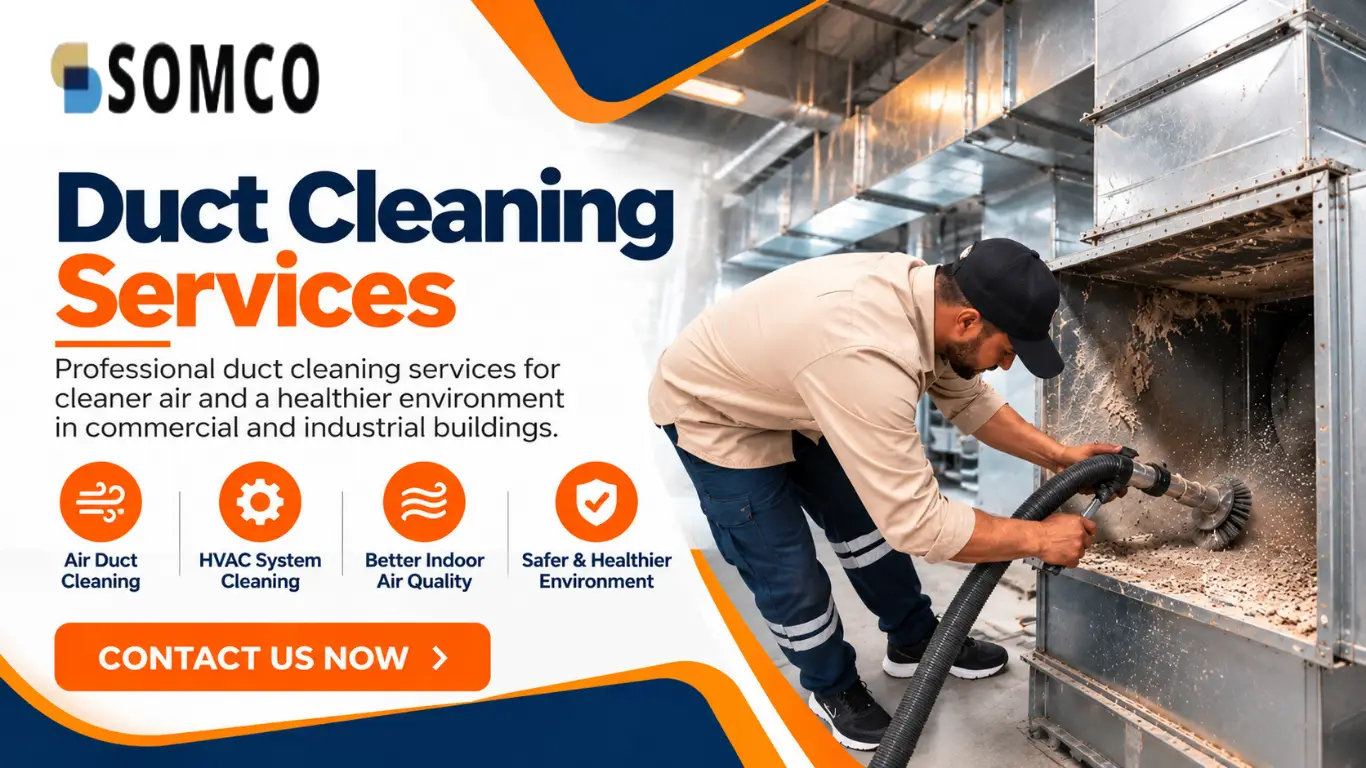
Duct cleaning services involve inspecting and cleaning ventilation ductwork to remove accumulated dust, debris, and other contaminants where necessary.
Commercial HVAC systems distribute conditioned air through networks of ducts, grilles, registers, and other components. Because these systems operate across different rooms and occupied areas, their maintenance requirements depend on the building’s size, usage, environmental conditions, and maintenance history.
Professional duct cleaning may involve:
- Inspecting accessible sections of ventilation ductwork.
- Identifying visible dust and debris accumulation.
- Cleaning affected duct sections using appropriate equipment.
- Addressing contamination around relevant ventilation components.
- Checking for moisture-related concerns or visible damage.
- Documenting findings and recommending further maintenance where necessary.
The precise scope of work depends on the system’s design and inspection results.
It is important to understand that duct cleaning is not a substitute for complete HVAC maintenance. Air filters, cooling coils, fans, drainage systems, and other components may also require inspection and servicing.
Why Is Air Duct Cleaning Important for Commercial Buildings?
Commercial buildings have different ventilation demands depending on their occupancy, operating hours, and daily activities. Offices may generate ordinary indoor dust, while restaurants and industrial facilities can experience different types of airborne contamination.
When inspection confirms that ductwork contains significant debris, appropriate cleaning can help address the problem.
1. Helps Remove Accumulated Dust and Debris
Dust and other particles can enter ventilation systems through outdoor air, indoor activities, and building operations. Filters capture some airborne particles, but their effectiveness depends on their condition and suitability.
When visible contamination accumulates inside ductwork, professional inspection can establish whether cleaning is required.
2. Supports a Well-Maintained HVAC System
Ventilation ductwork is one part of a larger HVAC installation. Maintaining the system requires attention to filters, equipment condition, airflow, and other operational factors.
Duct inspections can help facility managers identify maintenance requirements and coordinate appropriate corrective work.
3. Helps Identify Moisture-Related Problems
Moisture inside ductwork can contribute to material deterioration and microbial growth under suitable conditions.
Inspection may reveal condensation, water damage, or other concerns that require investigation. The source of moisture should be corrected before the affected system is considered properly maintained.
4. Supports Better Facility Maintenance Planning
Commercial property managers need reliable information to plan maintenance activities and allocate budgets.
Documenting duct inspections, cleaning requirements, and completed work helps businesses maintain service records and plan future inspections.
5. Helps Investigate Ventilation Concerns
Dust around vents, persistent unusual odours, and airflow problems may indicate an issue with the ventilation system.
These symptoms can have several causes, so a proper assessment is important. Duct cleaning should be recommended when the findings support it rather than treated as a solution to every HVAC problem.
8 Warning Signs Your Building May Need Duct Cleaning Services
Recognising possible warning signs can help building managers decide when to arrange an inspection.
1. Visible Dust Inside the Ductwork
Visible accumulation inside accessible duct sections may indicate that cleaning is necessary.
An inspection helps determine the extent of the buildup, whether it is concentrated in specific areas, and what cleaning methods may be appropriate.
2. Dust Frequently Accumulating Around Air Vents
Repeated dust accumulation around supply vents may justify further investigation.
However, dust around ventilation outlets can also come from indoor activities, inadequate housekeeping, or filtration issues. Inspecting the HVAC system helps identify the actual cause.
3. Persistent Unusual Odours
Unusual smells coming from air vents may be associated with accumulated debris, moisture, contaminated filters, or other HVAC issues.
If the odour persists, the source should be investigated before cleaning is undertaken. Cleaning the ducts alone may not resolve the problem if the cause lies elsewhere in the system.
4. Recent Construction or Renovation
Renovation work can generate dust that may enter exposed ductwork or ventilation equipment.
After major construction activities, businesses should consider an inspection to determine whether dust has entered the system and whether targeted cleaning is necessary.
5. Evidence of Water Damage or Condensation
Leaks, condensation, and water damage around ventilation components require attention.
Moisture-related issues should be investigated promptly because cleaning without correcting the source of the water may allow the problem to return.
6. Unexplained Airflow Problems
Weak or uneven airflow can have several causes, including dirty filters, closed dampers, blocked grilles, fan problems, or restrictions within the duct system.
An HVAC assessment can help determine whether duct cleaning, repairs, system balancing, or another maintenance task is needed.
7. Dusty Conditions in Industrial Facilities
Industrial facilities and warehouses may generate dust and airborne particles depending on their operations.
Where contamination is suspected, the ventilation system should be assessed according to the type of material present. Specialist precautions may be required for hazardous substances.
8. No Recent Ductwork Inspection Records
If a commercial property has no documented history of duct inspections, an initial assessment can help establish the system’s current condition.
The findings can provide a baseline for future maintenance planning and help identify any immediate concerns.
Which Commercial Properties Need Duct Cleaning?
Duct cleaning requirements vary by building type. Understanding the activities taking place inside a facility helps determine the appropriate inspection and maintenance approach.
Office Buildings
Offices contain workstations, meeting rooms, shared areas, and other occupied spaces. Businesses should monitor filter condition, ventilation performance, and visible contamination.
Ductwork inspections may be appropriate after renovation projects or when signs of accumulated debris are identified.
Hotels and Hospitality Facilities
Hotels operate multiple areas with different ventilation needs, including guest rooms, corridors, restaurants, kitchens, and conference facilities.
Maintenance teams should assess each system according to its function and condition. Kitchen exhaust systems require different cleaning procedures from ordinary HVAC supply-air ductwork.
Restaurants and Commercial Kitchens
Restaurants may operate separate air conditioning, general ventilation, and kitchen exhaust systems.
Kitchen exhaust ducts can accumulate grease and require suitable cleaning based on usage, inspection findings, and applicable safety requirements.
Important: Kitchen hood and grease duct cleaning are different from ordinary air duct cleaning. Businesses should identify the system involved when requesting a quotation.
Shopping Centres and Retail Stores
Shopping centres and retail facilities may have extensive duct networks serving shops, corridors, storage areas, and shared spaces.
Routine HVAC maintenance and appropriate duct inspections can help facility teams identify contamination and plan necessary work.
Industrial Buildings and Warehouses
Industrial properties may be exposed to dust, production residues, and other airborne particles.
The appropriate maintenance procedure depends on the materials handled, the ventilation design, and the nature of the contamination. Some environments require specialised inspection and cleaning procedures.
Healthcare and Specialised Facilities
Healthcare and other specialised buildings may have specific ventilation, filtration, and infection-control requirements.
Cleaning and maintenance should follow the applicable requirements for the facility and its ventilation systems. General duct cleaning procedures should not replace specialist protocols.
What Is the Professional Duct Cleaning Process?
A properly planned cleaning project should begin with an assessment rather than an assumption that every duct needs cleaning.
Step 1: Initial Assessment
The service provider gathers information about the building, ventilation system, operating conditions, and reported concerns.
This helps determine the areas that need inspection and whether any special access or safety arrangements are required.
Step 2: Ductwork Inspection
Accessible duct sections and relevant ventilation components are examined for visible dust, debris, moisture, or damage.
Where necessary, additional inspection methods may be recommended to assess areas that are not directly accessible.
Step 3: Preparation of the Work Area
Before cleaning starts, the contractor prepares the affected areas and takes appropriate precautions to protect the building and prevent dislodged contaminants from spreading.
The work plan should account for occupied areas, equipment access, and the operational needs of the facility.
Step 4: Cleaning of Affected Components
Suitable equipment and cleaning methods are selected according to the ductwork materials, system design, accessibility, and type of contamination.
The work should remove the identified debris without damaging the ductwork, insulation, or associated HVAC components.
Step 5: Post-Cleaning Inspection
After cleaning, the affected areas should be checked to assess the work completed.
Any remaining contamination, inaccessible sections, damage, or moisture concerns should be documented for further action.
Step 6: Maintenance Recommendations
The service provider can report the findings and recommend additional maintenance where necessary.
This may include filter replacement, repairs, moisture correction, or inspection of other HVAC components.
How Often Should Commercial Air Ducts Be Cleaned?
One of the most common questions facility managers ask is how frequently air ducts should be cleaned.
There is no single cleaning interval that is appropriate for every commercial building. The required frequency depends on system condition, building activities, contamination levels, filtration, and maintenance history.
For example, a warehouse exposed to substantial airborne dust may have different requirements from an office with effective filtration and a well-maintained HVAC system.
When determining an appropriate inspection and cleaning schedule, businesses should consider:
- The type and daily use of the building.
- The condition of filters and HVAC equipment.
- Visible contamination inside ductwork.
- Recent renovation or construction activities.
- Water damage or moisture-related concerns.
- Previous inspection and cleaning records.
- Applicable industry and facility requirements.
Rather than scheduling cleaning solely because a fixed period has passed, facility managers should use inspection findings and relevant maintenance requirements to determine when work is necessary.
Duct Cleaning vs. Regular HVAC Maintenance
Duct cleaning and HVAC maintenance are related, but they are not the same service.
Duct cleaning focuses on removing accumulated material from affected areas of ventilation ductwork. HVAC maintenance covers the broader system and may involve inspections, servicing, adjustments, and repairs.
Maintenance Activity | Main Purpose |
Air duct cleaning | Removes accumulated debris from affected duct sections |
Air filter replacement | Maintains appropriate filtration according to system requirements |
HVAC equipment inspection | Identifies equipment condition and maintenance needs |
Airflow assessment | Investigates airflow concerns and system performance |
Coil cleaning | Removes accumulated dirt from applicable heat-transfer surfaces |
Drainage inspection | Identifies blockages, leaks, or drainage concerns |
Kitchen hood cleaning | Addresses grease and contamination in commercial kitchen exhaust systems |
A suitable maintenance programme may include several of these activities, depending on the facility’s requirements.
How to Choose the Right Duct Cleaning Company
Choosing a suitable contractor is important for commercial property owners and facility managers.
Before selecting a service provider, consider the following factors.
Commercial HVAC Experience
Look for a contractor familiar with commercial ventilation systems and the requirements of your type of facility.
Inspection Before Cleaning
The provider should assess the ductwork and explain why cleaning is recommended.
Clearly Defined Scope of Work
The quotation should specify which areas will be inspected, which components will be cleaned, and what is excluded.
Appropriate Equipment and Methods
Cleaning methods should suit the ductwork materials, system design, and type of contamination.
Work Documentation
Ask whether the provider can document inspection findings, completed work, and any maintenance issues identified.
Related HVAC Maintenance Services
If the inspection identifies other concerns, a contractor with relevant HVAC maintenance capabilities may help coordinate additional servicing or corrective work.
A clear scope of work helps businesses compare quotations and understand exactly what the proposed service includes.
How Businesses Can Prevent Excessive Duct Contamination
Although some accumulation is unavoidable, good maintenance practices can help businesses manage ventilation systems and identify problems before they become more difficult to address.
Maintain Air Filters
Inspect and replace filters according to the HVAC manufacturer’s recommendations and the operating conditions of the building.
Schedule HVAC Inspections
Regular equipment inspections help identify dirty filters, damaged components, and other conditions that may affect ventilation performance.
Protect Ductwork During Renovations
Where practical, protect duct openings and HVAC components during construction or renovation activities. Inspect affected systems before normal operation resumes.
Investigate Moisture Problems Promptly
Leaks and condensation should be addressed quickly. Correcting the source of moisture is essential when managing water-related contamination.
Keep Maintenance Records
Record inspections, identified issues, cleaning work, and repairs. These records help establish a maintenance history and support future decisions.
Base Cleaning on Actual Conditions
Avoid assuming that every building needs the same cleaning frequency. Inspection findings should guide the scope and timing of duct cleaning.
Duct Cleaning Services for Commercial Facilities by SSOMCO
Commercial buildings require a maintenance approach that considers the condition of their HVAC equipment, ventilation systems, and wider facility infrastructure.
SSOMCO provides HVAC and facility maintenance solutions for commercial and industrial customers. Businesses can discuss their ventilation maintenance requirements with SSOMCO to identify the appropriate scope of inspection and service.
Depending on the facility and project requirements, related services may include:
- Air duct cleaning.
- HVAC and air conditioning maintenance.
- Preventive maintenance services.
- Chiller maintenance.
- Kitchen hood cleaning.
- Building and facility maintenance.
The appropriate service depends on the type of system, the condition identified during inspection, and the building’s operational requirements.
If your facility has visible duct contamination, persistent ventilation concerns, or a history of construction-related dust, arranging an assessment can help you determine the next steps.
Looking for commercial HVAC and duct cleaning support?
Contact SSOMCO to discuss your facility’s requirements and request a quotation.
Visit: https://ssomco.sa/
Conclusion
Professional duct cleaning services can help commercial businesses address accumulated dust and debris when inspection confirms that cleaning is necessary. Recognising warning signs, investigating moisture problems, and maintaining accurate HVAC records can help facility managers make informed maintenance decisions.
From offices and hotels to restaurants and industrial facilities, every building has different ventilation requirements. An inspection-led approach helps determine whether duct cleaning is appropriate and whether additional HVAC maintenance is needed.
SSOMCO supports commercial and industrial customers with HVAC and facility maintenance solutions. If your building requires a ductwork assessment or related maintenance, contact SSOMCO to discuss your requirements and request a quotation.
Frequently Asked Questions About Duct Cleaning Services
Duct cleaning services involve inspecting and cleaning affected areas of HVAC ventilation ductwork to remove accumulated dust, debris, and other contaminants where necessary.
Visible debris inside ductwork, contamination following renovation, persistent unusual odours, or evidence of moisture may indicate that an inspection is needed.
The appropriate frequency depends on building usage, ventilation conditions, contamination levels, and maintenance history. Inspection findings should guide the schedule.
Cleaning may help address certain sources of dust and debris inside ductwork. However, indoor air quality also depends on filtration, ventilation, moisture control, and indoor pollutant sources. Duct cleaning alone does not guarantee improved air quality.
No. HVAC duct cleaning and kitchen hood cleaning address different systems and types of contamination. Kitchen exhaust systems may accumulate grease and require specialised cleaning procedures.
Not always. Airflow issues may result from dirty filters, blocked grilles, fan problems, closed dampers, or system balancing issues. A professional assessment can help identify the cause.
No. The need depends on the system's condition, inspection findings, building activities, and applicable maintenance requirements.
Visit the SSOMCO website at https://ssomco.sa/ to explore its HVAC and facility maintenance solutions and discuss your commercial property's requirements.
