

 Blog
Searching for a reliable hood cleaning service near me? If you manage a restaurant, hotel, catering facility, or commercial kitchen, keeping your kitchen exhaust hood clean is an important part of routine maintenance.
Commercial cooking produces grease, smoke, heat, and airborne particles that can accumulate on exhaust hoods, filters, and connected ductwork. Over time, this buildup can contribute to unpleasant odors, reduced ventilation performance, and increased fire risk.
Professional kitchen hood cleaning helps remove grease deposits, maintain cleaner exhaust equipment, and support a safer working environment. For businesses that operate commercial kitchens every day, establishing an appropriate cleaning schedule is an essential part of facility maintenance.
SSOMCO provides HVAC and maintenance solutions for commercial facilities. If your business needs kitchen hood cleaning or related maintenance, understanding the cleaning process and knowing what to look for in a service provider can help you make an informed decision.
Need assistance with commercial kitchen maintenance? Contact SSOMCO to discuss your requirements and request a quotation.
What Is a Hood Cleaning Service?
A hood cleaning service focuses on removing accumulated grease, oil residue, and other contaminants from commercial kitchen exhaust hoods and the components included in the cleaning scope.
A commercial kitchen exhaust system commonly includes:
- Exhaust hoods positioned above cooking equipment
- Grease filters that capture airborne grease particles
- Ductwork that carries exhaust air away from the kitchen
- Exhaust fans that help move air through the system
- Related components designed for commercial kitchen ventilation
During cooking, grease particles can collect on filters and interior surfaces. If the buildup is not managed, it can become difficult to remove and may affect the condition and performance of the exhaust system.
Professional cleaning should be appropriate for the equipment, the type of grease, and the system’s design.
Remember: Cleaning the visible hood exterior is not necessarily the same as cleaning the complete exhaust system. When requesting a quotation, confirm whether filters, internal hood surfaces, ductwork, and exhaust fans are included.
Why Search for a Professional Hood Cleaning Service Near You?
Finding a suitable local service provider can make it easier to arrange cleaning around restaurant opening hours, staff schedules, and maintenance requirements.
Here are several reasons commercial kitchens should prioritize hood cleaning.
1. Help Reduce Grease-Related Fire Risks
Grease deposits can accumulate inside kitchen exhaust systems and create a combustible hazard. If the deposits ignite, fire can spread through contaminated components.
Regular inspection and appropriate cleaning help control grease accumulation and form part of a broader kitchen fire-prevention program.
Cleaning frequency should be determined by the type of cooking, volume of operations, grease accumulation, applicable requirements, and advice from qualified professionals.
2. Support Effective Kitchen Ventilation
Commercial exhaust hoods help remove smoke, heat, and cooking fumes from food preparation areas.
Heavy grease accumulation on filters and other components can interfere with airflow. Cleaning helps remove this buildup where it is contributing to the problem.
If smoke or heat continues to accumulate after cleaning, the exhaust fan, ductwork, system design, and other mechanical components may require further inspection.
3. Help Control Unpleasant Kitchen Odors
Grease and food residue can contribute to persistent odors around cooking equipment and exhaust components.
Cleaning contaminated surfaces and filters helps remove one potential source of these smells. Other issues, such as inadequate airflow or mechanical faults, may also need attention.
For restaurants and hotels, odor management is important for maintaining a comfortable working environment and a positive customer experience.
4. Maintain Cleaner Commercial Kitchen Equipment
Grease deposits can collect on exhaust hoods, filters, and surrounding surfaces.
A planned cleaning routine helps control this buildup and supports the wider kitchen cleaning program. It should complement routine housekeeping rather than replace daily cleaning of work surfaces and cooking equipment.
5. Support Preventive Maintenance
Professional cleaning provides an opportunity to identify visible grease accumulation, damaged filters, access issues, or other maintenance concerns.
Although cleaning does not replace mechanical servicing, it can be coordinated with a broader facility maintenance plan to help businesses manage their kitchen exhaust systems more effectively.
Signs You Need Commercial Kitchen Hood Cleaning
Not sure whether it is time to arrange a hood cleaning service near you? Watch for these common warning signs.
Visible Grease on the Hood and Filters
Grease deposits on filters, hood interiors, or surrounding surfaces indicate that cleaning may be necessary. Heavy accumulation should be assessed promptly.
Persistent Cooking Smells
If unpleasant odors remain after normal kitchen cleaning, accumulated residue in the exhaust hood or connected components may be contributing.
Smoke Lingering Around Cooking Equipment
Smoke that does not clear effectively may indicate an exhaust problem. Grease buildup is one possible cause, but fan performance, duct restrictions, and system design should also be considered.
Grease Dripping From Exhaust Components
Grease dripping from a hood or exhaust connection is a warning sign that requires prompt assessment and appropriate cleaning.
Filters That Appear Heavily Contaminated
Grease-loaded filters may require cleaning or replacement according to the manufacturer’s instructions and the equipment’s condition.
Long Periods Without Professional Cleaning
If you cannot confirm when the exhaust system was last inspected or cleaned, arrange an assessment to establish its current condition and suitable maintenance requirements.
Important: Do not wait for all these warning signs to appear. Grease can accumulate inside ductwork even when exterior surfaces look relatively clean.
What Does Professional Kitchen Hood Cleaning Include?
The precise scope depends on the system design, contamination level, access, and service agreement. A professional cleaning job may include the following stages.
Step 1: Inspect the Exhaust Hood
The service provider assesses accessible surfaces, filters, and other included components to understand the amount of grease buildup and identify cleaning requirements.
The assessment should also consider access limitations and relevant safety precautions.
Step 2: Prepare the Kitchen Area
The work area is prepared to help protect surrounding equipment and surfaces from cleaning residue.
Appropriate safety procedures should be followed, including equipment isolation where required. Cleaning products and methods should be suitable for the equipment and the working environment.
Step 3: Clean the Grease Filters
Filters are removed where appropriate and cleaned according to the manufacturer’s recommendations and the agreed service scope.
Damaged or unserviceable filters may need to be replaced.
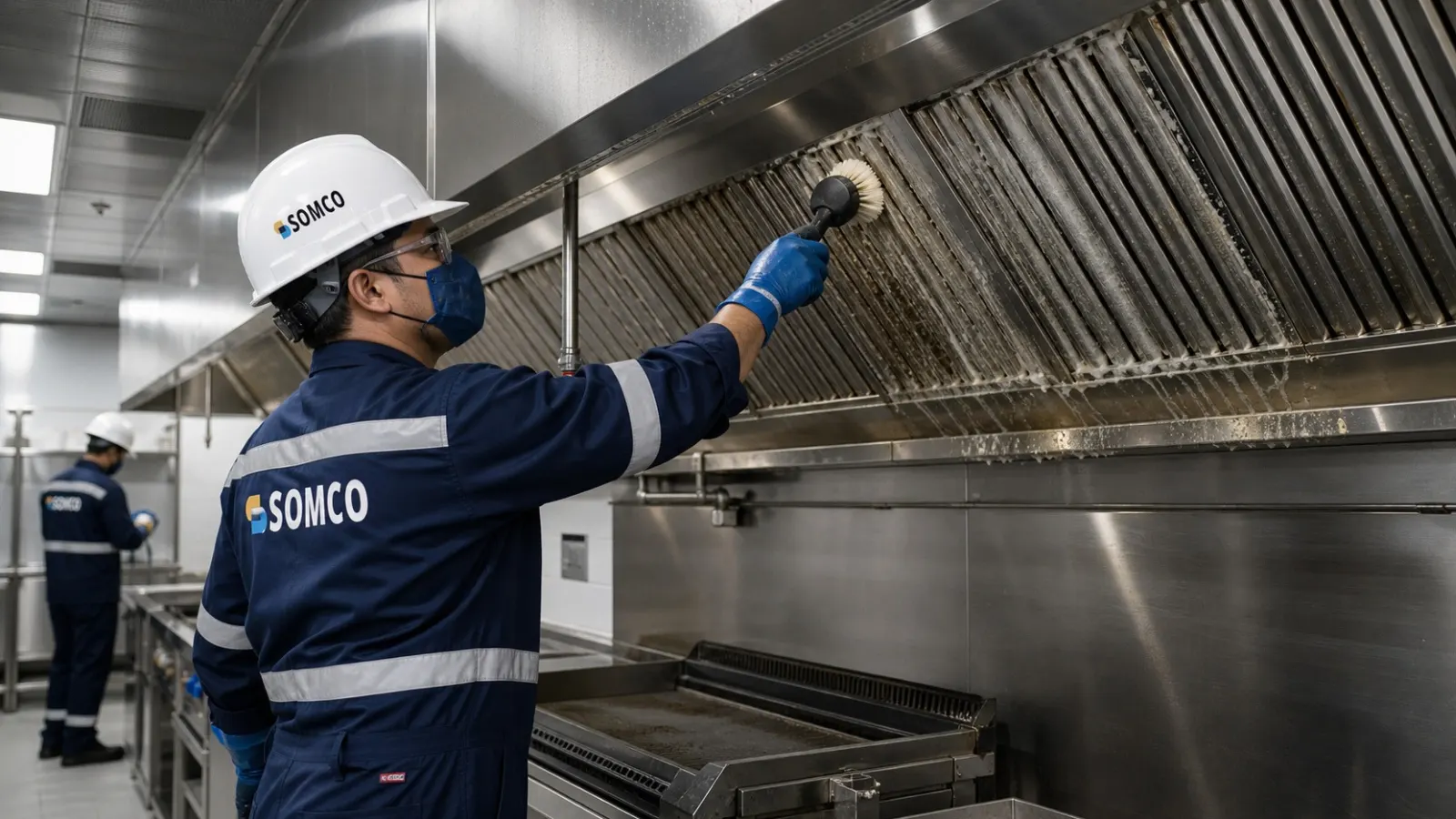
Step 4: Remove Grease From Hood Surfaces
Suitable cleaning methods are used to remove grease from the included hood surfaces and accessible components.
The objective is to remove accumulated residue without damaging the equipment or surrounding finishes.
Step 5: Assess the Connected Exhaust System
Depending on the service agreement, the work may extend to accessible internal ductwork and exhaust fan components.
Ask the provider to confirm exactly which components are included. Hood cleaning alone does not automatically mean the entire exhaust system has been cleaned.
Step 6: Complete the Work and Review the Results
The work area should be cleaned after the service, and the completed scope should be reviewed.
Where agreed, the provider may supply photographs or service records and identify visible defects that require additional maintenance.
How Often Should a Commercial Kitchen Hood Be Cleaned?
There is no single cleaning schedule suitable for every commercial kitchen. The appropriate frequency depends on cooking volume, operating hours, cooking methods, grease production, and applicable requirements.
For example, a busy restaurant that frequently fries food may accumulate grease faster than a kitchen with lighter cooking operations.
Use the following table as a general planning guide.
Type of commercial kitchen | Cleaning consideration |
High-volume restaurant kitchen | Frequent inspection may be necessary because of heavy cooking activity and grease production. |
Fast-food outlet | Frying operations and long operating hours can increase grease accumulation. |
Hotel kitchen | Cleaning requirements depend on meal volumes, operating schedules, and cooking methods. |
Catering kitchen | Cleaning frequency should reflect production volumes and the types of food prepared. |
Light-duty commercial kitchen | Requirements depend on actual usage, equipment, and grease accumulation. |
NFPA 96 is a widely referenced standard for ventilation control and fire protection in commercial cooking operations. Businesses should verify current applicable requirements with their fire-safety authority and qualified service provider rather than relying on a generic cleaning interval.
A professional assessment can help establish a maintenance schedule that reflects your kitchen’s actual operating conditions.
Hood Cleaning vs. Exhaust Duct Cleaning: What's the Difference?
Kitchen hood cleaning and exhaust duct cleaning are related services, but they do not always cover the same components.
Kitchen hood cleaning | Kitchen exhaust duct cleaning |
Focuses on the exhaust hood and included components | Focuses on accumulated contaminants inside the ductwork |
May include grease filters and accessible hood surfaces | May include accessible internal duct surfaces |
Helps manage grease buildup around the cooking exhaust area | Helps manage grease accumulation along the exhaust route |
Scope depends on the service agreement | Scope depends on duct access, configuration, and the agreed work |
Some providers offer a combined kitchen exhaust cleaning service that includes the hood, filters, ductwork, and exhaust fan. Others quote for individual components.
When searching for a hood cleaning service near you, confirm the exact scope before approving the work.
How to Choose the Right Hood Cleaning Company
Selecting a service provider involves more than comparing prices. Businesses should understand what will be cleaned, how the work will be performed, and whether the provider can accommodate their operating requirements.
Consider these factors when evaluating a commercial kitchen hood cleaning company.
Clear Scope of Work
Ask whether the quotation includes hood surfaces, filters, ductwork, exhaust fans, and cleanup. Confirm which components are excluded.
Appropriate Cleaning Methods
The provider should use methods and cleaning products suitable for the equipment and the type of contamination.
Safety Procedures
Ask how the work area and equipment will be managed during cleaning. The provider should follow appropriate safety procedures for the premises and equipment.
Experience With Commercial Kitchens
Restaurant, hotel, and catering facilities have different operating requirements. Choose a provider that understands the needs of commercial kitchen environments.
Transparent Pricing
A clear quotation should explain the work included, any exclusions, and whether additional repairs or replacement components will cost extra.
Flexible Scheduling
If your kitchen operates for extended hours, discuss scheduling options that minimize disruption to normal operations.
Service Records
Ask whether photographs, service records, or recommendations for future maintenance can be provided.
These checks help you compare providers based on the work required rather than price alone.
Hood Cleaning Services for Restaurants, Hotels, and Catering Facilities
Different commercial kitchens have different cleaning needs. A suitable maintenance plan should reflect the type of food preparation, operating hours, exhaust equipment, and grease production.
Restaurant Hood Cleaning
Restaurants that prepare meals throughout the day can accumulate grease on exhaust hoods and filters. Regular inspection and cleaning help control this buildup.
Fast-Food Kitchen Hood Cleaning
Fast-food kitchens may operate for extended hours and use equipment that produces substantial grease. Cleaning requirements should reflect actual cooking methods and operating conditions.
Hotel Kitchen Hood Cleaning
Hotel kitchens may serve restaurants, banqueting facilities, room service, and large events. Coordinated maintenance planning can help manage cleaning across different operating schedules.
Catering and Institutional Kitchen Hood Cleaning
Catering facilities, staff kitchens, and institutional food preparation areas should establish suitable cleaning schedules based on their equipment, production levels, and maintenance requirements.
For every kitchen type, the service scope should be confirmed before work begins.
Why Consider SSOMCO for Commercial Kitchen Maintenance?
SSOMCO provides HVAC and maintenance solutions for commercial and industrial facilities.
Businesses seeking assistance with commercial kitchen maintenance can contact SSOMCO to discuss their requirements and confirm the appropriate scope of service.
When planning a kitchen hood cleaning project, it is helpful to provide details about your premises, equipment, operating hours, and current maintenance concerns.
This information can help establish the work required and whether related exhaust system or facility maintenance should also be considered.
Contact SSOMCO to discuss your commercial kitchen cleaning and maintenance requirements.
Looking for a Hood Cleaning Service Near You?
Keeping a commercial kitchen exhaust system clean is an important part of ongoing maintenance. Grease accumulation can create fire risks, contribute to unpleasant odors, and interfere with ventilation when it affects airflow.
Whether you operate a restaurant, fast-food outlet, hotel, or catering facility, a suitable cleaning schedule can help you manage grease buildup and maintain your kitchen equipment.
SSOMCO supports commercial facility maintenance requirements and can discuss your project needs.
Request a Quotation From SSOMCO
Contact our team to discuss your commercial kitchen maintenance requirements.
Website: https://ssomco.sa/
When requesting a quotation, share your business type, project location, approximate hood size, number of exhaust hoods, and whether you need hood cleaning alone or a broader exhaust cleaning service.
Plan your kitchen maintenance with SSOMCO. Contact us to discuss your requirements and request a quotation.
Frequently Asked Questions
A hood cleaning service removes grease and other accumulated contaminants from commercial kitchen exhaust hoods and the components included in the agreed service scope.
Look for a provider that serves your location, understands commercial kitchen exhaust systems, explains its cleaning scope, follows appropriate safety procedures, and provides a clear quotation. Contact SSOMCO to discuss your requirements and confirm service availability.
The cost depends on hood size, the number of hoods, grease accumulation, accessibility, the components included, and the amount of work required. Request a quotation based on your specific kitchen.
Not always. Some services cover only the hood and filters, while others include connected ductwork and exhaust fan components. Confirm the complete scope before booking.
The appropriate frequency depends on cooking methods, operating hours, grease production, and applicable requirements. High-volume kitchens may require more frequent attention than light-duty kitchens.
Grease can create a combustible deposit inside kitchen exhaust systems. Appropriate cleaning helps control accumulation and forms part of a broader fire-prevention and maintenance program.
Cleaning may help when grease buildup restricts airflow. If ventilation problems continue, the exhaust fan, ductwork, and other system components may need inspection.
Contact SSOMCO to discuss your commercial kitchen requirements and confirm the appropriate services and scope for your premises.
Provide your business type, location, hood size, number of hoods, approximate system layout, and any known maintenance concerns. Photographs can also help explain the equipment and access conditions.
