

 Blog
Commercial kitchens operate for long hours and generate heat, smoke, grease, and airborne particles during food preparation. A kitchen chimney and exhaust duct system helps remove these contaminants, supporting ventilation and a more comfortable working environment.
However, grease and residue can gradually accumulate inside exhaust hoods, filters, ducts, and connected components. Without appropriate cleaning, this buildup can affect ventilation performance, create unpleasant odors, and increase the risk of a kitchen fire.
Professional chimney duct cleaning helps commercial kitchens maintain cleaner exhaust systems and supports safer, more efficient daily operations.
SSOMCO provides HVAC and maintenance solutions for commercial and industrial facilities. Understanding the importance of exhaust system maintenance can help restaurant owners, hotel operators, facility managers, and maintenance teams make informed decisions about their kitchen cleaning requirements.
What Is Chimney Duct Cleaning?
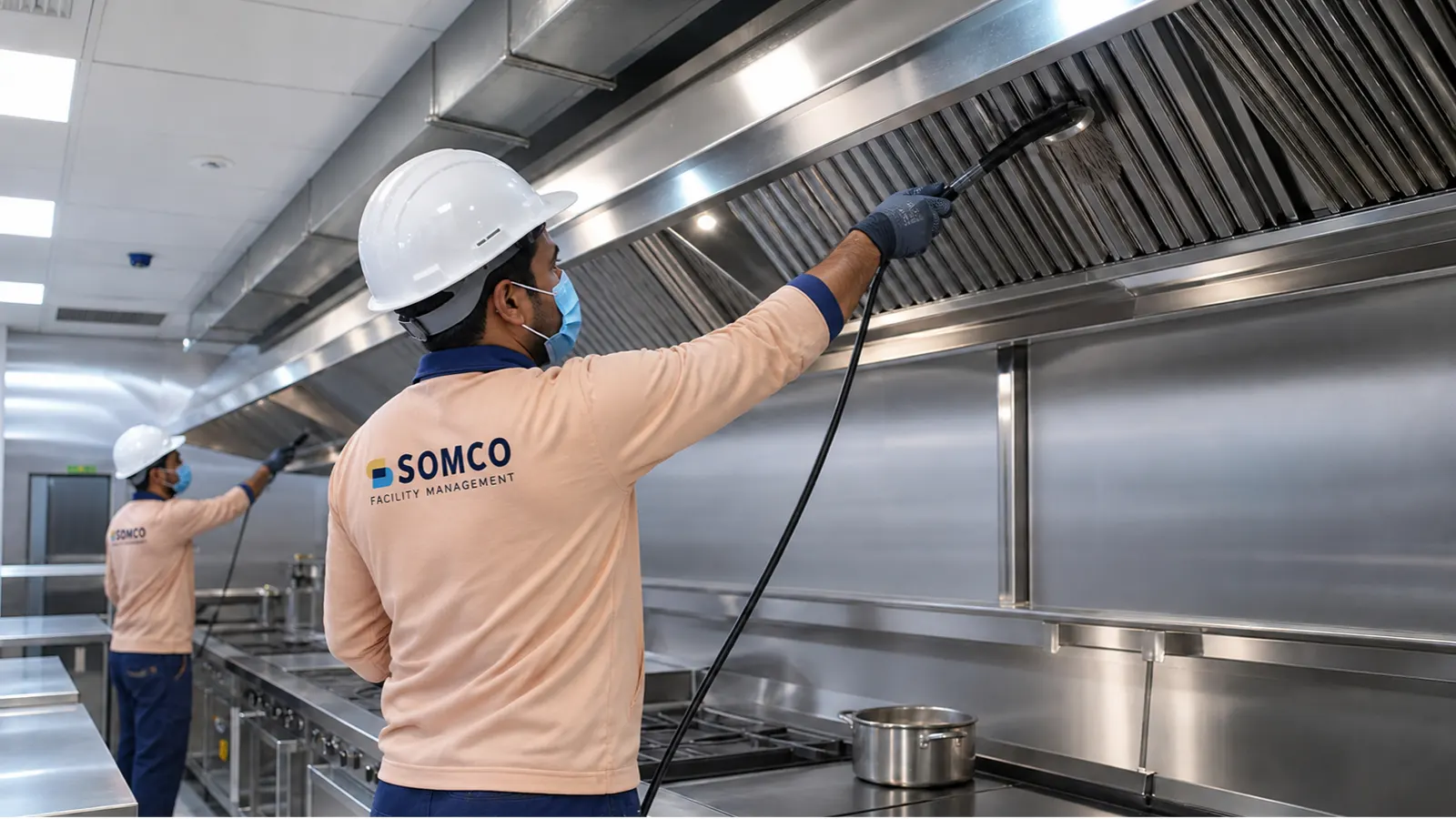
Chimney duct cleaning is the process of removing accumulated grease, oil residue, dust, and other contaminants from kitchen exhaust systems.
In commercial kitchens, the system typically includes an exhaust hood, grease filters, ductwork, an exhaust fan, and associated components that help extract cooking fumes from the building.
During cooking, grease particles can travel through the exhaust system and settle on internal surfaces. Over time, this residue can become difficult to remove without appropriate equipment and cleaning procedures.
Commercial kitchen chimney duct cleaning focuses on removing these deposits from accessible system components and, where included in the service scope, the connected exhaust ductwork.
The cleaning requirements depend on the type of cooking, operating hours, equipment, system design, and amount of grease accumulation.
Why Is Commercial Kitchen Chimney Duct Cleaning Important?
Regular cleaning is an important part of commercial kitchen maintenance. It helps address grease accumulation and supports the performance of the exhaust system.
1. Helps Reduce Grease-Related Fire Risks
Grease deposits inside kitchen exhaust systems can become a fire hazard. If flames or intense heat reach accumulated grease, the deposits may ignite and allow fire to spread through the exhaust system.
Cleaning helps remove combustible grease deposits and is an important part of a broader kitchen fire-prevention program.
The cleaning frequency should be based on cooking operations, grease accumulation, applicable fire-safety requirements, and recommendations from qualified professionals.
2. Supports Effective Kitchen Ventilation
Kitchen exhaust systems are designed to remove smoke, heat, cooking odors, and airborne contaminants.
Grease accumulation can restrict airflow or interfere with exhaust components. Cleaning the hood, filters, ductwork, and other applicable components helps address this buildup.
If ventilation remains poor after cleaning, the system may require inspection for mechanical faults, fan problems, duct restrictions, or other issues.
3. Helps Control Persistent Cooking Odors
Grease and food residue can produce unpleasant odors, particularly when they remain inside the exhaust system for extended periods.
Cleaning contaminated surfaces and filters helps remove one potential source of persistent cooking smells.
Other causes, such as inadequate ventilation, damaged ductwork, or malfunctioning exhaust fans, may also need to be investigated.
4. Supports a Cleaner Commercial Kitchen
Grease and residue can collect around exhaust hoods and other kitchen equipment. A suitable cleaning and maintenance routine helps manage this buildup.
For restaurants, hotels, catering facilities, and institutional kitchens, cleaning the exhaust system should form part of a coordinated commercial kitchen hygiene and maintenance plan.
5. Helps Maintain Exhaust Equipment
Grease accumulation may affect filters, fans, and other exhaust components. Cleaning and inspection can help identify visible buildup, damage, or maintenance concerns before they become more serious operational problems.
Cleaning does not replace mechanical servicing. Exhaust fans, motors, electrical components, and other equipment may require separate inspection and maintenance by qualified technicians.
Signs Your Kitchen Chimney Duct Needs Cleaning
Recognizing the warning signs of grease buildup can help facility managers arrange cleaning before the problem becomes more difficult to manage.
Visible Grease Around the Hood
Grease deposits around the exhaust hood, filters, or surrounding surfaces may indicate that the system needs attention.
Persistent Cooking Odors
If cooking smells remain in the kitchen long after food preparation, accumulated residue or ventilation problems may be contributing to the issue.
Smoke or Heat Not Extracted Effectively
Smoke or excessive heat lingering around cooking equipment may indicate restricted airflow, an exhaust fan problem, or another ventilation issue. Cleaning may help if grease buildup is contributing, but the system should be inspected when problems persist.
Grease Dripping From Exhaust Components
Visible grease dripping from a hood or duct connection is a warning sign that the system needs prompt assessment and cleaning.
Excessive Buildup on Filters
Grease-loaded filters can affect airflow and require appropriate cleaning or replacement according to the manufacturer’s instructions.
Important: Do not rely on visible exterior surfaces alone to judge the condition of the entire exhaust system. Grease can accumulate inside ductwork where it is not immediately visible.
What Does Professional Chimney Duct Cleaning Include?
The exact scope varies according to the exhaust system, its condition, and the service agreement. A professional cleaning service may include the following steps.
Step 1: Initial Inspection
The service team assesses the accessible exhaust hood, filters, ductwork, and related components to identify grease buildup and determine the required work.
The inspection should also consider access limitations and any relevant safety precautions.
Step 2: Preparation and Safety Measures
Before cleaning begins, the work area is prepared and suitable precautions are taken. Where necessary, affected equipment is isolated in accordance with the applicable procedures.
Protective coverings may be used to help prevent cleaning residue from contaminating kitchen equipment and surrounding surfaces.
Step 3: Hood and Filter Cleaning
Grease filters and accessible hood surfaces are cleaned using methods and products suitable for the equipment and type of contamination.
Filters that are damaged or no longer serviceable may need replacement rather than cleaning.
Step 4: Exhaust Duct Cleaning
Where included in the agreed scope, grease deposits are removed from accessible internal duct surfaces using appropriate tools and cleaning methods.
Access panels, duct configuration, and the extent of the buildup influence the work required.
Step 5: Exhaust Fan and Related Components
The exhaust fan and associated components are assessed and cleaned where included in the service scope and safe access is available.
Mechanical servicing, electrical repairs, and component replacement may require separate work by qualified technicians.
Step 6: Final Inspection and Cleanup
After cleaning, the work area is checked and cleaning residue is removed. The service team can document the completed scope and identify any visible concerns requiring additional maintenance.
Where agreed, service records and photographs may be provided for facility maintenance documentation.
How Often Should Commercial Kitchen Chimney Ducts Be Cleaned?
There is no single cleaning interval suitable for every commercial kitchen. The required frequency depends on the cooking process, operating hours, fuel type, grease production, and amount of buildup.
A high-volume restaurant preparing fried food may accumulate grease more quickly than a facility with lighter cooking operations.
Use the following as a general maintenance planning guide, not a substitute for applicable regulations or a professional assessment.
Kitchen type | Maintenance consideration |
High-volume kitchens with heavy grease production | Require frequent inspection and may need more frequent professional cleaning. |
Restaurants with regular daily cooking | Should establish a cleaning schedule based on grease accumulation and operating conditions. |
Hotel and catering kitchens | Should coordinate exhaust cleaning with operating hours, cooking volume, and maintenance schedules. |
Light-duty commercial kitchens | May require less frequent cleaning, depending on the equipment and actual usage. |
For example, NFPA 96 is a widely referenced standard for ventilation control and fire protection of commercial cooking operations. Its cleaning schedules distinguish between different cooking operations and levels of use.
Businesses should verify the current applicable requirements with their fire-safety authority, qualified service provider, and relevant local regulations. Do not adopt a generic schedule without considering the actual system and cooking conditions.
Chimney Duct Cleaning vs. Regular Kitchen Cleaning
Routine kitchen cleaning and exhaust duct cleaning serve different purposes.
Routine kitchen cleaning | Professional chimney duct cleaning |
Focuses on work surfaces and accessible kitchen areas | Focuses on grease deposits within the exhaust system |
Includes routine cleaning of equipment exteriors | May include hood interiors, filters, ductwork, and exhaust components |
Is typically performed as part of daily housekeeping | Is scheduled according to system condition and applicable requirements |
Helps maintain general kitchen cleanliness | Helps manage combustible grease accumulation and exhaust-system contamination |
Both are important. Cleaning kitchen surfaces does not remove grease hidden inside exhaust ductwork.
Benefits of a Planned Kitchen Exhaust Maintenance Program
Commercial kitchens can benefit from coordinating exhaust cleaning with wider facility maintenance activities.
A planned maintenance program can help businesses:
- Identify grease accumulation before it becomes excessive.
- Arrange cleaning around kitchen operating hours.
- Maintain records of cleaning and inspections.
- Identify visible damage or maintenance concerns.
- Coordinate exhaust cleaning with HVAC and facility maintenance.
- Reduce avoidable disruption through better scheduling.
For facility managers responsible for multiple restaurants or properties, documented maintenance schedules can also help coordinate work across different locations.
Choosing a Commercial Kitchen Chimney Duct Cleaning Service
When selecting a service provider, consider the condition of your exhaust system, the required cleaning scope, access arrangements, and applicable safety requirements.
Before confirming a service, ask the provider:
- Which components are included in the cleaning?
- Does the scope include the accessible internal ductwork?
- Are the exhaust fan and other components included?
- What safety precautions will be followed?
- Can the completed work be documented?
- Are any repairs or replacement parts excluded from the quotation?
- What maintenance interval is recommended for your cooking operations?
A clear scope of work helps businesses understand what will be cleaned and whether additional mechanical maintenance is required.
Professional Kitchen Exhaust Cleaning and Maintenance by SSOMCO
Commercial kitchens need maintenance plans that support their daily operations and the condition of their building systems.
SSOMCO provides HVAC and maintenance solutions for commercial facilities. Businesses looking for kitchen exhaust cleaning or related maintenance can contact the team to discuss their requirements and confirm the appropriate service scope.
Whether you manage a restaurant, hotel, catering facility, or commercial property with a kitchen, it is important to assess grease accumulation and establish a suitable maintenance schedule.
Contact SSOMCO to discuss your commercial kitchen maintenance requirements and request a quotation.
Request a Quotation Today
Website: https://ssomco.sa/
Frequently Asked Questions
Chimney duct cleaning removes accumulated grease, oil residue, and other contaminants from commercial kitchen exhaust hoods, filters, ductwork, and other included components.
It helps control combustible grease deposits, supports exhaust-system cleanliness, and may improve airflow when buildup is restricting the system. It also helps address residue that can contribute to persistent cooking odors.
Commercial kitchens that produce grease during cooking need an appropriate exhaust-system cleaning and maintenance schedule. The frequency depends on cooking operations, grease accumulation, and applicable requirements.
The interval depends on the type of cooking, operating hours, grease production, and relevant regulations. High-volume kitchens with heavy grease production generally need more frequent attention than light-duty operations.
It can help when grease accumulation is restricting airflow. However, persistent ventilation problems may also be caused by fan faults, duct design, damaged components, or other mechanical issues.
This depends on the agreed service scope and safe access to the equipment. Confirm whether fan cleaning, inspection, and mechanical servicing are included in the quotation.
Contact SSOMCO through its website and provide your business type, location, approximate exhaust system size, and current maintenance concerns. The service scope and quotation can then be discussed.
