

 Blog
Maintaining a clean kitchen ventilation system is essential for restaurants, hotels, catering facilities, and other commercial food-service businesses. During daily cooking operations, grease, oil, smoke, and airborne particles accumulate on kitchen hoods, filters, exhaust ducts, and ventilation fans.
Without proper cleaning, grease deposits can become difficult to remove, affect exhaust performance, create unpleasant odours, and increase fire risks.
Kitchen hood cleaning is an important part of commercial kitchen maintenance. Professional cleaning helps remove accumulated grease and residues from accessible components of the kitchen exhaust system while supporting a cleaner and better-maintained cooking environment.
For restaurants, hotels, cafeterias, and industrial kitchens, regular hood cleaning should be included in an organised maintenance programme.
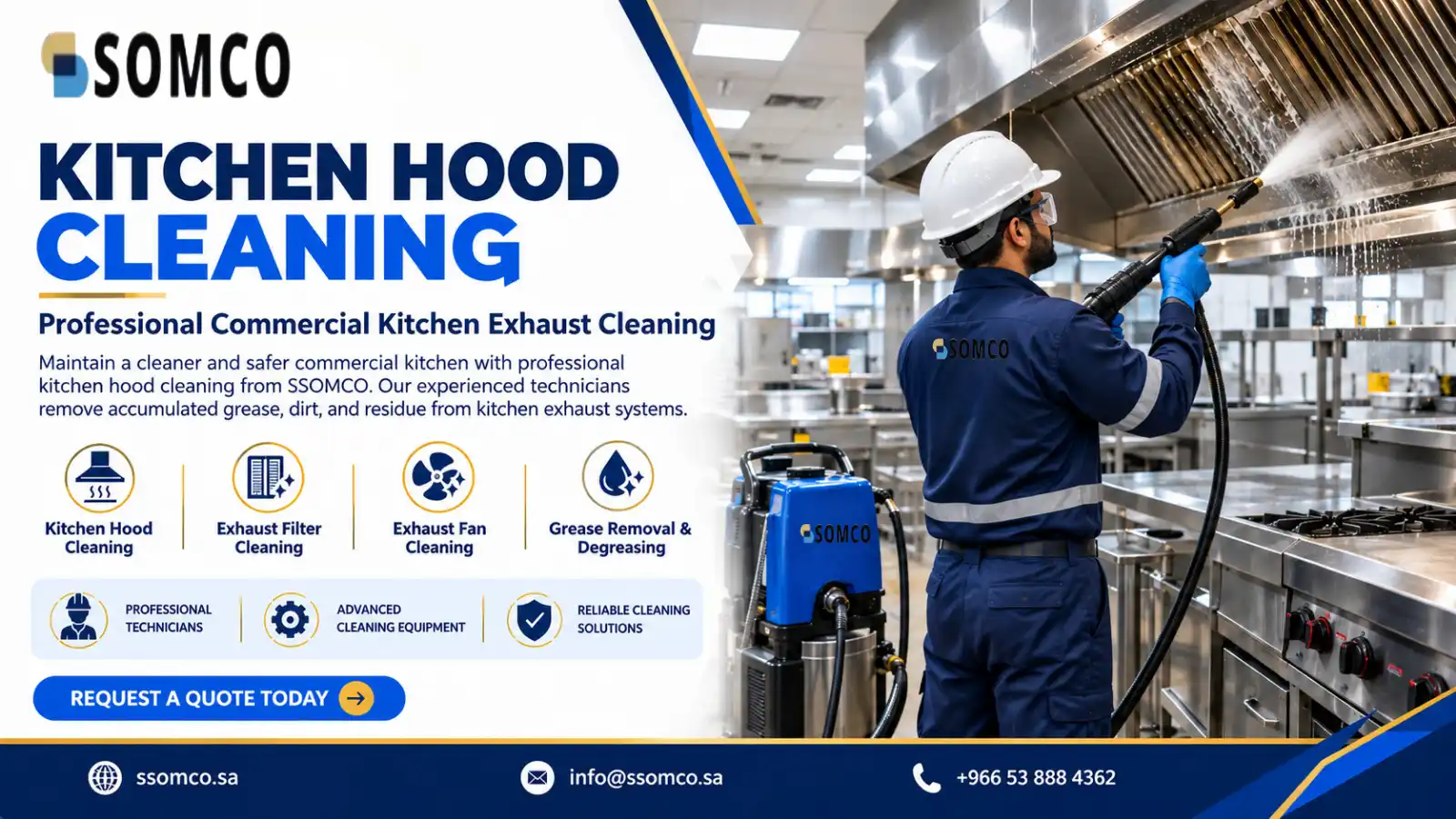
SSOMCO provides professional kitchen hood cleaning services for commercial kitchens and hospitality facilities, helping businesses maintain cleaner kitchen ventilation and exhaust systems.
What Is Kitchen Hood Cleaning?
Kitchen hood cleaning is the process of removing accumulated grease, oil, dirt, and other residues from commercial kitchen exhaust equipment.
A commercial kitchen hood is installed above cooking appliances to capture smoke, heat, grease-laden vapours, and other airborne contaminants. The exhaust system then carries these emissions away from the cooking area.
Depending on the system design and agreed service scope, professional kitchen hood cleaning may include:
- Kitchen hood canopy cleaning
- Grease filter cleaning
- Exhaust duct cleaning
- Exhaust fan cleaning
- Grease deposit removal
- Inspection of accessible exhaust components
- Cleaning documentation and service reporting
The cleaning requirements depend on the type of cooking equipment, kitchen usage, exhaust system configuration, and grease accumulation.
Why Is Regular Kitchen Hood Cleaning Important?
Commercial kitchens produce grease and cooking residues every day. These materials can accumulate throughout the exhaust system if cleaning is not performed appropriately.
Regular kitchen hood cleaning offers several important maintenance benefits.
1. Helps Reduce Grease Fire Risks
Grease deposits inside kitchen hoods, filters, ducts, and exhaust fans can create a serious fire hazard.
If flames or high temperatures reach accumulated grease, a fire may spread through the exhaust system.
Professional cleaning helps remove combustible grease deposits from serviced components and supports the wider fire-safety maintenance programme.
Cleaning does not replace fire suppression systems, inspections, or other required fire protection measures.
2. Supports Kitchen Hygiene
Grease, dirt, and cooking residues can accumulate around kitchen ventilation equipment.
Cleaning these surfaces helps maintain a more organised and hygienic working environment for kitchen staff.
3. Supports Effective Exhaust Operation
Excessive grease accumulation can affect exhaust components and may contribute to restricted airflow.
Removing deposits from the relevant components helps maintain the condition of the exhaust system. Airflow performance should be assessed separately where required.
4. Helps Control Unpleasant Odours
Accumulated grease and food residues can contribute to unpleasant smells around commercial cooking areas.
Regular cleaning helps remove these deposits and supports a cleaner kitchen environment.
5. Supports Equipment Maintenance
Cleaning and inspecting accessible hood and exhaust components can help identify grease accumulation, visible damage, or maintenance requirements.
Early identification of these conditions helps facility managers plan appropriate corrective work.
What Does Professional Kitchen Hood Cleaning Include?
A commercial kitchen exhaust system contains several components that require attention during maintenance.
Kitchen Hood Canopy Cleaning
The hood canopy is positioned above cooking equipment and collects smoke, grease, and vapours.
Cleaning generally focuses on removing grease and residues from accessible internal and external hood surfaces.
Grease Filter Cleaning
Grease filters capture airborne grease particles before air enters the exhaust ductwork.
Filters should be inspected and cleaned according to their design, condition, and manufacturer’s instructions.
Damaged or ineffective filters may require replacement.
Kitchen Exhaust Duct Cleaning
Exhaust ducts carry contaminated air from the kitchen hood towards the exhaust fan and discharge point.
Grease can accumulate along internal duct surfaces, particularly in systems handling high volumes of cooking emissions.
Duct cleaning should include appropriate access arrangements and suitable grease-removal procedures.
Exhaust Fan Cleaning
Exhaust fans help move contaminated air through the kitchen ventilation system.
Grease accumulation on accessible fan components can affect equipment condition and maintenance requirements.
Where included in the service scope, cleaning may cover accessible fan surfaces and related components.
Final Inspection
After cleaning, the serviced areas should be checked to identify remaining deposits and confirm that the agreed cleaning work has been completed.
Photographic documentation can also help facility managers maintain service records.
How Does Professional Kitchen Hood Cleaning Work?
A structured cleaning process helps ensure that relevant components are addressed while protecting surrounding kitchen equipment.
Step 1: Initial Inspection
The cleaning team reviews the kitchen hood, filters, exhaust ductwork, and accessible fan components.
The inspection helps identify grease accumulation, access requirements, and the scope of cleaning.
Step 2: Work Area Preparation
Cooking equipment and surrounding surfaces are protected as necessary.
The work area is prepared to reduce the risk of contamination and unnecessary disruption during cleaning.
Where required, the kitchen exhaust system and associated equipment are isolated according to appropriate safety procedures.
Step 3: Grease Filter Removal
Removable grease filters are taken out for cleaning where appropriate.
Accumulated grease and residues are removed using suitable cleaning methods.
Step 4: Hood and Surface Degreasing
Accessible internal and external hood surfaces are cleaned to remove accumulated grease, oil, and dirt.
Suitable cleaning products and methods should be selected according to the equipment materials.
Step 5: Exhaust Duct and Fan Cleaning
Where included in the service scope, accessible exhaust duct sections and fan components are cleaned to remove grease deposits.
The cleaning process should follow the system configuration and applicable safety requirements.
Step 6: Final Inspection
The cleaned components are inspected to evaluate the completed work.
Any inaccessible sections, remaining contamination, or additional maintenance requirements should be documented.
Step 7: Site Cleanup and Reporting
The work area is cleaned and returned to an appropriate condition.
The client can request a service report describing the completed work, observations, and recommended follow-up actions.
Kitchen Hood Cleaning for Different Commercial Facilities
Different commercial kitchens have different cooking volumes, equipment configurations, and cleaning requirements.
Restaurant Kitchen Hood Cleaning
Restaurants often operate cooking equipment for extended hours, resulting in continuous grease and vapour production.
Regular hood and exhaust system cleaning helps restaurants maintain cleaner kitchen ventilation equipment.
Hotel Kitchen Hood Cleaning
Hotel kitchens may serve breakfast, lunch, dinner, banquets, and other food-service operations.
A planned cleaning schedule helps hotel facility managers maintain kitchen exhaust systems across different operating periods.
Catering Kitchen Hood Cleaning
Catering facilities may handle large food volumes and intensive cooking activities.
Their exhaust systems should be assessed according to cooking processes, equipment usage, and grease accumulation.
Cafeteria and Institutional Kitchen Cleaning
Schools, corporate cafeterias, hospitals, and institutional kitchens use commercial cooking equipment that requires appropriate ventilation maintenance.
Cleaning should be coordinated with kitchen operations and facility maintenance schedules.
Industrial Kitchen Hood Cleaning
Large-scale food preparation facilities may have extensive kitchen exhaust systems.
Professional assessment helps determine the appropriate cleaning scope for hoods, filters, ducts, and exhaust fans.
How Often Should Commercial Kitchen Hoods Be Cleaned?
There is no single cleaning schedule suitable for every commercial kitchen.
Cleaning frequency depends on several factors:
- Type of cooking activity
- Volume of food preparation
- Daily kitchen operating hours
- Grease production levels
- Type of cooking equipment
- Exhaust system configuration
- Previous cleaning history
- Applicable fire-safety requirements
A kitchen handling frequent high-grease cooking may require more frequent cleaning than a facility with lighter cooking operations.
Facility managers should establish cleaning schedules based on inspection findings, applicable requirements, and the actual operating conditions of the kitchen.
NFPA 96 and Commercial Kitchen Exhaust Cleaning
NFPA 96 is a recognised standard addressing ventilation control and fire protection for commercial cooking operations.
It provides guidance relevant to commercial cooking exhaust systems, including inspection, cleaning, and fire-safety considerations.
Businesses should ensure that their kitchen exhaust maintenance arrangements are reviewed against the applicable edition of NFPA 96 and local authority requirements.
Important considerations include:
- Inspection of commercial cooking exhaust systems
- Removal of combustible grease deposits
- Appropriate access to exhaust system components
- Maintenance of exhaust fans and related equipment
- Documentation of cleaning and inspection activities
- Coordination with applicable fire protection requirements
The required cleaning frequency depends on cooking operations and the applicable standard. Businesses should not assume that one schedule is suitable for every kitchen.
Common Kitchen Hood Cleaning Mistakes to Avoid
Incorrect cleaning practices can leave important parts of the exhaust system untreated.
Cleaning Only the Visible Hood Surface
Cleaning the canopy alone may leave grease inside filters, ducts, and exhaust fans.
The complete agreed cleaning scope should be considered.
Ignoring Exhaust Ductwork
Grease can accumulate inside exhaust ducts even when the visible hood looks clean.
Accessible duct sections should be inspected and included in the cleaning plan where required.
Using Unsuitable Cleaning Chemicals
Inappropriate chemicals may damage stainless steel, coatings, seals, or other equipment materials.
Cleaning products should be suitable for the components being serviced and used according to their instructions.
Neglecting Exhaust Fans
Exhaust fans are important parts of kitchen ventilation systems.
Their accessible components should be inspected and cleaned where included in the maintenance scope.
Not Maintaining Cleaning Records
Without proper records, facility managers may struggle to track previous cleaning work and plan future maintenance.
Keeping inspection reports, photographs, and service dates can improve maintenance coordination.
How to Choose a Professional Kitchen Hood Cleaning Company
Selecting a suitable cleaning provider is important for maintaining commercial kitchen exhaust systems.
Before appointing a contractor, consider the following factors.
Commercial kitchen experience: Check whether the provider has experience with restaurants, hotels, catering facilities, and large commercial kitchens.
Cleaning scope: Confirm whether the quotation includes hood surfaces, filters, ducts, exhaust fans, and other relevant components.
Cleaning equipment: Ask about the equipment and degreasing methods used for the specific exhaust system.
Safety procedures: Ensure that the contractor follows suitable work-area preparation, equipment isolation, and cleaning precautions.
Technical knowledge: The team should understand commercial kitchen ventilation systems and grease accumulation.
Documentation: Ask whether the service includes inspection records, photographs, and a summary of completed work.
Scheduled maintenance: Consider whether the provider can arrange recurring cleaning according to your kitchen’s operating requirements.
Why Choose SSOMCO for Kitchen Hood Cleaning?
SSOMCO (Saudi Specialized Operations & Maintenance Company) provides professional kitchen hood cleaning services for commercial and food-service facilities.
Its kitchen hood cleaning service focuses on removing accumulated grease, oil, dirt, and residues from relevant accessible components of commercial kitchen exhaust systems.
SSOMCO’s service offering can include:
- Kitchen hood canopy cleaning
- Grease filter cleaning
- Exhaust system cleaning
- Grease deposit removal
- Cleaning of accessible fan components where applicable
- Inspection of serviced areas
- One-time deep cleaning
- Scheduled cleaning arrangements
SSOMCO serves restaurants, hotels, catering facilities, commercial kitchens, hospitality properties, and other facilities.
Businesses can discuss their kitchen layout, exhaust system configuration, operating hours, and cleaning requirements to determine an appropriate service scope.
Need professional kitchen hood cleaning for your restaurant or commercial kitchen? Contact SSOMCO to discuss your requirements and request a service quotation.
Frequently Asked Questions
Kitchen hood cleaning is the removal of accumulated grease, oil, dirt, and residues from commercial kitchen hoods and relevant exhaust system components.
Regular cleaning helps reduce combustible grease accumulation, maintain kitchen hygiene, support exhaust operation, and keep ventilation equipment in better condition.
It can include exhaust duct cleaning depending on the agreed service scope. Always confirm whether the quotation covers the hood, filters, ducts, and exhaust fans.
Cleaning frequency depends on cooking volume, grease production, operating hours, and applicable fire-safety requirements. A professional inspection can help establish a suitable schedule.
Yes. Restaurant kitchens produce grease and cooking residues that can accumulate inside ventilation and exhaust components. Regular cleaning is an important part of commercial kitchen maintenance.
NFPA 96 is a recognised standard covering ventilation control and fire protection for commercial cooking operations. It includes guidance relevant to commercial kitchen exhaust system inspection and cleaning.
Yes. SSOMCO provides professional kitchen hood cleaning services for restaurants, hotels, catering facilities, commercial kitchens, and other food-service environments.
Yes. SSOMCO offers one-time deep cleaning and scheduled cleaning arrangements according to the operational requirements of the facility.
Contact SSOMCO with your facility location, kitchen type, approximate hood dimensions, and cleaning requirements to discuss the service scope and quotation.
Conclusion
Kitchen hood cleaning is an essential part of maintaining commercial kitchen ventilation and exhaust systems. Regular removal of grease and accumulated residues helps support a cleaner working environment, maintain equipment condition, and reduce combustible grease deposits.
Restaurants, hotels, catering facilities, and other food-service businesses should establish cleaning schedules based on their cooking operations, system condition, and applicable safety requirements.
For professional kitchen hood cleaning, contact SSOMCO to discuss your commercial kitchen maintenance requirements and arrange a suitable service.

Chimney Duct Cleaning Service For Commercial Kitchens
November 16, 2026 11:20 am[…] Kitchen hood cleaning can be considered alongside other facility maintenance requirements. […]