

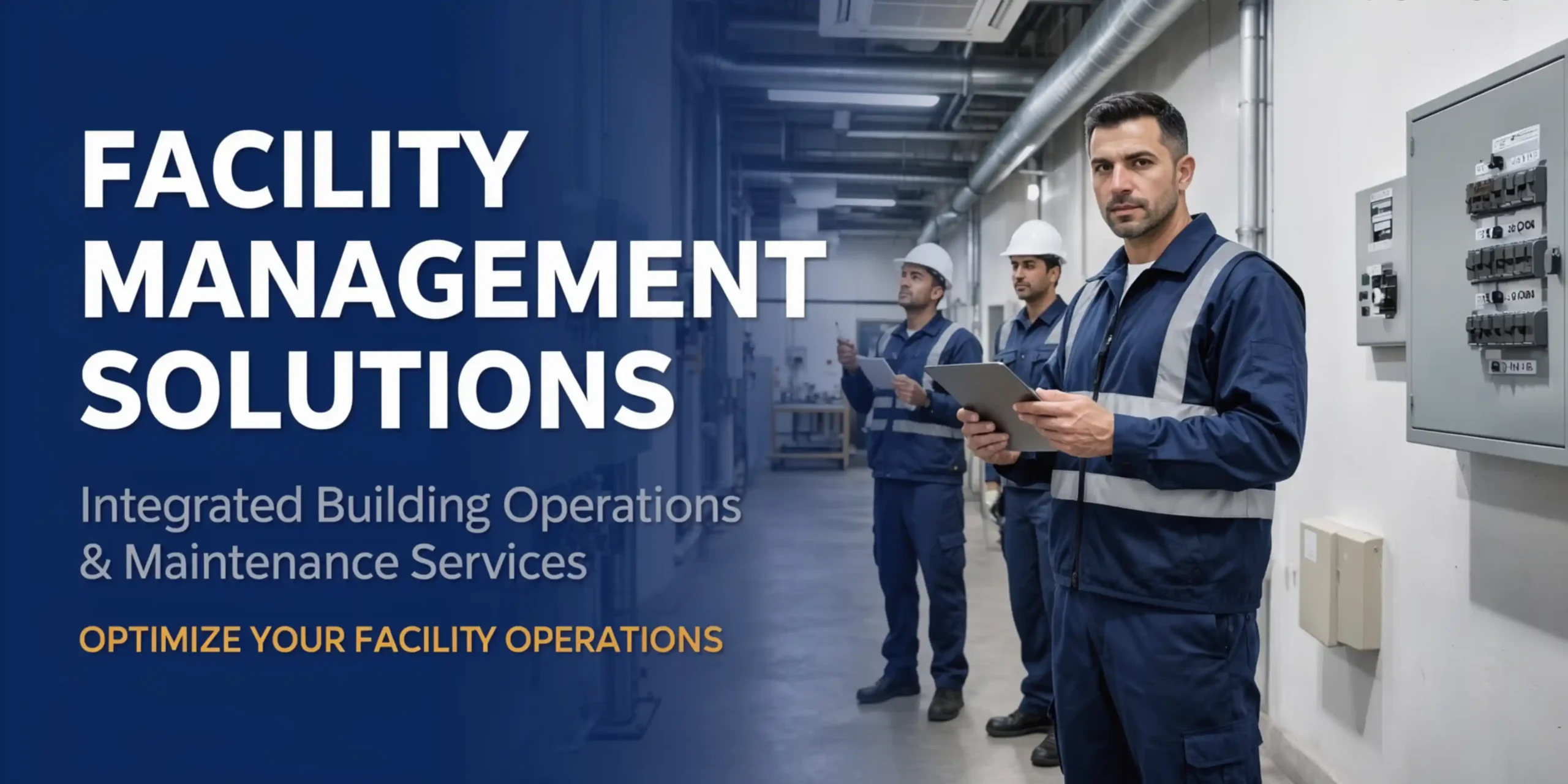
 Blog
Managing a commercial or industrial property requires more than maintaining the building. Businesses must coordinate essential systems, manage maintenance requirements, maintain comfortable working environments, and ensure that facilities remain suitable for daily operations.
Professional facility management solutions help organizations manage these responsibilities through structured maintenance activities, technical services,s and coordinated facility support.
For offices, hotels, retail properties, warehouses,es and industrial facilities, an effective facility management approach can support operational efficiency, equipment performance, and better property management.
SSOMCO (Saudi Specialized Operations & Maintenance Company) provides HVAC and maintenance solutions for commercial and industrial facilities. Our service portfolio supports businesses looking to manage essential building systems and maintenance requirements.
What Are Facility Management Solutions?
Facility management solutions refer to the services, processes, and maintenance activities used to manage buildings, equipment,t and supporting infrastructure.
The objective is to maintain functional, safe,fe and comfortable environments while supporting the operational needs of an organization.
Depending on the facility and agreed service scope, facility management may involve:
- Building maintenance and technical support.
- HVAC and air conditioning maintenance.
- Chiller and cooling system maintenance.
- Electrical and mechanical maintenance.
- Cleaning and housekeeping services.
- Ventilation and air duct cleaning.
- Commercial kitchen hood cleaning.
- Preventive and corrective maintenance planning.
Not every facility requires the same services. The appropriate solution depends on building size, equipment, industry, occupancy, and operational requirements.
Why Are Facility Management Solutions Important?
A well-managed facility supports the people, equipment, and activities that depend on the building.
Without organized maintenance and facility support, businesses may experience recurring equipment problems, unplanned repair requirements,s and difficulties coordinating maintenance activities.
Professional facility management solutions can help organizations:
1. Maintain Building Performance
Regular inspections and appropriate maintenance help identify issues affecting building systems and equipment.
2. Reduce Avoidable Equipment Disruptions
Preventive maintenance helps identify potential problems before they develop into more serious operational issues.
3. Improve Workplace Comfort
Properly maintained HVAC and ventilation systems contribute to suitable indoor conditions for employees, customers, and visitors.
4. Organize Maintenance Activities
A structured approach helps businesses plan inspections, record maintenance work, and prioritize corrective requirements.
5. Support Better Resource Planning
Clear service responsibilities and maintenance schedules help facility managers coordinate work and understand operational requirements.
6. Maintain Property Condition
Appropriate maintenance helps preserve the condition and functionality of building components and installed equipment.
Types of Facility Management Solutions
Facility management covers different service categories. Businesses should select services according to their building requirements and the responsibilities defined in their maintenance agreement.
1. Hard Facility Management Services
Hard facility management generally relates to the physical building, infrastructure, installed equipment, and technical systems.
Common areas include:
HVAC Maintenance: Inspection and maintenance of heating, ventilation,n and air conditioning equipment.
Electrical Maintenance: Maintenance and inspection of electrical systems by appropriately qualified personnel.
Mechanical Maintenance: Maintenance of relevant mechanical equipment and building systems.
Building Maintenance: Identifying and addressing maintenance issues affecting building components and functionality.
Chiller Maintenance: Equipment inspections and servicing based on chiller specifications and operating requirements.
These services help businesses maintain the technical systems that support their daily operations.
2. Soft Facility Management Services
Soft facility management relates to services that support the cleanliness, appearance, and everyday usability of a facility.
Depending on the service provider and contract scope, these services may include:
- Cleaning and housekeeping.
- Janitorial services.
- Waste management coordination.
- Reception and front-of-house support.
- Landscaping.
- Pest control coordination.
Businesses should confirm which soft services are actually included in a provider’s offering rather than assuming every facility management company delivers all categories.
3. Preventive Maintenance Solutions
Preventive maintenance involves scheduled inspections and servicing intended to identify potential equipment problems and maintain system condition.
A preventive maintenance plan may include:
- Equipment inventories.
- Inspection schedules.
- Manufacturer-recommended servicing.
- Maintenance records.
- Identification of recurring issues.
- Recommendations for corrective work.
A suitable maintenance frequency should be established according to equipment specifications, operating conditions, and facility requirements.
4. Corrective Maintenance Solutions
Corrective maintenance addresses faults and equipment problems that have already been identified.
It may involve troubleshooting, repair recommendations, replacement of approved components, and restoring equipment operation.
Businesses should establish clear procedures for reporting faults, approving work,k and documenting completed maintenance.
Facility Management Solutions for Different Industries
Every industry has different facility requirements. A suitable management approach should reflect the type of property, installed systems and daily operational activities.
Commercial Offices
Office buildings require suitable indoor comfort, functional workspaces, and properly maintained building systems.
Common requirements include HVAC servicing, air conditioning maintenance, building inspections and cleaning support.
Hotels and Hospitality Properties
Hotels depend on well-maintained guest rooms, common areas, cooling systems, and supporting equipment.
Facility management planning should consider guest comfort, building usage,e and maintenance activities that minimize disruption to hotel operations.
Shopping Malls and Retail Buildings
Retail facilities experience regular customer and staff activity. HVAC performance, cleaning requirements,ts and building maintenance can contribute to the overall customer experience.
Industrial Facilities
Industrial properties may contain specialized equipment, ventilation systems and complex maintenance requirements.
Facility management planning should consider equipment specifications, operational risks, maintenance access and the responsibilities of specialist contractors.
Restaurants and Commercial Kitchens
Restaurants require attention to cooling, ventilation, and kitchen exhaust systems.
Depending on the facility, maintenance requirements may include air conditioning servicing, ventilation support and commercial kitchen hood cleaning.
How to Choose the Right Facility Management Company
Selecting a facility management provider is an important decision for businesses responsible for commercial or industrial properties.
Consider these factors before entering into a service agreement.
1. Understand Your Facility Requirements
Identify the systems, equipment,t and maintenance activities that need support. Prepare an inventory of essential equipment and recurring maintenance issues.
2. Review Technical Capabilities
Check whether the provider has relevant experience with your building systems, HVAC equipment,nt and required maintenance activities.
3. Confirm the Service Scope
Request a clear description of included services, exclusions, and responsibilities.
Pay particular attention to labour, spare parts, materials, specialist services and corrective maintenance arrangements.
4. Evaluate Maintenance Planning
A suitable proposal should explain inspection frequency, preventive maintenance activities, reporting,g and procedures for handling faults.
5. Check Documentation and Reporting
Maintenance reports help facility managers understand equipment condition, completed work, outstanding issues,es and recommended actions.
6. Review Commercial Terms
Compare quotations based on the actual service scope, staffing requirements, maintenance frequency, and contractual responsibilities.
The lowest quotation may not provide the level of service your facility requires.
Facility Management vs. Building Maintenance
Facility management and building maintenance are closely related, but they are not identical.
Facility Management | Building Maintenance |
Broader approach to managing facility requirements | Focuses on maintaining building components and systems |
May coordinate multiple service categories | Addresses maintenance and repair activities |
Can include technical and support services | Primarily concerns building condition and functionality |
Depends on the agreed management scope | Depends on the maintenance responsibilities |
Building maintenance can form an important part of a broader facility management arrangement.
How to Develop an Effective Facility Maintenance Plan
A structured maintenance plan helps organizations manage equipment and facility requirements more consistently.
Consider the following steps:
Step 1: Identify Building Systems
Prepare an inventory of HVAC equipment, chillers, ventilation systems,s and other relevant building assets.
Step 2: Review Equipment Condition
Identify existing faults, recurring issues, and equipment requiring closer attention.
Step 3: Establish Maintenance Priorities
Prioritize equipment according to operational importance, manufacturer recommendations,s and identified risks.
Step 4: Create a Maintenance Schedule
Define suitable inspection and servicing frequencies for each equipment category.
Step 5: Maintain Service Records
Document inspections, maintenance activities, identified faults,ts and completed corrective work.
Step 6: Review Performance
Periodically review recurring maintenance issues and update the plan when equipment or operational requirements change.
How SSOMCO Supports Facility Maintenance Requirements
SSOMCO – Saudi Specialized Operations & Maintenance Company – provides HVAC and maintenance solutions for commercial and industrial facilities.
Our service portfolio includes:
- HVAC maintenance and installation.
- Air conditioning maintenance.
- HVAC operation and maintenance.
- Chiller installation and maintenance.
- VRF and VRV system services.
- Building maintenance.
- MEP installation and maintenance.
- Air duct cleaning.
- Kitchen hood cleaning.
- Cleaning and janitorial services.
The appropriate service scope depends on the facility, project requirements, and agreed responsibilities.
For businesses looking for facility management solutions, SSOMCO can discuss relevant maintenance requirements and help identify suitable services for their properties.
Request Facility Management Support from SSOMCO
Managing a commercial or industrial property requires a clear understanding of building systems, equipment condition, and maintenance responsibilities.
Whether you manage an office, hotel, retail property, restaurant,t or industrial facility, an organized maintenance approach can help support day-to-day operations.
Contact SSOMCO to discuss your facility requirements, maintenance scope,pe and quotation needs.
Looking for professional facility maintenance solutions? Get in touch with SSOMCO today.
Website: https://ssomco.sa/
Explore our Services to learn more about our maintenance and technical service portfolio.
Frequently Asked Questions
Facility management solutions include services and processes used to manage buildings, equipment, maintenance activities, and supporting facility operations.
Depending on the contract, services may include HVAC maintenance, building maintenance, electrical and mechanical support, cleaning, janitorial services, and other facility-related activities.
Hard facility management focuses on physical building systems and infrastructure, while soft facility management covers services such as cleaning, housekeeping, and other workplace support activities.
A structured facility management approach helps businesses organize maintenance, monitor equipment condition, coordinate service responsibilities,s and support efficient building operations.
Facility management is a broader approach to managing building operations and support requirements. Facility maintenance focuses on inspections, servicing, and repairs of equipment and building systems.
Evaluate the provider's technical experience, service capabilities, maintenance planning, reporting process, contract scope,e and commercial terms.
SSOMCO provides HVAC and maintenance solutions for commercial and industrial facilities. Contact the company to confirm the specific services, location coverage, and scope suitable for your property.
Some maintenance services can be arranged through an annual maintenance contract. The agreement should clearly define included services, inspection frequency, exclusions, spare parts, and corrective maintenance responsibilities.
