

 Blog
Commercial buildings in Saudi Arabia depend on reliable heating, ventilation, and air conditioning (HVAC) systems to maintain comfortable indoor environments and support daily operations. With high outdoor temperatures, dust, and long operating hours, commercial air conditioning equipment can experience considerable operational demands throughout the year.
For offices, hospitals, hotels, shopping centres, restaurants, warehouses, and industrial facilities, regular commercial HVAC maintenance in Saudi Arabia is essential for maintaining equipment performance, reducing unexpected breakdowns, and supporting energy efficiency.
A well-planned maintenance programme helps businesses identify potential problems early, protect valuable equipment, and maintain suitable indoor conditions for employees, visitors, and customers.
In this guide, we explore commercial HVAC maintenance, common system problems, preventive maintenance activities, and how to select a reliable HVAC maintenance company in Saudi Arabia.
What Is Commercial HVAC Maintenance?
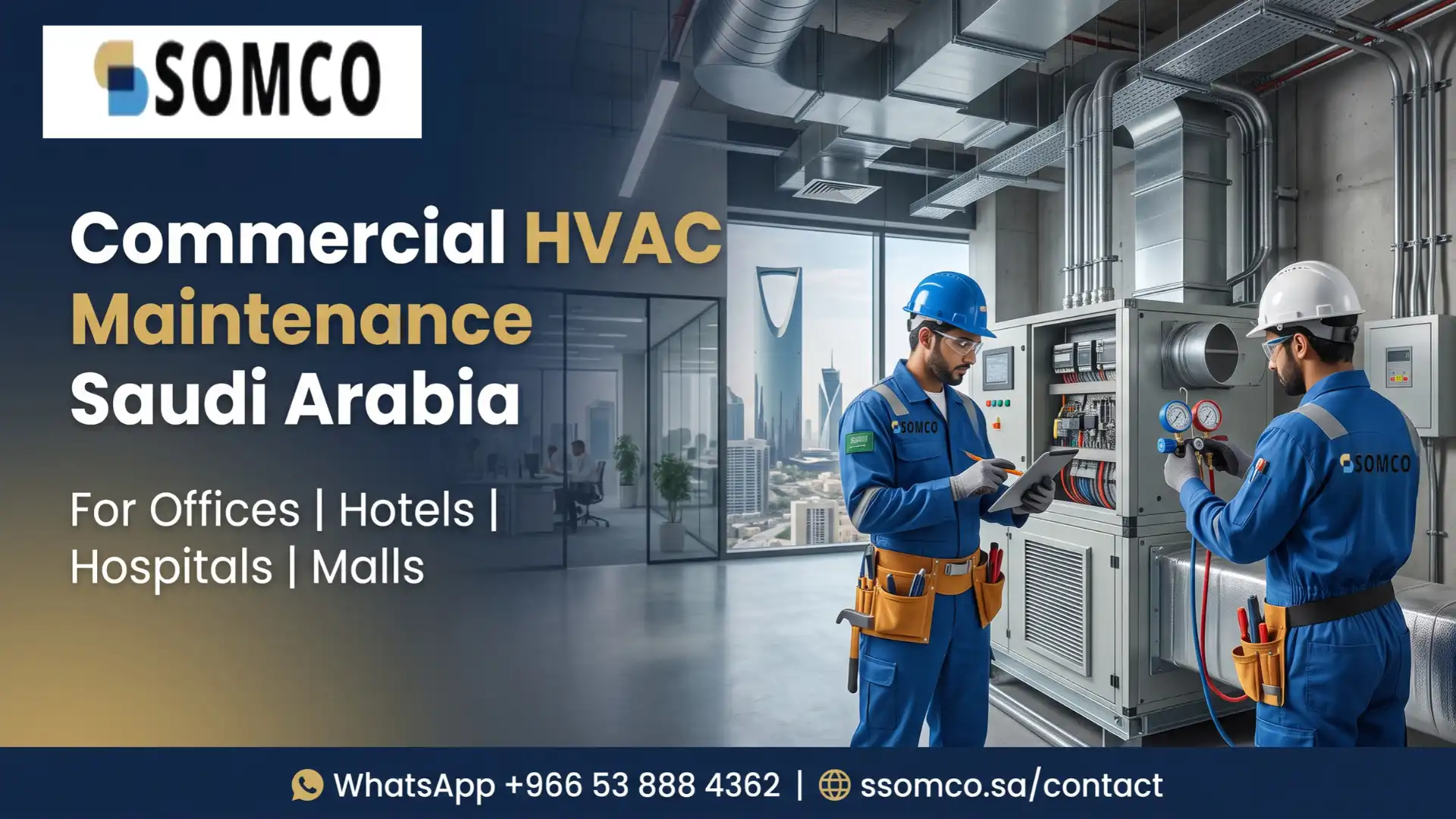
Commercial HVAC maintenance refers to inspecting, servicing, cleaning, testing, and repairing heating, ventilation, and air conditioning systems installed in commercial and industrial properties.
Unlike residential air conditioning systems, commercial HVAC installations often serve larger spaces and operate for extended periods. They may include multiple air conditioning units, central cooling systems, chillers, ventilation equipment, duct networks, and automated control systems.
Professional commercial HVAC maintenance generally involves:
- Inspecting air conditioning equipment.
- Cleaning or replacing air filters.
- Checking evaporator and condenser coils.
- Inspecting electrical connections.
- Checking airflow and ventilation performance.
- Examining drainage systems.
- Reviewing temperature controls and thermostats.
- Monitoring equipment operating conditions.
- Identifying faults and recommending corrective maintenance.
The maintenance programme should be designed according to the building’s equipment, occupancy, operating schedule, and manufacturer recommendations.
Why Commercial HVAC Maintenance Is Important in Saudi Arabia
Saudi Arabia’s climate creates specific challenges for commercial cooling systems. High temperatures, airborne dust, and continuous cooling requirements can increase equipment operating demands.
Here are some important reasons businesses should prioritise regular HVAC maintenance.
1. Reliable Cooling During Hot Weather
Commercial properties require dependable cooling, particularly during the summer months. An unexpected HVAC breakdown can affect employees, customers, patients, and business operations.
Regular inspections help identify developing faults and reduce the likelihood of avoidable equipment interruptions.
2. Better Energy Efficiency
HVAC systems can consume a significant amount of electricity in commercial buildings. Dirty filters, restricted airflow, poorly maintained coils, and incorrect equipment settings may affect system efficiency.
Routine servicing helps identify these conditions and supports more efficient operation.
3. Improved Indoor Air Quality
Commercial HVAC systems circulate and condition indoor air. Filters, ventilation equipment, and ductwork should be inspected and maintained to support appropriate airflow and indoor air quality.
The required cleaning and filtration approach depends on the building’s usage and environmental conditions.
4. Reduced Equipment Repair Costs
Small problems can become expensive if they remain undetected. Loose electrical connections, blocked drainage lines, unusual vibration, and deteriorating components may eventually lead to system failure.
Preventive maintenance helps businesses identify these issues before they develop into more serious faults.
5. Longer Equipment Service Life
Commercial HVAC equipment represents a considerable investment. Appropriate servicing and timely repairs help protect system components and support reliable long-term operation.
Types of Commercial HVAC Systems Used in Saudi Arabia
Different commercial properties require different cooling and ventilation solutions. Understanding the installed system helps determine the correct maintenance requirements.
1. Central Air Conditioning Systems
Central air conditioning systems provide cooling to multiple rooms or areas through a central unit and distribution network.
Maintenance activities may include inspecting air handling units, filters, cooling coils, fans, ductwork, drainage, and control systems.
2. Chiller Systems
Chillers are commonly used in large buildings and facilities that require substantial cooling capacity.
A chiller maintenance programme may include:
- Compressor inspection.
- Condenser and evaporator inspection.
- Checking pumps and water circulation.
- Reviewing operating temperatures and pressures.
- Inspecting electrical connections.
- Checking control panels and alarms.
- Examining water quality and treatment requirements where applicable.
Proper chiller servicing helps maintain system performance and identify potential operating problems.
3. VRF and VRV Systems
Variable Refrigerant Flow (VRF) and Variable Refrigerant Volume (VRV) systems are commonly installed in commercial properties requiring independent temperature control across different zones.
Maintenance may include checking indoor and outdoor units, cleaning filters, inspecting electrical components, checking controls, and reviewing system fault codes.
4. Package Air Conditioning Units
Package units combine major cooling components within a single equipment cabinet. They are often used in commercial spaces, offices, and retail facilities.
Regular maintenance may include filter cleaning, coil inspection, fan checks, drainage inspection, and performance testing.
5. Split Air Conditioning Systems
Commercial buildings may also use multiple split air conditioning units to cool individual offices, meeting rooms, shops, and other spaces.
Each unit should be inspected and serviced according to its condition, usage, and manufacturer recommendations.
Commercial HVAC Preventive Maintenance Checklist
Preventive maintenance helps building managers monitor equipment condition and plan servicing activities before major problems occur.
A commercial HVAC maintenance checklist may include the following activities.
Daily or Routine Monitoring
- Check indoor temperature conditions.
- Review equipment alarms and operating indicators.
- Listen for unusual noises.
- Observe visible water leakage.
- Report any unexpected system shutdowns.
Monthly Inspection
- Inspect air filters and replace or clean them when required.
- Check visible electrical connections and equipment condition.
- Inspect condensate drainage.
- Review thermostat operation.
- Check accessible ventilation components.
Quarterly or Scheduled Servicing
- Inspect evaporator and condenser coils.
- Check fan and motor operation.
- Review airflow and cooling performance.
- Inspect ductwork and air distribution.
- Check refrigerant system performance using appropriate procedures.
- Review control systems and operating records.
Annual or Major Preventive Maintenance
- Conduct a comprehensive equipment condition assessment.
- Review the performance of major HVAC components.
- Inspect chillers and associated systems where installed.
- Review maintenance history and recurring faults.
- Identify equipment requiring repair or replacement.
- Prepare recommendations for the next maintenance period.
Note: These are general planning guidelines, not universal service intervals. Actual maintenance frequency should follow manufacturer instructions, applicable standards, equipment condition, and operating requirements.
Common Commercial HVAC Problems in Saudi Arabia
Commercial HVAC systems may develop different problems due to environmental conditions, equipment age, installation quality, and maintenance practices.
Insufficient Cooling
Possible causes include dirty filters, restricted airflow, coil contamination, control problems, or refrigerant system faults.
Airflow Problems
Blocked filters, damaged ductwork, fan problems, and incorrect air balancing may contribute to uneven airflow throughout a building.
Water Leakage
Blocked condensate drainage, damaged drain connections, or other equipment problems may result in water leakage from air conditioning units.
Unusual Noise and Vibration
Loose components, fan imbalance, motor issues, or mechanical wear can cause abnormal sounds and vibration.
Frequent Equipment Shutdowns
Electrical faults, control problems, overheating, or other operating issues may cause equipment to stop unexpectedly.
High Energy Consumption
Poor maintenance, incorrect system settings, unsuitable operating schedules, and equipment performance issues can contribute to higher energy usage.
A qualified HVAC technician should inspect the system to identify the actual cause before recommending repairs.
Commercial HVAC Maintenance for Different Industries
Each commercial sector has different cooling, ventilation, and operational requirements.
Office Buildings
Office HVAC systems should maintain suitable temperatures and airflow across workspaces, meeting rooms, and shared areas. Planned servicing helps reduce disruptions during business hours.
Hospitals and Healthcare Facilities
Healthcare facilities require carefully managed indoor environmental conditions. HVAC maintenance should follow the facility’s technical requirements, infection-control procedures, and applicable healthcare standards.
Hotels and Hospitality Properties
Hotels require dependable cooling in guest rooms, reception areas, restaurants, kitchens, and conference facilities. Preventive servicing helps support guest comfort and uninterrupted operations.
Shopping Malls and Retail Centres
Large retail properties often operate multiple HVAC systems serving shops, corridors, food courts, and public areas. Planned maintenance helps coordinate servicing while limiting disruption to visitors and tenants.
Restaurants and Commercial Kitchens
Restaurants need suitable air conditioning and ventilation. Kitchen exhaust and hood cleaning should also be considered as part of the wider building maintenance programme.
Warehouses and Industrial Facilities
Warehouses and industrial properties may require specialised cooling, ventilation, and equipment maintenance depending on their operations, stored materials, and environmental requirements.
Commercial HVAC Maintenance Contracts in Saudi Arabia
Many businesses choose an annual maintenance contract (AMC) to organise HVAC servicing throughout the year.
A commercial HVAC maintenance contract can define:
- Equipment included in the agreement.
- Preventive maintenance schedules.
- Inspection and servicing activities.
- Emergency call-out arrangements.
- Response times and service availability.
- Reporting and documentation requirements.
- Spare parts and repair cost responsibilities.
- Contract duration and renewal conditions.
Before signing an agreement, building owners and facility managers should confirm exactly what is included and excluded.
A clearly defined maintenance contract can help organisations plan maintenance expenditure, monitor equipment condition, and coordinate service activities.
How to Choose a Commercial HVAC Maintenance Company in Saudi Arabia
Selecting the right maintenance provider is important for protecting building equipment and maintaining reliable operations.
Consider the following factors before choosing a contractor.
Technical Knowledge and Experience
Check whether the company has experience with your installed equipment, including chillers, central air conditioning, package units, and VRF systems.
Preventive Maintenance Capabilities
Choose a provider that can prepare a structured maintenance programme rather than only responding after equipment fails.
Qualified Technicians
Ask about technician experience, training, safety procedures, and familiarity with the equipment installed at your property.
Service Coverage
Confirm whether the company can provide services at your actual project location. Do not assume nationwide coverage without checking operational availability.
Documentation and Reporting
A professional provider should be able to explain its inspection process, document completed maintenance activities, and communicate recommendations for corrective work.
Transparent Pricing
Request a written quotation that clearly identifies the covered equipment, maintenance frequency, service scope, exclusions, and additional charges.
Why Choose SSOMCO for Commercial HVAC Maintenance?
SSOMCO provides HVAC and facility management solutions for commercial and industrial requirements. Its service portfolio includes HVAC operations and maintenance, chiller maintenance, VRF system services, air duct cleaning, kitchen hood cleaning, and building maintenance.
These services can support organisations looking for coordinated maintenance solutions for their facilities.
SSOMCO identifies Al Ahsa as its base and describes service availability in the Eastern Province and other Saudi Arabian locations depending on project requirements. Businesses should contact the company to confirm coverage for their specific property.
Explore SSOMCO’s services:
For commercial HVAC maintenance enquiries, businesses can contact SSOMCO to discuss their building requirements, installed equipment, and maintenance needs.
Frequently Asked Questions About Commercial HVAC Maintenance in Saudi Arabia
Commercial HVAC maintenance involves inspecting, cleaning, testing, and servicing heating, ventilation, and air conditioning systems installed in commercial buildings and industrial facilities.
Maintenance frequency depends on equipment type, operating hours, environmental conditions, and manufacturer recommendations. High-use commercial systems may require more frequent inspections.
High temperatures, dust, and extended operating hours can place additional demands on cooling equipment. Regular maintenance helps identify problems, maintain performance, and reduce unexpected breakdowns.
A maintenance contract may include scheduled inspections, filter servicing, coil checks, electrical inspections, performance monitoring, and corrective maintenance arrangements. The exact scope depends on the agreement.
Preventive maintenance is planned work carried out to monitor equipment condition and reduce the risk of failures. Corrective maintenance addresses problems after a fault has been identified.
It can. Chiller servicing may be included in a commercial HVAC maintenance contract when the agreement specifically covers chillers and their associated components.
Businesses can review equipment settings, maintain filters and coils, monitor operating schedules, address faults promptly, and arrange professional inspections. Actual savings depend on the building and equipment condition.
SSOMCO describes its service coverage as including Al Ahsa, the Eastern Province, and other Saudi Arabian locations depending on project requirements. Contact SSOMCO to verify availability for your location.
Conclusion
Commercial HVAC maintenance is an important part of building operations in Saudi Arabia. From offices and hospitals to hotels, shopping centres, restaurants, and industrial facilities, reliable cooling and ventilation systems help support comfortable and productive indoor environments.
A structured preventive maintenance programme, timely repairs, and professional technical support can help businesses monitor equipment performance and reduce avoidable operational interruptions.
If your organisation requires commercial HVAC maintenance, chiller servicing, or facility management support, explore SSOMCO’s HVAC solutions and contact the team to discuss your project requirements.
Visit:https://ssomco.sa/
Contact:https://ssomco.sa/contact/
