

 Blog
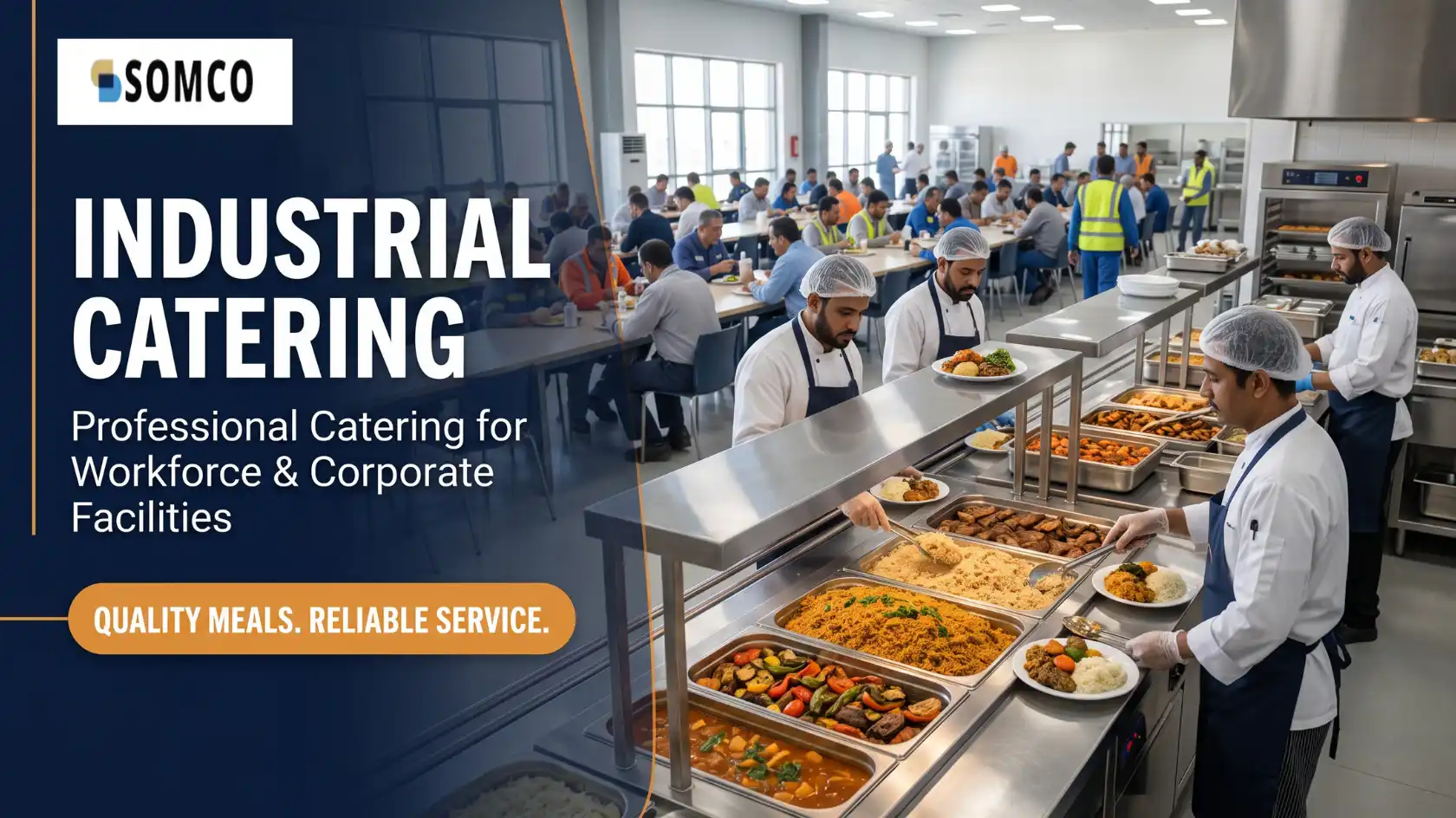
Industrial catering plays an important role in supporting employees working in factories, industrial facilities, construction sites, labour accommodation, and large commercial workplaces. Providing organised meal services helps businesses manage daily food requirements while maintaining a convenient dining environment for their workforce.
Unlike small-scale catering, industrial catering involves serving larger numbers of people, managing food preparation and delivery schedules, maintaining hygiene standards and coordinating daily operations according to workplace requirements.
For companies operating in Saudi Arabia, selecting the right industrial catering provider requires careful consideration of food quality, operational capacity, hygiene, workforce needs and service consistency.
This guide explains industrial catering services, how they work, what businesses should consider when selecting a catering provider, and how workplace catering can support industrial operations.
What Is Industrial Catering?
Industrial catering refers to the preparation, supply, and management of food services for large workforces in industrial and commercial environments.
These services are commonly required by factories, manufacturing plants, construction projects, warehouses, worker accommodation, oil and gas facilities, and other workplaces where employees need regular meals.
Industrial catering may include:
- Daily breakfast, lunch and dinner services
- Workforce meal preparation
- Industrial cafeteria management
- Food preparation and distribution
- Packed meals for worksite employees
- Staff accommodation catering
- Menu planning
- Food supply and ingredient procurement
- Kitchen operations
- Cleaning and sanitation of food-service areas
The exact service scope depends on the number of employees, facility location, kitchen infrastructure, operating hours, and contract requirements.
Why Industrial Catering Is Important for Businesses
Workforce catering is more than providing meals. It involves managing a daily service that supports employees and workplace operations.
1. Supporting Workforce Needs
Employees working long shifts or in demanding industrial environments require convenient access to meals during their working day.
Organised catering services can help businesses provide meals according to workforce schedules, site conditions, and operational requirements.
2. Managing Large-Scale Meal Operations
Factories, industrial sites and accommodation facilities may serve hundreds or thousands of meals depending on the operation.
A structured catering arrangement helps coordinate food preparation, serving schedules, quantities, kitchen resources and distribution.
3. Improving Workplace Convenience
Providing meals at or near the workplace can reduce the need for employees to travel outside the facility during meal breaks.
This may be particularly valuable for remote industrial locations, large manufacturing facilities and sites with limited nearby dining options.
4. Supporting Consistent Food-Service Operations
Industrial catering requires consistency in meal planning, food preparation, service timing, hygiene procedures and quality checks.
An organised service approach can help businesses establish clearer expectations and manage food-service operations more efficiently.
5. Simplifying Catering Management
Outsourcing catering may allow businesses to work with a service provider responsible for agreed food preparation, service, staffing and operational activities.
The responsibilities should be clearly defined in the catering agreement.
Industrial Catering Services for Different Sectors
Industrial catering requirements vary according to the workplace, employee population, operating hours, and available kitchen facilities.
Factory and Manufacturing Catering
Factories often operate multiple shifts, making meal scheduling an important part of catering management.
Services may include:
- Shift-based meal preparation
- Breakfast and lunch services
- Dinner for evening or night shifts
- Cafeteria management
- Packed meals
- Food service for production employees
Meal quantities and serving times should be coordinated with production schedules and workforce requirements.
Construction Site Catering
Construction projects may require catering services for workers operating at locations with limited access to restaurants or food facilities.
Depending on the site, services may involve:
- Prepared meal delivery
- Packed lunches
- Drinking water arrangements
- Breakfast and lunch supply
- Meal distribution coordination
- Catering for temporary project camps
The catering plan should account for site access, food transport, serving arrangements and the number of workers.
Labour Accommodation Catering
Worker accommodation facilities often require regular food-service arrangements for residents.
Typical requirements may include:
- Daily meal planning
- Breakfast, lunch and dinner
- Large-volume food preparation
- Dining-area management
- Food distribution
- Kitchen cleaning and sanitation
- Menu planning according to agreed requirements
Accommodation catering should be planned around occupancy levels, meal schedules and the facility’s available kitchen and dining infrastructure.
Oil, Gas and Industrial Facilities
Industrial locations may have specific catering requirements related to site access, operating schedules, workforce size and accommodation arrangements.
Catering providers may need to coordinate food preparation, transport, serving times and operational procedures according to site requirements.
Businesses should ensure that the selected provider can meet the site’s actual logistical and operational needs.
Corporate and Commercial Workplaces
Industrial catering principles can also apply to corporate offices, business campuses and large commercial facilities.
Services may include staff cafeterias, corporate meals, buffet arrangements, meeting catering, and daily food service.
What Does an Industrial Catering Contract Include?
Industrial catering contracts can vary significantly depending on the facility and the responsibilities assigned to the service provider.
A contract may include the following services.
Menu Planning and Meal Preparation
Menu planning should consider the workforce size, meal schedules, dietary requirements, food preferences and agreed budget.
Meals may be prepared according to a planned menu cycle to help organise procurement, preparation and service.
Food Procurement and Ingredient Management
Catering operations require the sourcing, storage and management of food ingredients.
Procurement procedures should consider ingredient quality, delivery schedules, storage conditions, quantities and food safety requirements.
Kitchen Operations
Kitchen management may include food preparation, cooking, equipment usage, staff coordination, cleaning and sanitation.
The available kitchen facilities and the agreed contract scope determine which responsibilities are handled by the catering provider.
Meal Distribution and Serving
Food service arrangements may include cafeteria counters, dining areas, packed meals or distribution to designated workplace locations.
Serving arrangements should accommodate workforce size, meal breaks, and site logistics.
Cleaning and Hygiene
Food-service areas require appropriate cleaning and hygiene practices.
Depending on the scope, this may include cleaning kitchen surfaces, food preparation equipment, serving areas, dining tables, utensils, and associated facilities.
Food Safety and Hygiene in Industrial Catering
Food safety is a critical requirement for large-scale catering operations.
When food is prepared and served to a large workforce, proper handling, storage, preparation and sanitation procedures are essential.
Industrial catering providers should establish procedures covering the following areas.
Food safety area | Important considerations |
Food storage | Appropriate storage conditions, organisation and stock management |
Food preparation | Hygienic preparation areas and safe handling procedures |
Temperature control | Appropriate control during cooking, storage, transport and service |
Personal hygiene | Staff hygiene, handwashing and suitable protective practices |
Kitchen sanitation | Cleaning of surfaces, equipment and food-service areas |
Ingredient management | Checking supplies, dates, quality and storage |
Food transportation | Appropriate containers, transport conditions and delivery timing |
Waste management | Proper handling and disposal of food and kitchen waste |
Catering operations in Saudi Arabia must comply with applicable food safety and regulatory requirements. Businesses should confirm that the provider follows relevant requirements and maintains appropriate documentation.
How to Choose an Industrial Catering Company
Choosing an industrial catering company requires evaluating its operational capabilities, food-service procedures, and ability to meet workforce requirements.
1. Evaluate Catering Capacity
Confirm whether the provider can handle the number of meals required each day.
Consider peak meal periods, multiple shifts, accommodation populations and any changes in workforce numbers.
2. Review Menu Planning
Ask how menus are developed and whether they can accommodate agreed dietary requirements, cultural preferences and meal variety.
A structured menu plan helps businesses understand the meals being provided and how food-service requirements will be managed.
3. Check Food Hygiene Procedures
Review the provider’s food handling, kitchen cleaning, storage, transport and hygiene procedures.
Where applicable, request information about food safety documentation, staff training and regulatory compliance.
4. Understand the Operational Scope
Clearly identify what the catering provider is responsible for.
This may include food preparation, ingredients, kitchen staffing, serving, cleaning, equipment, transportation and waste management.
Not every catering contract includes all these activities.
5. Review Meal Schedules
Industrial facilities may operate different shifts and have specific meal-break requirements.
The provider should understand the daily schedule, meal quantities, serving times, and any delivery requirements.
6. Compare Pricing and Contract Terms
Industrial catering quotations may depend on the number of meals, menu, food ingredients, staffing, kitchen facilities, transportation, and operating requirements.
Compare quotations using the same service scope and meal specifications.
Industrial Catering Challenges and How Businesses Can Manage Them
Large-scale food services require coordination. Businesses should identify potential operational challenges before entering into a contract.
Changing Workforce Numbers
Employee attendance and workforce numbers may fluctuate.
Catering arrangements should include a clear method for communicating meal quantities and adjusting orders according to agreed procedures.
Multiple Shifts
Factories and industrial facilities may have different shift schedules.
Meal preparation and serving should be coordinated so employees receive meals at the required times.
Remote Locations
Sites located away from commercial areas may require additional logistics for food preparation, delivery, storage, and serving.
The catering plan should account for site access and transportation arrangements.
Menu Variety
Repeated menus may affect employee satisfaction.
A planned menu rotation, based on the agreed requirements and budget, can help provide variety while supporting procurement and kitchen operations.
Hygiene Management
Large catering operations involve multiple food preparation and serving activities.
Businesses should ensure that hygiene procedures, cleaning schedules, inspections, and responsibilities are clearly established.
Benefits of Outsourcing Industrial Catering
Outsourcing industrial catering can be a practical option for businesses that prefer to work with a dedicated food-service provider rather than manage all catering activities internally.
Potential benefits include:
- Organised meal preparation and serving
- Dedicated catering management
- Structured menu planning
- Workforce meal coordination
- Defined hygiene procedures
- Catering operations based on agreed service requirements
- Simplified coordination with a contracted service provider
The actual benefits depend on the provider’s capabilities, the contract scope and the facility’s operational requirements.
Industrial Catering Solutions in Saudi Arabia
Industrial catering is required across a range of sectors in Saudi Arabia, including manufacturing, construction, industrial operations, corporate workplaces, workforce accommodation and large commercial facilities.
Businesses selecting catering providers should evaluate workforce numbers, meal schedules, food-service arrangements, site location, kitchen facilities and applicable requirements.
A suitable catering arrangement should be designed around the actual workplace rather than using a standard plan for every facility.
Industrial Catering and Facility Management
Catering can form part of a broader facility management arrangement where businesses require multiple workplace services.
Depending on the contract, integrated facility management may include catering alongside cleaning, maintenance, workplace support and other operational services.
Combining services under a coordinated arrangement may simplify communication and contract management when the provider has the relevant capabilities.
Businesses should clearly define each service, responsibility, and performance requirement before entering into an integrated contract.
Why Consider SSOMCO for Industrial Catering Requirements?
SSOMCO works with commercial and industrial businesses in Saudi Arabia on facility and operational service requirements.
For businesses exploring industrial catering or workplace food-service arrangements, the important first step is identifying the workforce size, meal requirements, operating schedules, location, and expected scope.
These details help establish the requirements for a suitable catering proposal.
Businesses can contact SSOMCO to discuss their facility management and service requirements and confirm the scope of catering solutions available for their project.
Explore SSOMCO’s services or contact the team to discuss your requirements.
Need industrial catering for your factory, workforce accommodation or commercial facility? Contact SSOMCO to discuss your requirements and request a quotation.
Frequently Asked Questions
Industrial catering is the preparation, supply and management of food services for large workforces in factories, construction sites, industrial facilities, worker accommodation, and commercial workplaces.
Depending on the contract, industrial catering may include breakfast, lunch, dinner, snacks, packed meals and refreshments. The menu and meal schedule are agreed according to the facility's requirements.
Industrial catering is commonly required by factories, manufacturing plants, construction projects, industrial facilities, labour accommodation, warehouses, corporate workplaces and other businesses with large workforces.
Industrial catering generally involves larger meal volumes, workforce scheduling, multiple shifts, organised food preparation, food distribution and ongoing service management. Regular catering may focus on smaller events or individual functions.
A contract should clearly define the meal types, quantities, menu, serving schedule, food procurement, staffing, hygiene responsibilities, equipment, transportation, pricing and service requirements.
Businesses should select providers with established food safety procedures covering food storage, preparation, temperature control, staff hygiene, kitchen cleaning, transportation, and waste management.
Depending on the provider's capabilities and contract scope, catering services can be planned around different workforce shifts, including evening and night operations.
Costs depend on the number of meals, menu, ingredients, staffing, kitchen facilities, transportation, site location, and contract requirements. Businesses should request a quotation based on their actual meal volumes and service scope.
Conclusion
Industrial catering is an important service for businesses that need organised, consistent food provision for large workforces. From factories and construction sites to industrial accommodation and corporate facilities, catering operations require careful planning, food safety management, logistics and workforce coordination.
Choosing the right catering provider involves evaluating meal capacity, food hygiene procedures, menu planning, service scope, operational schedules, and contract terms.
For industrial and commercial catering requirements in Saudi Arabia, contact SSOMCO to discuss your workforce needs and request a quotation.
