

 Blog
Commercial HVAC systems are essential for maintaining comfortable indoor temperatures, proper ventilation, and a productive working environment. Offices, hotels, shopping centres, restaurants, warehouses, and industrial facilities depend on reliable heating, ventilation, and air conditioning equipment for their daily operations.
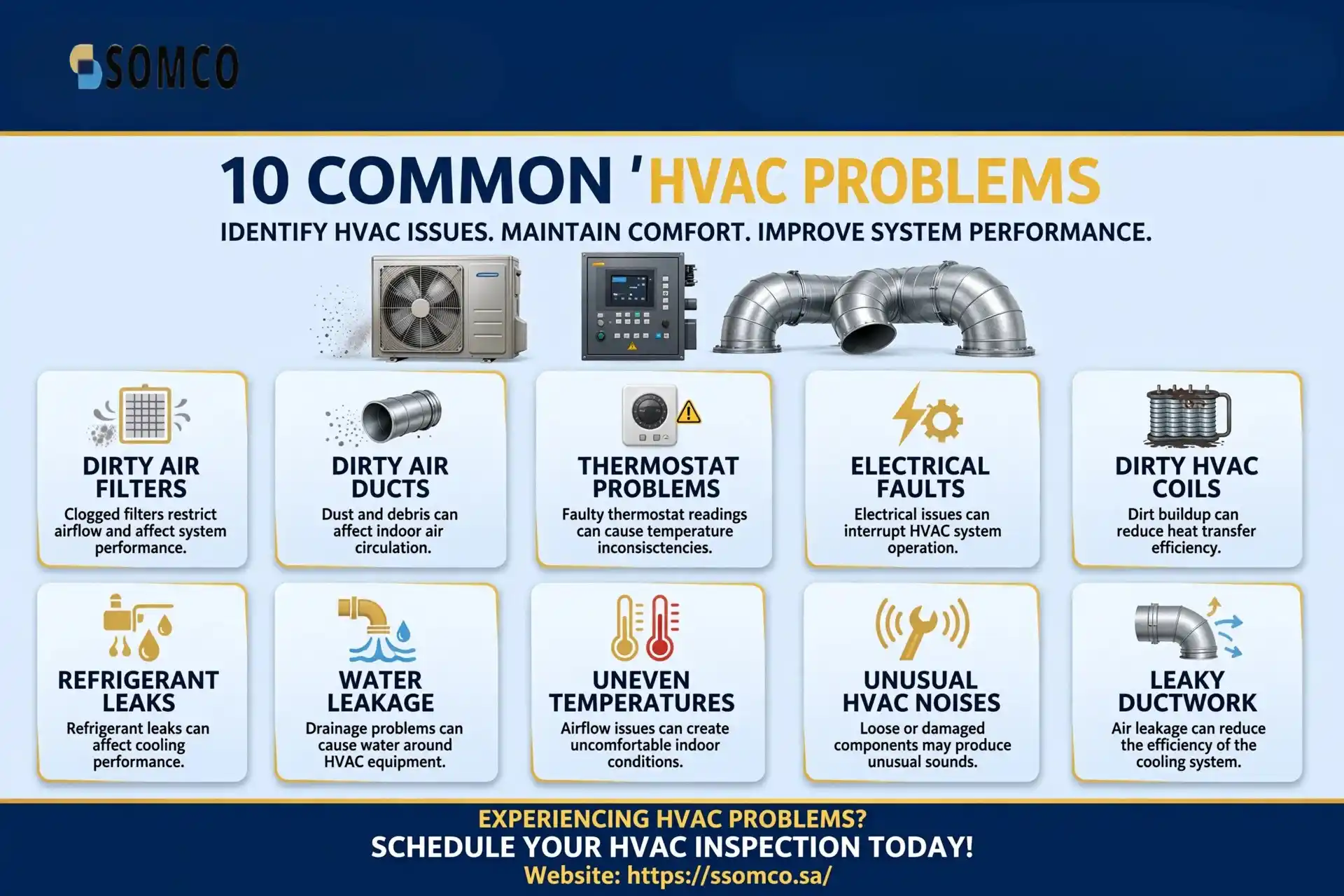
However, HVAC systems can develop problems over time due to continuous operation, dust accumulation, poor maintenance, electrical faults, and component wear. Issues such as insufficient cooling, weak airflow, water leakage, unusual noises, and thermostat malfunctions can affect system performance and disrupt business activities.
If these problems are not identified and addressed promptly, they may lead to increased energy consumption, expensive repairs, and unexpected equipment breakdowns.
Understanding common HVAC problems and their solutions helps business owners and facility managers recognise warning signs, arrange timely repairs, and maintain their equipment more effectively.
This guide explains the most common commercial HVAC problems, their possible causes, recommended solutions, and preventive maintenance practices that businesses should follow.
Why Do HVAC Systems Develop Problems?
HVAC systems contain several interconnected components, including compressors, fans, motors, filters, coils, thermostats, electrical controls, refrigerant circuits, and ventilation equipment.
A problem with one component can affect the performance of the entire system. Some issues develop gradually because of insufficient maintenance, while others may occur suddenly due to electrical faults, component failure, or operating conditions.
Common reasons for HVAC problems include:
- Poor or irregular maintenance.
- Dirty or blocked air filters.
- Dust accumulation on coils and equipment.
- Restricted airflow.
- Refrigerant leakage.
- Electrical connection problems.
- Incorrect thermostat settings.
- Blocked condensate drainage.
- Worn motors, belts, and bearings.
- Improper equipment operation.
- Age-related component deterioration.
Regular inspection and timely servicing help businesses identify these problems and maintain better control over HVAC equipment condition.
12 Common HVAC Problems and Their Solutions
The following are common HVAC problems found in commercial buildings, along with their possible causes and recommended solutions.
1. HVAC System Not Cooling Properly
Insufficient cooling is one of the most common complaints in commercial buildings. Employees, customers, and visitors may experience uncomfortable temperatures even when the air conditioning system is running.
Possible causes:
- Dirty or blocked air filters.
- Dirty evaporator or condenser coils.
- Refrigerant leakage.
- Restricted airflow.
- Faulty thermostat or temperature sensor.
- Incorrect system settings.
- Compressor or other component problems.
Recommended solutions:
- Inspect and clean or replace air filters as required.
- Check evaporator and condenser coils.
- Verify thermostat settings and sensor operation.
- Inspect airflow through supply and return outlets.
- Arrange a refrigerant-system inspection by qualified technicians.
- Check compressor operation and relevant electrical components.
If the system continues to provide insufficient cooling, a professional diagnosis may be required to identify the underlying fault.
2. Weak Airflow from AC Vents
Weak airflow can make some areas of a commercial building uncomfortable while other areas receive sufficient cooling.
Possible causes:
- Blocked air filters.
- Obstructed supply or return grilles.
- Dirty fan components.
- Damaged or slipping fan belts.
- Ductwork restrictions.
- Incorrect damper positions.
- Fan motor problems.
Recommended solutions:
- Inspect and replace filters when required.
- Check supply and return grilles for obstructions.
- Inspect fan blades, motors, and belts.
- Review accessible ductwork for visible damage or restrictions.
- Check damper operation.
- Measure airflow where necessary to identify performance issues.
Maintaining proper airflow helps support consistent cooling and ventilation throughout occupied spaces.
3. HVAC System Making Unusual Noise
Unusual sounds from HVAC equipment should not be ignored. Rattling, grinding, buzzing, humming, and squealing may indicate a mechanical or electrical problem.
Possible causes:
- Loose equipment panels or fasteners.
- Worn fan bearings.
- Damaged fan blades.
- Loose or damaged belts.
- Motor problems.
- Vibration from poorly secured components.
- Electrical component faults.
Recommended solutions:
- Inspect equipment panels and accessible mounting points.
- Check fan blades and motor assemblies.
- Inspect belts and pulleys where applicable.
- Investigate abnormal vibration.
- Check electrical components through qualified personnel.
- Replace damaged components when necessary.
If noise is sudden, severe, or accompanied by vibration, overheating, or a burning smell, the equipment should be assessed promptly and shut down when continued operation may be unsafe.
4. HVAC System Leaking Water
Water leakage around indoor AC units or air handling equipment can damage ceilings, walls, flooring, and nearby electrical components.
Possible causes:
- Blocked condensate drain lines.
- Damaged or incorrectly positioned drain pans.
- Drainage connection leakage.
- Incorrect drain installation.
- Frozen evaporator coils that later produce excess water during thawing.
- Poor drainage or equipment levelling.
Recommended solutions:
- Inspect condensate drain pans.
- Check drain lines for blockages.
- Inspect visible drainage connections.
- Clean drainage components using suitable procedures.
- Investigate coil icing or airflow problems.
- Repair damaged drainage components.
Water leakage should be addressed promptly, especially where it could reach electrical equipment or create a slip hazard.
5. HVAC System Turning On and Off Frequently
Frequent starting and stopping is commonly known as short cycling. It can affect system performance and place additional stress on certain components.
Possible causes:
- Incorrect thermostat settings or sensor readings.
- Restricted airflow.
- Incorrect equipment sizing.
- Control-system problems.
- Electrical faults.
- Refrigerant-system issues.
- Overheating or protective shutdowns.
Recommended solutions:
- Check thermostat operation and settings.
- Inspect air filters and airflow paths.
- Review equipment operating conditions.
- Check control systems and fault history.
- Investigate electrical and refrigerant-related issues through qualified technicians.
- Assess equipment sizing if the issue is recurring and other causes have been ruled out.
Short cycling should be properly diagnosed rather than treated by repeatedly restarting the equipment.
6. Unpleasant Odours from HVAC Vents
Unusual smells coming from HVAC outlets can indicate contamination, moisture problems, or electrical issues.
Possible causes:
- Dirty filters.
- Moisture accumulation in drain pans.
- Contaminated internal components.
- Poorly maintained ventilation components.
- Mould or microbial growth where moisture conditions allow it.
- Electrical overheating or damaged wiring.
Recommended solutions:
- Inspect and replace filters as required.
- Check drain pans and condensate lines.
- Inspect accessible internal components.
- Investigate persistent musty smells and moisture sources.
- Arrange appropriate cleaning where contamination is identified.
- Treat burning or electrical smells as a potential safety issue and arrange immediate assessment.
The source of an odour should be identified before selecting a cleaning or repair method.
7. High Energy Consumption
Unexpected increases in electricity consumption may indicate that HVAC equipment is operating inefficiently or under unusual conditions.
Possible causes:
- Dirty air filters and coils.
- Restricted airflow.
- Incorrect temperature settings.
- Poor equipment maintenance.
- Faulty sensors or controls.
- Excessive equipment operating hours.
- Simultaneous heating and cooling in different zones.
- Deteriorating equipment performance.
Recommended solutions:
- Inspect filters and coils.
- Review thermostat settings and operating schedules.
- Check control-system performance.
- Inspect fans, motors, and airflow.
- Review equipment operating data.
- Investigate unusual energy consumption patterns.
- Consider a broader system performance assessment.
Comparing energy consumption with operating hours, occupancy, and weather conditions can help facility managers identify unusual changes.
8. Thermostat Not Working Correctly
A faulty thermostat can cause incorrect temperature readings, inconsistent cooling, or unnecessary HVAC operation.
Possible causes:
- Incorrect thermostat settings.
- Low batteries in battery-operated units.
- Faulty temperature sensors.
- Damaged control wiring.
- Incorrect thermostat placement.
- Communication problems with the HVAC control system.
Recommended solutions:
- Check thermostat settings and operating modes.
- Replace batteries where applicable.
- Inspect visible wiring and connections.
- Verify sensor readings.
- Review control-system communication.
- Arrange thermostat replacement or repair when required.
Thermostats should be installed and configured according to the equipment manufacturer’s recommendations.
9. Refrigerant Leakage
Refrigerant is essential to the cooling process in air conditioning systems. A leak can reduce cooling performance and affect system operation.
Possible causes:
- Damaged refrigerant piping.
- Corroded connections.
- Loose joints.
- Physical damage to refrigerant lines.
- Deteriorated components.
- Poor previous repair work.
Recommended solutions:
- Arrange a refrigerant-system inspection by qualified technicians.
- Identify the leakage location using suitable methods.
- Repair or replace the affected component.
- Perform the required leak checks.
- Restore the refrigerant charge according to manufacturer specifications and applicable requirements.
- Check system performance after corrective work.
Simply adding refrigerant without identifying and addressing the leak is not a proper long-term solution.
10. Frozen Evaporator Coils
Ice formation on evaporator coils can reduce cooling performance and restrict airflow.
Possible causes:
- Restricted airflow.
- Dirty air filters.
- Dirty evaporator coils.
- Fan problems.
- Refrigerant-system faults.
- Incorrect operating conditions.
Recommended solutions:
- Stop operation when necessary to prevent further damage.
- Allow the coil to defrost according to manufacturer guidance.
- Inspect filters and airflow paths.
- Check fan operation.
- Arrange a qualified refrigerant-system inspection if required.
- Identify and correct the underlying cause before restarting normal operation.
Operating equipment with frozen coils can lead to further performance problems and potential component damage.
11. HVAC System Not Starting
An HVAC unit that does not start can disrupt normal building operations, especially in areas that depend on continuous cooling or ventilation.
Possible causes:
- Power supply interruption.
- Tripped circuit protection.
- Faulty thermostat.
- Damaged electrical wiring.
- Control-board problems.
- Motor or compressor faults.
- Safety protection activation.
Recommended solutions:
- Check whether the building power supply is available.
- Review thermostat settings.
- Check displayed fault codes and alarms.
- Inspect accessible electrical indicators.
- Arrange qualified electrical testing.
- Identify the cause of protective shutdowns before resetting the system.
Repeatedly resetting equipment without investigating the cause can create additional risks.
12. Uneven Cooling Across Different Areas
Some commercial buildings experience inconsistent temperatures, with certain rooms remaining too warm while other areas become too cold.
Possible causes:
- Poor airflow distribution.
- Incorrect damper settings.
- Blocked supply or return grilles.
- Ductwork leakage or restrictions.
- Incorrect zoning controls.
- Poor thermostat placement.
- Changes in occupancy or internal heat loads.
Recommended solutions:
- Inspect supply and return air outlets.
- Review damper positions.
- Check zone control settings.
- Investigate ductwork condition.
- Review thermostat and sensor locations.
- Arrange airflow measurement and balancing when required.
Air balancing and appropriate control adjustments can help improve temperature distribution across building zones.
Common HVAC Problems in Different Commercial Buildings
HVAC problems can vary depending on building type, equipment selection, operating hours, and environmental conditions.
Office Buildings
Common problems include inconsistent temperatures, weak airflow, thermostat faults, and poor ventilation.
Maintenance priorities: Filter inspection, AHU maintenance, thermostat checks, ventilation inspection, and airflow balancing.
Hotels
Hotels require suitable indoor comfort across guest rooms, corridors, meeting spaces, restaurants, and other facilities.
Common problems include room temperature complaints, drainage issues, unusual equipment noise, and inconsistent cooling.
Maintenance priorities: Room AC inspections, control-system checks, drainage maintenance, and planned equipment servicing.
Restaurants and Commercial Kitchens
Commercial kitchens generate heat, moisture, and grease-related operational demands.
Common HVAC problems may include inadequate ventilation, high indoor temperatures, dirty filters, and airflow restrictions.
Maintenance priorities: HVAC equipment inspection, ventilation checks, appropriate filtration maintenance, and separate kitchen exhaust and hood cleaning where required.
Shopping Centres and Retail Facilities
Large retail buildings often contain multiple HVAC units and controlled zones.
Common problems include uneven cooling, control-system faults, airflow restrictions, and equipment performance issues.
Maintenance priorities: Chiller and AHU inspections, control-system monitoring, airflow reviews, and planned maintenance.
Warehouses and Industrial Facilities
Warehouses and industrial properties may experience high dust levels, demanding operating conditions, and significant temperature variations.
Common problems include dirty filters, ventilation restrictions, motor wear, and equipment overheating.
Maintenance priorities: Filter inspections, fan and motor maintenance, ventilation checks, and equipment-specific servicing.
Preventive Maintenance Tips to Avoid Common HVAC Problems
Many HVAC problems can be identified earlier through regular inspections and planned maintenance. Businesses should establish a maintenance programme based on equipment type, operating conditions, and manufacturer recommendations.
1. Inspect Air Filters Regularly
Dirty filters can restrict airflow and affect equipment performance. Inspect filters at suitable intervals and replace them according to their condition and manufacturer guidance.
2. Keep Coils Clean
Evaporator and condenser coils should be inspected and cleaned using suitable methods. Clean coils support proper heat transfer and help maintain equipment performance.
3. Check Drainage Systems
Inspect condensate drain pans, traps, and pipes to identify blockages or leakage before they cause water damage.
4. Monitor Equipment Noise and Vibration
Unusual noise and vibration may indicate mechanical problems. Maintenance teams should record changes and investigate recurring issues.
5. Review Thermostat Settings
Check temperature settings, operating schedules, and sensor performance to avoid unnecessary equipment operation.
6. Inspect Electrical Components
Electrical connections, controls, and protection devices should be checked by qualified personnel as part of the maintenance programme.
7. Maintain Equipment Records
Record inspection dates, faults, repairs, replaced components, and outstanding recommendations. These records help identify recurring problems and plan future maintenance.
8. Schedule Professional HVAC Servicing
Arrange planned inspections and servicing for AC units, chillers, AHUs, VRF/VRV systems, and ventilation equipment according to their maintenance requirements.
When Should Businesses Call an HVAC Maintenance Professional?
Some basic observations can be made by facility personnel, but technical repairs should be handled by qualified HVAC professionals.
Businesses should arrange professional inspection when they notice:
- Persistent insufficient cooling.
- Repeated equipment shutdowns.
- Refrigerant leakage indicators.
- Electrical faults or burning smells.
- Water leakage around equipment.
- Frozen evaporator coils.
- Unusual mechanical noise or vibration.
- Repeated thermostat or control-system errors.
- Significant or unexplained energy consumption changes.
- Persistent ventilation or airflow problems.
Electrical faults, refrigerant handling, compressor repairs, and specialist equipment servicing should not be attempted by unqualified personnel.
How Does Regular HVAC Maintenance Help Businesses?
A planned HVAC maintenance programme helps businesses manage equipment condition and reduce avoidable operational problems.
Important advantages include:
- Improved equipment reliability: Routine inspections help identify developing faults.
- Better operating performance: Cleaning and adjustments support suitable equipment operation.
- Reduced unexpected repairs: Early fault identification may prevent some problems from becoming more serious.
- Improved indoor comfort: Proper airflow and temperature control support occupied spaces.
- Better maintenance planning: Service records help facility managers plan repairs and replacement activities.
- Greater equipment oversight: Equipment inventories and inspection reports provide a clearer picture of asset condition.
The actual results depend on equipment condition, maintenance quality, operating environment, and the scope of the maintenance programme.
Frequently Asked Questions About Common HVAC Problems
Common commercial HVAC problems include insufficient cooling, weak airflow, unusual noise, water leakage, thermostat faults, refrigerant leakage, frozen evaporator coils, and uneven indoor temperatures.
Possible causes include dirty filters, dirty coils, restricted airflow, incorrect thermostat settings, refrigerant leakage, or equipment faults. A qualified technician should inspect the system to identify the actual cause.
Weak airflow may result from blocked filters, obstructed grilles, dirty fan components, damaged belts, ductwork restrictions, or fan motor problems.
Frequent starting and stopping can be caused by restricted airflow, thermostat issues, control faults, equipment sizing problems, or protective shutdowns. Proper diagnosis is necessary to determine the cause.
Businesses can reduce the risk of avoidable breakdowns by following a preventive maintenance schedule, inspecting filters and coils, checking drainage, monitoring equipment performance, and arranging professional servicing.
The maintenance frequency depends on equipment type, operating hours, environmental conditions, and manufacturer recommendations. A maintenance plan should establish suitable inspection intervals for each asset.
Water leakage can indicate a blocked drain line, damaged drain pan, or another drainage issue. It should be inspected promptly to prevent water damage and potential electrical hazards.
Yes. Dirty filters can restrict airflow and affect system performance. Depending on the equipment and operating conditions, this may increase the energy required to maintain indoor temperatures.
Preventive maintenance involves planned inspections and servicing to help reduce the likelihood of faults. Corrective maintenance involves diagnosing and repairing problems after they have been identified.
Professional HVAC maintenance helps businesses obtain equipment-specific inspections, technical diagnosis, appropriate servicing, and maintenance documentation. Qualified personnel are particularly important for electrical, refrigerant, and specialist equipment work.
Conclusion
HVAC problems can affect building comfort, energy consumption, equipment reliability, and business operations. Issues such as insufficient cooling, weak airflow, unusual noise, water leakage, thermostat faults, and refrigerant problems should be identified and addressed before they develop into more serious concerns.
The most effective approach is to combine regular inspections, proper equipment cleaning, timely repairs, and a structured preventive maintenance programme. Businesses should also maintain accurate equipment records and use qualified professionals for technical servicing.
By understanding common HVAC problems and their solutions, facility managers can make better maintenance decisions and support reliable operation across their commercial properties.
Need Professional HVAC Maintenance Support?
SSOMCO (Saudi Specialized Operations & Maintenance Company) supports businesses with HVAC and maintenance-related service requirements. Commercial property owners and facility managers can discuss their equipment condition, inspection requirements, and ongoing maintenance needs with the SSOMCO team.
Whether your facility uses commercial air conditioning units, chillers, VRF/VRV systems, or air handling equipment, a clearly defined maintenance scope helps establish the right servicing approach.
Have an HVAC maintenance requirement or upcoming project? Contact SSOMCO to discuss your needs and request a quotation.
Website: https://ssomco.sa/
