

 Blog
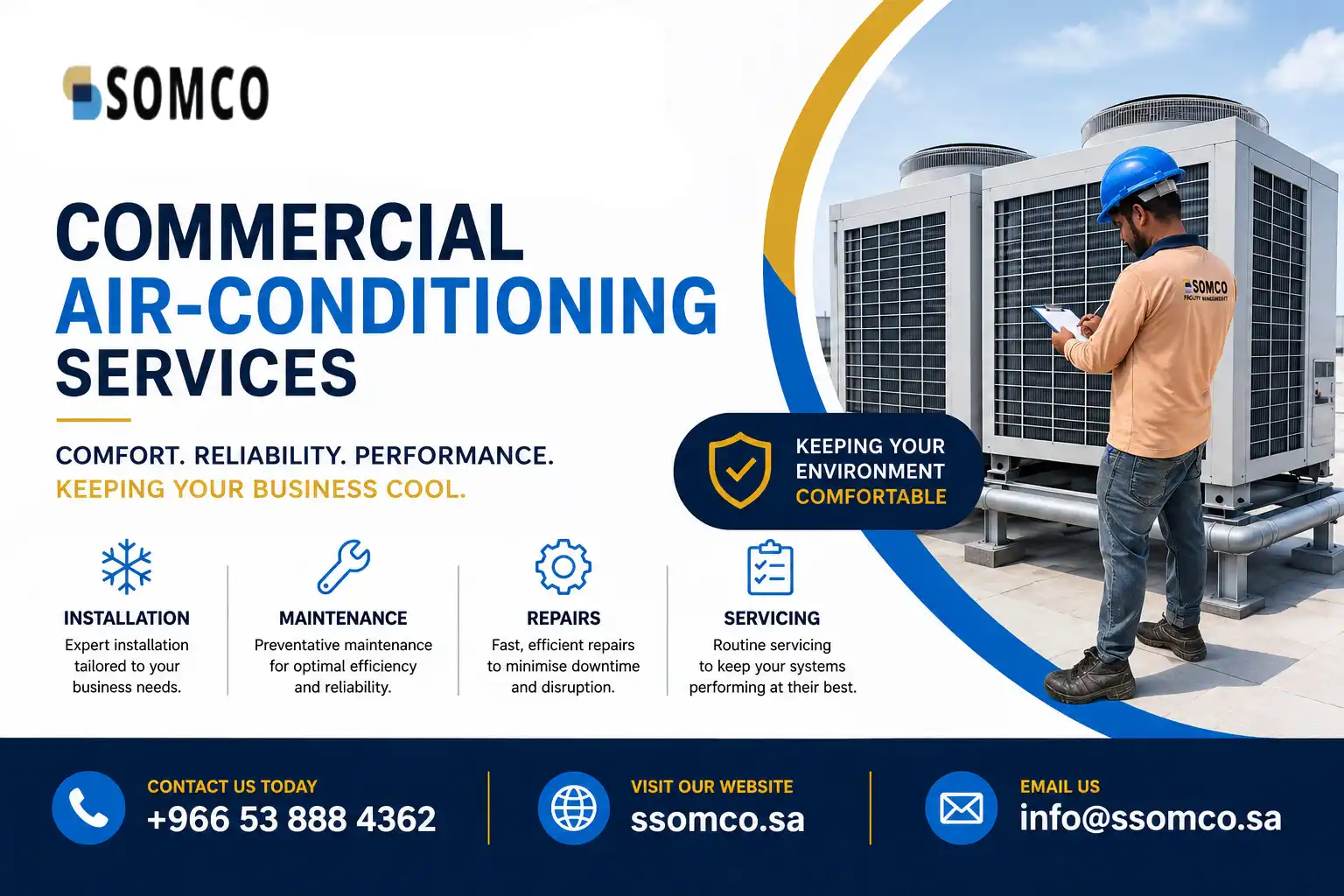
In commercial buildings, air conditioning is essential for maintaining comfortable indoor environments and supporting daily business operations. Offices, hotels, shopping centres, restaurants, retail stores, and industrial facilities depend on reliable cooling systems throughout their operating hours.
When commercial AC equipment is not maintained properly, businesses may experience insufficient cooling, unexpected breakdowns, water leakage, restricted airflow, and increased operating expenses.
Commercial AC maintenance helps prevent these problems through scheduled inspections, equipment cleaning, performance checks, and timely servicing.
For businesses managing multiple air conditioning units or large commercial properties, a planned maintenance programme is an important part of effective facility management.
In this guide, we explain commercial AC maintenance, common equipment problems, essential servicing activities, preventive maintenance schedules, and how to select a suitable commercial AC maintenance company.
What Is Commercial AC Maintenance?
Commercial AC maintenance involves inspecting, cleaning, servicing, and maintaining air conditioning equipment installed in business properties.
Unlike residential air conditioning, commercial AC systems may serve multiple rooms, floors, departments, and operational areas. They may also operate for extended periods depending on the building’s requirements.
A commercial AC maintenance programme may cover:
- Commercial split air conditioners
- Packaged air conditioning units
- Rooftop AC units
- Central air conditioning systems
- Ducted air conditioning systems
- Fan coil units
- Indoor and outdoor AC units
- Air conditioning controls and thermostats
The maintenance requirements depend on the equipment type, manufacturer recommendations, operating conditions, and building usage.
Why Is Commercial AC Maintenance Important?
Regular air conditioning maintenance helps businesses manage equipment performance and reduce the risk of unexpected operational problems.
1. Maintain Consistent Cooling Performance
Commercial spaces require suitable indoor temperatures throughout their operating hours.
Dirty filters, contaminated coils, restricted airflow, and equipment faults can affect cooling performance. Regular maintenance helps identify and address these issues.
2. Reduce Unexpected AC Breakdowns
A minor equipment problem can develop into a more serious fault when left unresolved.
Scheduled inspections help identify abnormal operating conditions and allow maintenance teams to recommend corrective work.
3. Support Energy-Efficient Operation
Air conditioning equipment may consume more energy when filters are blocked, coils are dirty, or components are not operating correctly.
Cleaning and inspecting equipment can help restore suitable operating conditions and support better energy performance.
4. Improve Indoor Comfort
Properly maintained air conditioning systems help support comfortable indoor environments for employees, customers, visitors, and occupants.
5. Protect Equipment Condition
Regular servicing helps identify worn components, drainage problems, electrical issues, and other maintenance requirements that may affect equipment reliability.
6. Plan Maintenance Expenses
Preventive maintenance allows facility managers to identify potential repairs and plan servicing activities instead of relying entirely on emergency maintenance.
Commercial AC Maintenance Services: What Does the Process Include?
Professional commercial AC maintenance should be based on the type and condition of the equipment.
The following are common maintenance activities.
1. Air Filter Cleaning and Replacement
Air filters collect airborne dust and particles as air passes through an air conditioning system.
Blocked filters can restrict airflow and affect cooling performance.
Maintenance activities may include:
- Inspecting filter condition
- Cleaning reusable filters where appropriate
- Replacing disposable filters
- Checking correct filter installation
- Identifying airflow restrictions
Filter maintenance frequency should depend on the filter type, operating hours, and surrounding environment.
2. Evaporator Coil Inspection and Cleaning
The evaporator coil is an important component in the cooling process.
Dust accumulation and contamination can affect airflow and heat transfer.
Maintenance may include inspecting the coil, identifying contamination, and cleaning it using methods and products suitable for the equipment.
3. Condenser Coil Cleaning
The condenser coil releases heat from the refrigeration system.
Dust and debris accumulation can affect heat rejection and equipment operation.
Maintenance may include inspecting the outdoor coil, removing suitable surface debris, and cleaning the coil according to manufacturer recommendations.
4. Condensate Drainage Inspection
Air conditioning systems produce condensate during cooling operation.
Blocked drain lines or contaminated drain pans can lead to water leakage and other moisture-related problems.
Maintenance may include:
- Inspecting condensate drain pans
- Checking drain line condition
- Removing suitable obstructions
- Inspecting drainage connections
- Checking for visible water leakage
5. Electrical Component Inspection
Electrical problems can affect air conditioning equipment operation and reliability.
Depending on the system, maintenance may include checking electrical connections, contactors, capacitors, wiring, and other relevant components.
Electrical work should be performed by appropriately qualified technicians.
6. Fan and Blower Inspection
Fans and blowers help circulate air through the air conditioning system.
Maintenance may include inspecting fan blades, motors, bearings, mounting arrangements, and operating conditions.
7. Refrigerant System Checks
Refrigerant is essential to the cooling process.
A professional inspection may include reviewing operating pressures and temperatures, checking refrigerant pipework, and investigating possible signs of leakage.
If a refrigerant issue is suspected, qualified technicians should identify the cause before recommending any corrective work.
8. Thermostat and Control Inspection
Thermostats and control systems regulate air conditioning operation.
Maintenance may include checking temperature settings, sensor operation, control responses, and system performance.
9. Overall Cooling Performance Assessment
After maintenance, the technician can assess the system’s operating condition using suitable inspection and performance measurements.
Findings should be recorded, with any additional repair requirements communicated to the facility manager.
Commercial AC Maintenance for Different Types of Businesses
Different business environments have different cooling requirements.
Office Buildings
Offices require suitable indoor temperatures across workstations, meeting rooms, reception areas, and shared spaces.
Regular AC maintenance helps support employee comfort and business operations.
Hotels and Hospitality Facilities
Hotels depend on air conditioning across guest rooms, reception areas, restaurants, corridors, and common spaces.
Planned servicing helps facility teams manage cooling equipment across different areas of the property.
Shopping Centres and Retail Stores
Retail environments require reliable cooling to maintain comfortable shopping areas and support daily operations.
Large commercial properties may require maintenance coordination across multiple air conditioning systems.
Restaurants and Commercial Kitchens
Restaurants require suitable air conditioning for dining areas, customer spaces, and designated working environments.
Kitchen exhaust and ventilation systems may require separate specialist maintenance according to their design and operating requirements.
Industrial and Warehouse Facilities
Industrial buildings and warehouses may use different types of commercial cooling equipment depending on their size, operations, and environmental requirements.
Maintenance should be based on the equipment specifications and facility operating conditions.
Healthcare and Educational Buildings
Healthcare facilities, schools, colleges, and other institutions may require carefully planned air conditioning and ventilation maintenance according to the intended use of each area.
Commercial AC Preventive Maintenance Schedule
A preventive maintenance schedule helps businesses organise inspections and servicing activities.
The following table is a general planning guide. Actual intervals should be adjusted according to equipment manufacturer instructions, operating hours, environmental conditions, and maintenance history.
Maintenance activity | Suggested frequency |
Visual equipment inspection | Monthly |
Air filter inspection | Monthly or as required |
Condensate drain inspection | Monthly or as required |
Cooling performance review | Periodically |
Indoor and outdoor coil inspection | Quarterly or as required |
Electrical component inspection | According to manufacturer recommendations |
Fan and motor inspection | According to equipment requirements |
Comprehensive equipment assessment | Annually or as required |
Commercial buildings operating in dusty environments or under heavy cooling demand may require more frequent inspections.
A maintenance contractor should prepare an equipment-specific schedule rather than applying identical service intervals to every unit.
Common Commercial AC Problems and Their Possible Causes
Understanding common air conditioning problems helps facility managers recognise when professional servicing may be required.
AC Not Cooling Properly
Possible causes include dirty filters, restricted airflow, coil contamination, refrigerant circuit problems, or equipment faults.
Weak Airflow from AC Units
Restricted filters, blower problems, blocked grilles, or ductwork issues may affect air distribution.
Water Leakage from Air Conditioners
Blocked condensate drains, drain pan problems, or other system faults may cause water leakage.
Unusual Noise or Vibration
Abnormal sounds may indicate fan, motor, bearing, compressor, or mounting problems.
Frequent AC Shutdowns
Repeated shutdowns may be associated with electrical faults, control issues, equipment protection systems, or mechanical problems.
Unpleasant Smells from AC Units
Persistent odours may require inspection of filters, coils, drain pans, drainage systems, or other components.
Increased Electricity Consumption
Changes in operating conditions, poor maintenance, restricted airflow, and equipment faults may contribute to increased energy use.
When these symptoms occur, a professional inspection can help identify the underlying cause and determine the appropriate corrective action.
Commercial AC Maintenance Contract: A Practical Solution for Businesses
An Annual Maintenance Contract (AMC) can help commercial property owners organise air conditioning maintenance through an agreed service arrangement.
Instead of arranging servicing only when equipment develops problems, businesses can establish scheduled inspections and preventive maintenance activities.
Depending on the agreement, commercial AC maintenance contracts may include:
- Scheduled maintenance visits
- Air filter inspection and servicing
- Coil condition checks
- Drainage inspection
- Electrical component checks
- Equipment operating assessments
- Fault identification
- Maintenance reports
- Corrective maintenance recommendations
Before signing a maintenance contract, businesses should review:
- Number and type of AC units covered.
- Number of scheduled maintenance visits.
- Included labour and consumables.
- Spare parts coverage.
- Emergency response arrangements.
- Repair exclusions and additional charges.
- Reporting and documentation requirements.
A clearly defined AMC helps facility managers understand the services included and plan their maintenance budgets.
How to Choose the Right Commercial AC Maintenance Company
Selecting a suitable service provider is important for maintaining commercial air conditioning equipment.
Consider these factors before appointing a contractor.
1. Commercial AC Experience
Look for experience with the type of air conditioning systems installed in your property.
2. Technical Knowledge
Confirm that technicians understand the relevant equipment, cooling components, electrical systems, drainage, and controls.
3. Preventive Maintenance Planning
A suitable provider should be able to prepare a maintenance schedule according to equipment specifications and operating requirements.
4. Clear Scope of Work
Review the quotation to understand which AC units, components, inspections, and servicing activities are included.
5. Maintenance Documentation
Inspection reports help facility managers monitor equipment condition, review completed work, and plan corrective maintenance.
6. Service Support
Understand how the contractor handles equipment faults, additional repair requirements, service requests, and emergency support.
Commercial AC Maintenance Services by SSOMCO
Saudi Specialized Operations & Maintenance Company (SSOMCO) provides air conditioning and HVAC maintenance-related solutions for commercial and facility requirements.
Our service portfolio includes:
- Air conditioning maintenance
- HVAC maintenance
- HVAC operation and maintenance
- Chiller maintenance
- VRF and VRV system services
- Air duct cleaning
- Building maintenance
- Facility maintenance
We understand that commercial buildings depend on reliable cooling systems to support daily operations and indoor comfort.
Whether you manage an office, hotel, retail property, restaurant, or industrial facility, SSOMCO can discuss your air conditioning and maintenance requirements.
Our team can help you identify an appropriate maintenance scope based on your equipment and facility needs.
Looking for commercial AC maintenance support?
Contact SSOMCO to discuss your air conditioning requirements and request a quotation.
Have an RFQ or upcoming project? Request a quotation today!
Frequently Asked Questions About Commercial AC Maintenance
Commercial AC maintenance involves inspecting, cleaning, servicing, and maintaining air conditioning equipment installed in offices, hotels, retail properties, restaurants, and other business facilities.
Maintenance frequency depends on equipment type, operating hours, environmental conditions, and manufacturer recommendations. Commercial properties should follow an equipment-specific preventive maintenance schedule.
Commercial AC servicing may include filter cleaning, coil inspection, drainage checks, electrical inspections, fan and motor checks, refrigerant system assessment, and cooling performance reviews.
Clean filters help maintain suitable airflow through the air conditioning system. Blocked filters can restrict airflow and affect equipment performance.
Maintenance can help address dirty filters, restricted airflow, contaminated coils, and other conditions that may affect equipment performance. Actual energy savings depend on the equipment and its operating conditions.
An Annual Maintenance Contract is an agreement covering specified air conditioning maintenance activities over an agreed period. It generally defines the equipment, service frequency, scope, exclusions, and payment terms.
Chiller maintenance can be included in a wider HVAC maintenance agreement when specifically agreed. Chillers require equipment-specific maintenance procedures.
Contact SSOMCO with your property type, AC equipment details, location, and required maintenance scope to discuss your requirements and request a quotation.
Conclusion
Commercial AC maintenance is essential for businesses that depend on reliable air conditioning systems. Regular inspections, filter servicing, coil cleaning, drainage checks, and equipment performance assessments help support cooling reliability and effective facility management.
From office buildings and hotels to shopping centres, restaurants, and industrial properties, every commercial facility needs an appropriate air conditioning maintenance strategy.
Choose a maintenance provider that understands your equipment, defines the service scope clearly, and supports planned maintenance activities.
For commercial air conditioning maintenance and facility support, contact SSOMCO and request a quotation for your property.

VRF Maintenance: Professional Maintenance Solutions For Commercial Air Conditioning Systems - Best Air Duct And Kitchen Hood Cleaning Service Provider In KSA
November 5, 2026 1:21 pm[…] Commercial AC maintenance […]